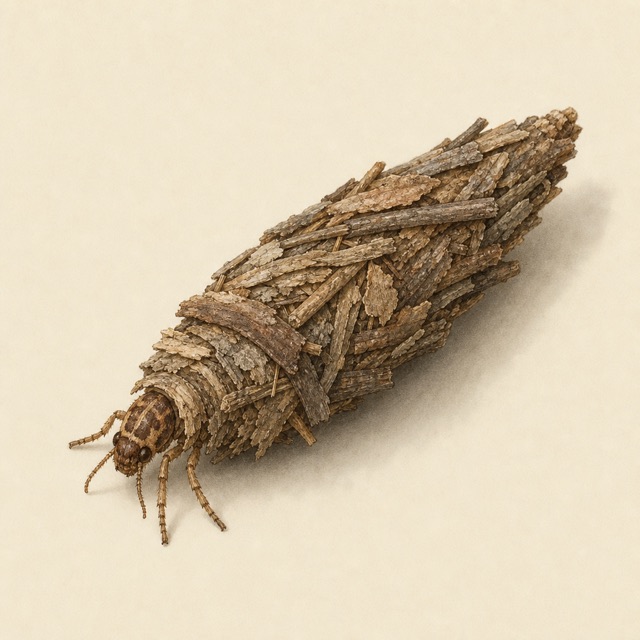
Bagworms are sneaky defoliators that build distinctive spindle-shaped bags from silk and plant material, camouflaging themselves so well they often go unnoticed until serious damage is done. These caterpillars attack over 120 species of trees and shrubs, with evergreens like arborvitae, juniper, and cedar being especially vulnerable -- and unlike deciduous trees, evergreens may not recover from severe defoliation.
Bagworms are most easily identified by their spindle-shaped bags, which hang from branches like small ornaments. Each bag is constructed of silk interwoven with bits of foliage and twigs from the host plant, making them remarkably well-camouflaged. Inside each bag lives a single caterpillar larva that feeds, grows, and enlarges its bag throughout the summer.
Similar Pests
Bags may be confused with pine cones, seed pods, or other natural plant structures. Eastern tent caterpillar nests are communal silk webs in branch forks, quite different from the individual hanging bags. Fall webworms create loose webs at branch tips, not compact bags.
Signs of Infestation
- •Spindle-shaped bags (1/2 to 2 inches) hanging from branches
- •Thinning or bare patches on evergreen foliage, starting at the top of the tree
- •Brown, dead branch tips on junipers, arborvitae, and cedars
- •Tiny caterpillars or silk threads visible on foliage in late spring
Key Inspection Areas
- •Arborvitae, juniper, cedar, spruce, and pine trees and hedges
- •Deciduous trees including maple, elm, sycamore, and willow
- •Branch tips and interior foliage where bags hang vertically
- •Nearby structures like fences, siding, and decks where bags may attach for pupation
When to Inspect
Inspect in late fall through winter when leaves have dropped and bags are most visible on evergreens. Check again in late May to June when tiny new bags first appear on foliage.
Inspection Tools
Hand pruners, bucket of soapy water for collecting bags, ladder for tall trees, magnifying glass for finding small larvae
Handpick and Destroy Bags
The most effective first step is manual removal. Pick all visible bags from trees and shrubs from fall through early spring before eggs hatch (typically mid-May). Pull bags off firmly -- they are attached with a silk band that must be broken. Drop bags into a bucket of soapy water or seal in a trash bag. Do not simply drop them on the ground, as larvae can still emerge.
Time Insecticide Applications Precisely
If chemical treatment is needed, timing is critical. Apply insecticides when larvae are small and actively feeding, typically late May through mid-June in most regions. Young larvae (less than 1/2 inch bags) are far more susceptible than mature larvae. Once bags exceed 1 inch, most insecticides become ineffective.
Apply Bt (Bacillus thuringiensis var. kurstaki)
For an organic approach, spray Bt (sold as Dipel, Thuricide, or Monterey Bt) on affected foliage when larvae are small. Bt must be ingested to work, so thorough coverage of foliage is essential. Apply in late afternoon (Bt degrades in UV light) and reapply after rain. Bt is highly effective on young bagworm larvae and safe for beneficial insects.
Use Synthetic Insecticides for Heavy Infestations
For severe infestations, apply products containing spinosad, bifenthrin, cyfluthrin, or permethrin. Spray thoroughly to wet all foliage, including interior branches where bags may be hidden. A pressurized sprayer or hose-end sprayer may be needed for tall trees. Follow label directions carefully and avoid spraying when pollinators are active.
Treat Tall Trees Professionally
Trees taller than 15-20 feet are difficult to treat effectively with consumer equipment. Hire a licensed pest control operator or certified arborist with commercial spray equipment to ensure thorough coverage. Professional applicators can also use systemic insecticides applied to the soil that are taken up by the tree.
Assess Damage and Support Recovery
After treatment, evaluate the health of affected trees. Deciduous trees typically recover from bagworm defoliation. Evergreens that have lost more than 80% of their foliage may not recover and should be monitored for one full growing season. Water stressed trees deeply and apply a balanced fertilizer in early spring to support regrowth.
Monitor Annually and Repeat as Needed
Bagworm populations rebuild from surrounding areas, so ongoing vigilance is essential. Inspect all susceptible plants twice yearly -- once in winter to handpick bags, and once in late May to watch for tiny new bags. Neighbors' infested trees can reinfest your landscape, so consider coordinating control efforts with adjacent properties.
- 1Inspect landscape evergreens thoroughly each fall and winter for bags
- 2Handpick and destroy all bags before April when eggs hatch
- 3Attract natural predators by planting native flowers to support parasitic wasps (Itoplectis conquisitor)
- 4Monitor for newly hatched larvae in late May and treat promptly when bags are still tiny
- 5Avoid planting large monoculture hedges of susceptible species like arborvitae
- 6Encourage birds like sparrows, finches, and nuthatches that feed on bagworms
Seasonal Note
Winter handpicking is the single most effective prevention strategy. Each overwintering bag can contain 500-1000 eggs, so removing bags before spring hatch dramatically reduces next year's population.
Will bagworms kill my evergreen trees?
Yes, severe bagworm defoliation can kill evergreen trees like arborvitae, juniper, and cedar because these species cannot regenerate foliage from bare branches. Deciduous trees can usually regrow leaves after defoliation, but repeated years of heavy bagworm feeding will weaken and eventually kill them too.
When is the best time to spray for bagworms?
The best time to spray is late May through mid-June when larvae are newly hatched and bags are smaller than 1/2 inch. Spraying later in summer when bags are large is much less effective because the thick bag protects the larva inside from contact insecticides.
Are bagworms harmful to humans?
No, bagworms do not bite, sting, or pose any health risk to humans or pets. They are purely a threat to trees and ornamental plants. The bags themselves are not toxic and can be handled safely during manual removal.
Why do my bagworms keep coming back every year?
Bagworms return because overwintering eggs in unremoved bags hatch each spring, and tiny larvae can balloon (drift on silk threads) from neighboring infested trees. Thorough winter handpicking of all bags combined with early-season insecticide treatment breaks the cycle.
Can I use neem oil for bagworms?
Neem oil can provide some control of very young bagworm larvae when applied thoroughly, but it is generally less effective than Bt or synthetic insecticides. If using neem, apply when bags are very small (under 1/4 inch) and reapply every 7-10 days. Bt is a better organic option for bagworm control.
Quick Facts
- Size
- Bags grow from 1/4 inch to 2 inches long; larvae up to 1 inch
- Color
- Bags covered in brown foliage and twigs; larvae are dark brown with white or yellowish markings
- Habitat
- Evergreen and deciduous trees and shrubs, especially arborvitae, juniper, cedar, spruce, and pine
- Active Season
- Larvae active May through August; bags visible year-round
Danger Level: Medium
This pest can cause health issues or property damage if left untreated.