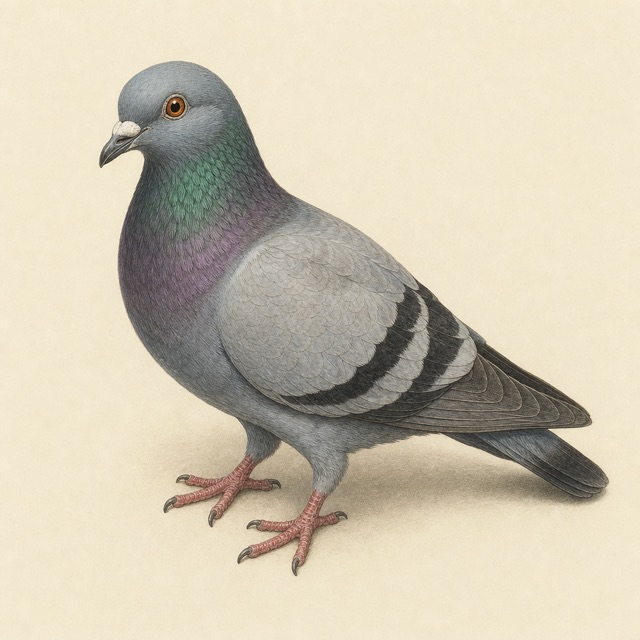
Pest birds like pigeons, starlings, and house sparrows cause millions of dollars in property damage annually through corrosive droppings, clogged gutters, and nesting debris that creates fire hazards. Their droppings also carry over 60 transmissible diseases, making bird management a serious health and property concern.
The most common pest birds are pigeons (rock doves), European starlings, and house sparrows. Pigeons are stocky birds with small heads and short legs that congregate in flocks on buildings. Starlings are smaller, dark birds that form massive murmurations and aggressively compete for nesting cavities.
Similar Pests
Pigeons are sometimes confused with mourning doves, which are slimmer with pointed tails and a more delicate build. Starlings may be confused with native blackbirds, but starlings have shorter tails, speckled plumage, and yellow bills in breeding season. House sparrows differ from native sparrows by their chunkier build and black bib on males.
Signs of Infestation
- •Heavy accumulations of white and gray droppings on ledges, walls, walkways, and vehicles
- •Nesting material such as twigs, grass, and debris in gutters, vents, and building crevices
- •Persistent cooing, chirping, or squawking especially at dawn and dusk
- •Damaged or blocked HVAC units, vents, and drainage systems from nesting debris
Key Inspection Areas
- •Building ledges, window sills, and architectural details where droppings accumulate
- •Rooftop HVAC units, signage mounts, and parapet walls
- •Gutters, downspouts, and drain openings clogged with nesting material
- •Loading docks, warehouse rafters, and open building interiors
When to Inspect
Inspect during early morning when birds are most active at roosting sites. Observe flight patterns at dusk to identify where birds congregate for the night. Seasonal inspections in early spring catch nesting activity before eggs are laid.
Inspection Tools
Binoculars for observing upper building areas, a ladder for roof access, camera for documenting damage, and protective gear including gloves and a dust mask for areas with heavy droppings
Identify the bird species causing problems
Correctly identifying the species is critical because the Migratory Bird Treaty Act protects most native birds. Pigeons, European starlings, and house sparrows are the three species exempt from federal protection and can be managed without permits. If you are unsure of the species, consult a wildlife professional before taking action.
Remove existing nests and clean droppings
Wearing gloves, safety glasses, and a dust mask, remove nesting material from ledges, vents, and gutters. Wet bird droppings with water before removal to prevent inhaling dried particles. Use a commercial enzymatic bird dropping cleaner to sanitize surfaces and eliminate the scent markers that attract birds back.
Install physical exclusion devices
Mount stainless steel or polycarbonate bird spikes on all preferred roosting ledges using adhesive or screws. For larger open areas like warehouse bays or covered walkways, install professional-grade bird netting with proper tensioning hardware. Ensure complete coverage with no gaps birds can exploit.
Seal building entry points
Close all gaps in soffits, eaves, and around utility penetrations with galvanized mesh or solid covers. Install vent covers with half-inch mesh screening over bathroom vents, kitchen exhaust vents, and dryer vents. Ensure HVAC units have protective screening around their bases.
Deploy visual and auditory deterrents
Install reflective tape, predator decoys (hawks or owls), or holographic bird scare devices in problem areas. For commercial properties, consider ultrasonic or sonic bird deterrent systems that emit distress calls. Move and rotate visual deterrents regularly, as birds habituate to stationary objects within days.
Eliminate food and water sources
Ensure dumpsters have tightly closing lids. Clean up spilled grain, food waste, and outdoor dining debris promptly. Remove birdbaths and fix any standing water from leaky fixtures. In commercial settings, enforce strict waste management protocols at loading docks and dining areas.
Maintain deterrents and monitor results
Inspect bird spikes and netting quarterly for damage or debris accumulation. Clean droppings from around deterrent installations regularly. Replace damaged spikes, re-tension netting, and reapply gel deterrents as needed. Persistent bird problems on large commercial buildings may require a professional integrated bird management program.
- 1Install bird spikes on ledges, signs, and other flat surfaces where birds perch and roost
- 2Hang bird netting over recessed areas, loading docks, and open building bays to block access
- 3Seal all openings larger than one inch in soffits, eaves, and around HVAC equipment
- 4Remove standing water and food sources including outdoor dining scraps and open dumpsters
- 5Apply bird gel or optical gel deterrents to ledges as a less visible alternative to spikes
- 6Install angled covers on flat ledges to create slopes that prevent perching
Seasonal Note
Install deterrents before spring breeding season when birds establish nesting territories. Once nests with eggs or chicks are present, many native species are protected under the Migratory Bird Treaty Act. Pigeons, starlings, and house sparrows are exempt from this protection.
Are bird droppings a health hazard?
Yes. Bird droppings can carry over 60 transmissible diseases including histoplasmosis, cryptococcosis, and psittacosis. Dried droppings become airite and the fungal spores can be inhaled, causing respiratory illness. Always wear respiratory protection when cleaning large accumulations of bird droppings.
Do ultrasonic bird repellers actually work?
Most independent studies show that consumer-grade ultrasonic devices have limited effectiveness against pest birds. Professional sonic systems that broadcast species-specific distress calls can be more effective but require proper installation and programming. Physical exclusion methods like spikes and netting remain the most reliable long-term solutions.
Is it legal to remove a bird nest from my property?
It depends on the species. Nests of pigeons, European starlings, and house sparrows can be removed at any time without a permit. However, nests of native species are protected under the Migratory Bird Treaty Act, and removing them while eggs or chicks are present is a federal offense. When in doubt, wait until the nest is empty or consult a wildlife professional.
How do I keep birds from nesting in my dryer vent?
Install a commercial dryer vent cover with a built-in pest guard that allows airflow but blocks bird entry. Avoid simple flap-style covers, as birds can push past them. Check and clean the vent annually to ensure it remains clear of nesting debris, which is also a fire hazard.
What is the most effective bird deterrent for a residential roof?
For residential applications, a combination of bird spikes on ridge caps and ledges plus sealed soffit vents provides the best long-term protection. Optical gel deterrents are effective on visible ledges where spikes would be unsightly. These methods are more reliable than visual deterrents alone, which birds quickly learn to ignore.
Quick Facts
- Size
- 11 to 14 inches long (pigeons); varies by species
- Color
- Pigeons are typically blue-gray with iridescent neck feathers and two dark wing bars; starlings are dark with speckled iridescent plumage
- Habitat
- Building ledges, rooftops, signage, HVAC units, loading docks, bridges, and any sheltered horizontal surface
- Active Season
- Year-round; breeding peaks in spring and summer but pigeons can breed in any month
Danger Level: Low
This pest is primarily a nuisance but can be eliminated with DIY methods.