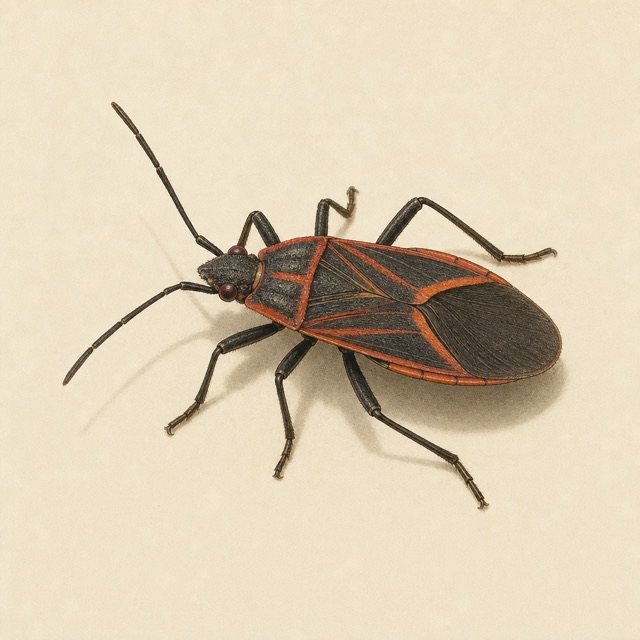
Boxelder bugs are harmless but incredibly annoying fall invaders that congregate by the hundreds on sunny exterior walls before sneaking indoors to overwinter. While they won't bite, sting, or damage your home, their sheer numbers and tendency to leave red stains on surfaces make them unwelcome houseguests. The key to control is timing your defense before they move inside.
Boxelder bugs are 1/2 inch long, dark gray to black with distinctive red or orange markings along wing edges and behind the head. They have 6 legs, antennae, and a flat, elongated oval body. Nymphs are smaller and bright red.
Similar Pests
Stink bugs are wider and shield-shaped without red markings. Assassin bugs have a curved beak and thicker legs. Asian lady beetles are rounder and spotted, not striped.
Signs of Infestation
- •Large congregations on south- or west-facing walls in fall seeking warmth
- •Clusters around window frames, door frames, and siding cracks in autumn
- •Red fecal staining on curtains, walls, and surfaces where bugs rest
- •Mass emergence from wall voids in late winter when indoor heating increases
Key Inspection Areas
- •South- and west-facing exterior walls warmed by afternoon sun
- •Around window frames, door frames, and siding cracks in fall
- •Inside attics, wall voids, and crawl spaces during winter
- •Near boxelder, maple, or ash trees where bugs feed in summer
When to Inspect
Inspect exterior in September-October when bugs aggregate for overwintering. Check interior wall voids in late winter when indoor heating triggers emergence.
Inspection Tools
Ladder to inspect upper siding and soffits, caulk to seal entry cracks, vacuum for indoor removal
Time Your Intervention for Maximum Impact
The best time to control boxelder bugs is late summer before they begin their fall migration indoors. Start monitoring in August and take action when you see them congregating on the sunny sides of your home. Once they're inside your walls for winter, control becomes much more difficult and you'll need to wait until spring when they re-emerge.
Vacuum Up Existing Indoor Populations
For bugs already inside, vacuuming is your safest bet since pesticides indoors can cause more problems than they solve. Use a vacuum with a bag, then immediately dispose of the bag in an outdoor trash can to prevent them from crawling back out. Avoid crushing them as they can leave red stains on fabrics and surfaces from their fecal matter.
Apply Perimeter Spray Treatment Outdoors
Create a barrier treatment using a residual insecticide like Talstar P, Tempo SC Ultra, or Suspend SC around your home's foundation, focusing on the sunny south and west sides where they congregate. Spray up 3-5 feet on exterior walls and out 3 feet from the foundation. Apply in late August or early September for best results, and reapply after heavy rain.
Seal All Entry Points Around Your Home
Boxelder bugs squeeze through surprisingly small gaps around windows, doors, utility penetrations, and siding. Use quality silicone caulk to seal cracks, install door sweeps, repair damaged window screens, and stuff steel wool into larger openings before caulking. Pay special attention to areas where different building materials meet and around air conditioning units.
Treat Aggregation Sites Directly
When you spot large clusters on trees, walls, or fences, hit them directly with a fast-acting contact spray like Cyonara or a soap-based solution. For an eco-friendly option, mix 2 tablespoons of dish soap per gallon of water in a pump sprayer. Treat on cool mornings when bugs are sluggish for maximum effectiveness.
Consider Removing or Treating Host Trees
Female boxelder trees are the primary attractant since bugs feed on their seeds. If you have a female boxelder tree near your home, consider removing it or having a professional treat it with systemic insecticide in spring. Alternatively, rake up and dispose of fallen seeds and seedpods which serve as food sources.
Install Physical Barriers for Long-Term Prevention
For persistent problems, install fine mesh screen over attic vents, crawl space vents, and other large openings. Consider adding weatherstripping around doors and windows. Some homeowners successfully use light-colored vinyl siding or paint, as boxelder bugs are more attracted to dark surfaces that absorb heat.
Plan for Spring Emergence
If bugs overwintered in your walls, they'll emerge inside your home on warm late-winter days seeking exit routes. Place sticky traps near windows and have your vacuum ready. Once outdoor temperatures consistently reach 50°F, they'll leave on their own, so patience is often the best strategy for late-season stragglers.
- 1Seal cracks around windows, doors, siding, and foundations with caulk in late summer before bugs aggregate
- 2Repair or replace damaged window screens and weatherstripping
- 3Apply residual pyrethroid spray (Talstar P, Cyper WSP) to exterior walls in September
- 4Remove boxelder, maple, and ash trees near home (female trees attract bugs)
- 5Vacuum bugs indoors rather than crushing (they stain surfaces)
- 6Install door sweeps on all exterior doors
Seasonal Note
Prevention must happen in late summer/early fall before bugs seek overwintering sites. Once inside walls, removal is difficult.
Are boxelder bugs dangerous or do they cause damage?
Boxelder bugs are essentially harmless—they don't bite humans, won't damage your home's structure, and don't infest food. Their main offenses are being a visual nuisance in large numbers and occasionally leaving reddish stains from their excrement on curtains, furniture, or walls. They also emit a mild odor when crushed or disturbed, but pose no health risks.
Why do I suddenly have hundreds of boxelder bugs on my house?
Boxelder bugs congregate in large numbers on warm, sunny exterior walls in fall while seeking sheltered spots to overwinter. They're attracted to the heat absorbed by south and west-facing walls, especially dark-colored siding. If you have boxelder, maple, or ash trees nearby—particularly female boxelder trees with seed pods—you're more likely to experience large gatherings.
Will boxelder bugs go away on their own?
Yes, boxelder bugs are seasonal and will eventually disperse. Outdoor congregations typically last a few weeks in fall before they find winter shelter. If they're inside your home during winter, they'll remain dormant in wall voids until spring, then emerge and attempt to exit. However, without intervention, they'll likely return each fall if conditions remain favorable.
What's the difference between boxelder bugs and Asian lady beetles?
Boxelder bugs are black with red markings and have an elongated, pill-shaped body about 1/2 inch long. Asian lady beetles are rounder, dome-shaped, and orange or red with black spots (or sometimes black with red spots). Both are fall invaders, but lady beetles can bite and often gather in larger numbers indoors, while boxelder bugs are more docile.
Can I spray boxelder bugs inside my house with pesticide?
It's generally not recommended to spray pesticides inside for boxelder bugs. They often hide in wall voids where spray won't reach them, and indoor pesticide use can cause bugs to die in inaccessible areas, attracting carpet beetles and other pests. Vacuuming is more effective and safer indoors. Save pesticides for outdoor perimeter treatments where they're most effective.
Quick Facts
- Size
- 1/2 inch long
- Color
- Black with distinctive red or orange markings on wings
- Habitat
- Boxelder, maple, and ash trees; sunny sides of buildings; wall voids and attics during winter
- Active Season
- Most active in spring and fall; invasive indoors from September through October
Danger Level: Low
This pest is primarily a nuisance but can be eliminated with DIY methods.