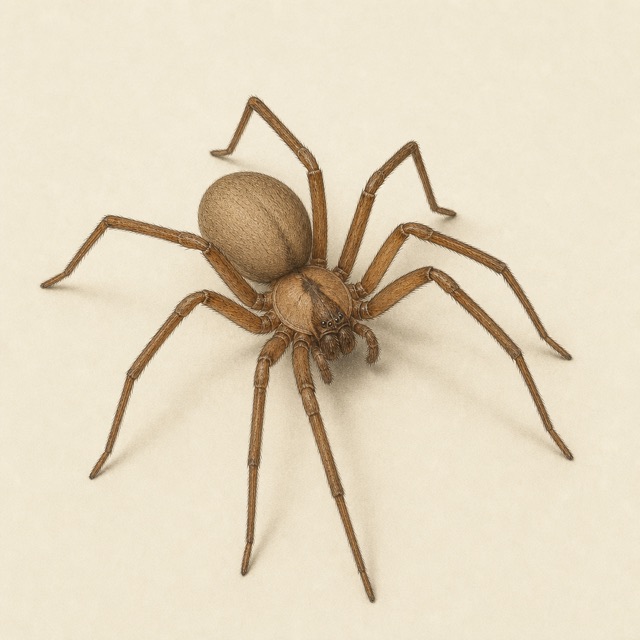
The brown recluse spider earns its name honestly—it hides in undisturbed spaces and avoids human contact, yet its venomous bite can cause serious tissue damage. Found primarily in the central and southern United States, this six-eyed spider is often misidentified, making proper identification your first defense. Understanding where they hide and how to eliminate harborage sites is the key to protecting your home.
Brown recluse spiders are 1/4 to 1/2 inch body length (up to 1 inch with legs), uniformly tan to dark brown with a distinctive dark brown violin or fiddle-shaped marking on the cephalothorax (head region). They have 6 eyes arranged in 3 pairs, unlike most spiders' 8 eyes.
Similar Pests
Wolf spiders are larger, hairier, and have 8 eyes. Common house spiders lack the violin marking. Hobo spiders have chevron patterns on abdomen, not a smooth violin shape.
Signs of Infestation
- •Irregular, messy, off-white webs in undisturbed corners, closets, and storage areas
- •Shed exoskeletons near hiding spots in basements, attics, or garages
- •Painful bite lesion that forms a necrotic ulcer with a white center surrounded by redness
- •Spiders seen at night (they are nocturnal hunters)
Key Inspection Areas
- •Dark, undisturbed corners in basements, attics, and garages
- •Inside cardboard boxes, stored clothing, and linens in closets
- •Behind furniture, appliances, and wall hangings
- •In crawl spaces, woodpiles, and outdoor sheds
When to Inspect
Inspect at night with a flashlight (they are nocturnal hunters). Check in spring and summer when most active. Use caution when moving stored items that haven't been disturbed for weeks.
Inspection Tools
Flashlight, sticky traps to monitor presence, gloves when moving stored items, UV blacklight (some spiders fluoresce)
Confirm Proper Identification
Brown recluses have six eyes arranged in three pairs (not eight like most spiders) and a violin-shaped marking pointing toward the abdomen. They're only found in specific states—primarily from Texas to Georgia and north to Iowa. If you're outside this range, you likely have a harmless spider. Use glue traps to capture specimens for proper identification before treatment.
Deploy Glue Traps Strategically
Place non-toxic sticky traps like Catchmaster or Trapper Max along baseboards, in closets, under beds, and near entry points. Position them flat against walls where spiders travel at night. These serve double duty—monitoring populations and catching spiders without chemicals. Check and replace monthly, keeping a log to identify problem areas.
Apply Residual Insecticide Barriers
Spray a residual pyrethroid insecticide like Talstar P, Demon Max, or Suspend SC around the home's perimeter, focusing on foundation cracks, door frames, window sills, and utility entry points. Indoors, treat baseboards, closet corners, and behind appliances. These products remain effective for 60-90 days and kill spiders on contact.
Dust Wall Voids and Hidden Spaces
Apply CimeXa or Delta Dust insecticidal dust into wall voids, attic spaces, crawlspaces, and electrical outlets (with power off). Use a hand duster to puff dust into cracks and crevices where spiders hide. These desiccant dusts remain effective for years in dry areas and kill spiders that contact the treatment.
Eliminate Clutter and Harborage Sites
Brown recluses thrive in undisturbed clutter. Remove cardboard boxes from basements and attics, replacing them with plastic containers with tight lids. Clear storage areas, shake out rarely-worn clothing and shoes before use, and eliminate piles of newspapers, magazines, or stored items. Reducing hiding spots is more effective than spraying alone.
Seal Entry Points and Cracks
Caulk gaps around pipes, wires, and cables entering your home. Install door sweeps on exterior doors and repair torn window screens. Seal cracks in foundation walls and gaps in siding. Brown recluses often enter through small openings, so thorough exclusion prevents new spiders from establishing indoors.
Reduce Outdoor Spider Populations
Clear vegetation, firewood, rocks, and debris from around your home's foundation—maintain an 18-inch clearance zone. Remove items stored against exterior walls. Treat outdoor harborage areas with Talstar P or Bifen IT. Reducing outdoor populations prevents migration indoors during temperature extremes.
Consider Professional Heat Treatment
For severe infestations or homes with documented brown recluse problems, professional thermal remediation (heating rooms to 130°F+) kills all life stages without chemicals. This is expensive but highly effective when combined with ongoing prevention. Monthly professional monitoring and treatment may be necessary in endemic areas.
- 1Reduce clutter in basements, attics, closets, and storage areas to eliminate hiding spots
- 2Seal cracks and gaps around pipes, wires, windows, and foundations
- 3Shake out clothing, shoes, and bedding that's been stored or undisturbed
- 4Move firewood, lumber, and debris away from house foundation
- 5Use sticky traps along baseboards in basements and closets to monitor presence
- 6Wear gloves when handling stored items in areas where brown recluses are common
Seasonal Note
Brown recluses are most active spring through fall but can bite year-round indoors. Reduce hiding spots before active season.
How dangerous is a brown recluse spider bite?
Most brown recluse bites cause minor symptoms like redness and mild pain, but approximately 10% develop necrotic lesions (tissue death) that can take months to heal. Rarely, bites cause systemic reactions including fever, nausea, and organ damage. Seek medical attention if you suspect a bite—especially if you develop a growing lesion, fever, or severe pain within 24-48 hours.
How can I tell if I actually have brown recluses or just harmless spiders?
Check your geographic location first—brown recluses are only established in about 15 central and southern states. Look for the six-eye pattern (requires magnification) and violin marking, though many spiders have similar markings. The most reliable method is placing glue traps for 1-2 weeks and having captures identified by an extension service or pest professional.
Do ultrasonic repellents or essential oils work against brown recluse spiders?
No scientific evidence supports ultrasonic devices or essential oils for brown recluse control. These spiders rely minimally on vibration for navigation and don't respond to sound waves. Stick with proven methods: residual insecticides, insecticidal dusts, glue traps, and habitat modification. Don't waste money on unproven remedies when dealing with a medically significant pest.
How long does it take to eliminate a brown recluse infestation?
Expect 3-6 months of consistent treatment for significant reduction, with ongoing monitoring necessary in endemic areas. Brown recluses live 2-4 years and females produce egg sacs with 40-50 spiderlings, so multiple generations may be present. Success requires combining chemical treatments with thorough habitat modification and exclusion—not a quick fix.
Should I use bug bombs or foggers for brown recluse spiders?
No—foggers are ineffective against brown recluses because they hide in wall voids, cracks, and enclosed spaces where fog doesn't penetrate. Foggers only treat exposed surfaces and may scatter spiders deeper into hiding. Use targeted residual sprays and dusts that reach harborage areas instead. Professional treatment is worth the investment for this medically important pest.
Quick Facts
- Size
- 1/4 - 1/2 inch body (1/2 - 3/4 inch with legs)
- Color
- Light to medium brown with distinctive dark violin-shaped marking on back
- Habitat
- Dark, undisturbed areas like closets, attics, basements, storage boxes, behind furniture, and in rarely-worn shoes
- Active Season
- Active year-round indoors; peak activity March through October
Danger Level: High
This pest poses significant health or property risks. Act quickly and consider professional help.