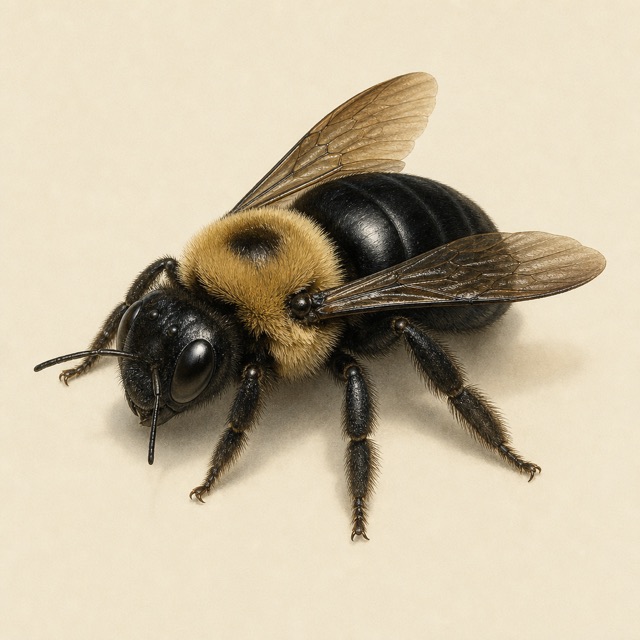
Carpenter bees bore perfectly round 1/2-inch holes in wood siding, decks, and eaves to nest, causing structural damage over time. They don't eat wood like termites but excavate tunnels up to 10 feet long. Here's how to eliminate them and protect your wood.
Carpenter bees are large, robust bees (1/2 to 1 inch) that look like bumblebees but have a shiny, hairless black abdomen. Males often hover aggressively near nest sites but cannot sting. Females have stingers but rarely sting unless handled. They create perfectly round 1/2-inch diameter holes in wood.
Similar Pests
Bumblebees have fuzzy, yellow-and-black striped abdomens. Carpenter bees have smooth, shiny black abdomens with minimal hair. Bumblebees nest in the ground; carpenter bees nest in wood.
Signs of Infestation
- •Perfectly round 1/2-inch diameter holes in wood siding, eaves, or deck railings
- •Coarse sawdust (frass) piled below entry holes from boring activity
- •Yellow-brown staining on wood below holes from bee excrement
- •Aggressive-acting male bees hovering around nesting sites in spring
- •Audible chewing or buzzing sounds inside wood
Key Inspection Areas
- •Unpainted or weathered wood siding, especially south-facing walls
- •Deck railings, fence posts, and outdoor furniture made of soft wood
- •Eaves, fascia boards, and window trim on upper floors
- •Old exit holes from previous years — carpenter bees reuse and expand old tunnels
When to Inspect
Inspect in early spring (April-May) when bees emerge and begin boring. Check again in late summer (August-September) when new adults emerge from nests.
Inspection Tools
Flashlight to look inside holes, screwdriver to probe tunnel depth, binoculars for high eaves inspection
Identify active vs. old holes
Fresh holes have clean edges and sawdust below. Old holes are weathered and dark inside. Active tunnels will have fresh sawdust (frass) and may have bees flying in and out in spring.
Apply residual insecticide into holes
Use a pyrethroid dust (Tempo Dust, Delta Dust) or foam (Fendona Foam) injected directly into active holes. Apply at dusk when bees are inside. The dust travels deep into tunnels and kills adults and larvae.
Wait 24-48 hours before sealing
Do NOT seal holes immediately after treatment — bees will chew new exit holes. Wait 2 days for the insecticide to kill all bees inside the tunnel.
Plug holes with wood filler or dowels
Fill treated holes with wood putty, caulk, or glue in a 1/2-inch dowel rod. This prevents reuse by new bees. Paint or stain over repairs to match surrounding wood.
Apply residual spray to wood surfaces
Spray unpainted wood with a pyrethroid insecticide (Cyper WSP, Demon WP) in early spring before bees emerge. This repels new bees from boring into treated wood. Reapply every 30-60 days through summer.
Paint or stain all bare wood
Carpenter bees strongly prefer unpainted, weathered wood. Paint or stain all exposed wood surfaces. Use oil-based or polyurethane finishes for maximum protection. Bees rarely bore into painted wood.
Replace heavily damaged wood
If tunnels are extensive (10+ feet long or multiple years of reuse), the wood may be structurally compromised. Replace damaged boards with pressure-treated or composite materials that bees can't bore.
Monitor and retreat annually
Carpenter bees return to the same locations every year. Mark your calendar for early April to reapply preventive sprays and check for new holes.
- 1Paint or stain all bare wood surfaces with oil-based paint or polyurethane finish
- 2Apply residual pyrethroid spray to unpainted wood in early spring (March-April)
- 3Fill old carpenter bee holes with wood putty or dowels to prevent reuse
- 4Replace soft woods (pine, cedar, redwood) with hardwoods or composite materials in high-risk areas
- 5Hang carpenter bee traps near known nesting sites as supplemental control
- 6Inspect and treat annually in early spring before bees emerge
Seasonal Note
Prevention must happen in early spring (March-April) before bees emerge from overwintering. Once tunnels are established, bees will return and expand them year after year.
Do carpenter bees sting?
Females can sting but rarely do unless handled or threatened. Males are aggressive and hover territorially but have no stinger. The bigger concern is wood damage, not stings.
Do carpenter bees eat wood?
No. They chew tunnels for nesting, not food. The damage is structural from tunneling, not consumption. Over time, extensive tunneling can weaken beams and siding.
Will they reuse old holes?
Yes, absolutely. Carpenter bees prefer to expand existing tunnels rather than bore new ones. A single tunnel can be reused and extended for 10+ years, reaching 10 feet in length.
Can I use a tennis racket to kill them?
You can swat hovering males, but this doesn't solve the problem. Females inside tunnels will keep boring and laying eggs. You need to treat the tunnels directly with insecticide.
How long do carpenter bee tunnels get?
A single tunnel can extend 4-10 feet over multiple years. They bore a few inches initially, then branch off at right angles, creating a complex network. This can seriously weaken structural wood.
Are carpenter bee traps effective?
Traps can catch some bees but won't eliminate an infestation. They work best as supplemental control combined with insecticide treatment and hole sealing. Trapping alone won't stop new boring.
Quick Facts
- Size
- 1/2 to 1 inch
- Color
- Black and yellow (resembles bumblebees)
- Habitat
- Unpainted or weathered wood (siding, eaves, decks)
- Active Season
- Spring - Summer
Danger Level: Medium
This pest can cause health issues or property damage if left untreated.