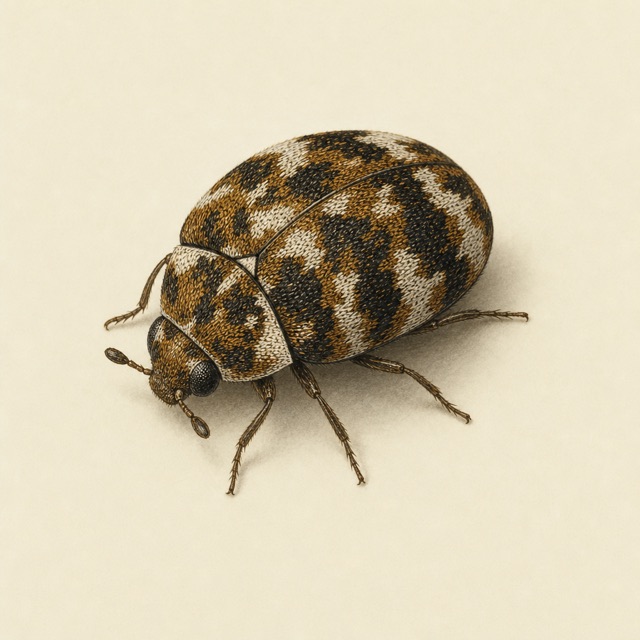
Finding small holes in your favorite wool sweater or mysterious shed skins under furniture? You're likely dealing with carpet beetles, one of the most underdiagnosed pests in American homes. While adults are harmless, their voracious larvae feast on natural fibers, causing hundreds of dollars in damage to clothing, rugs, and upholstery before most homeowners even realize they're present.
Adult carpet beetles are small (1/16 to 1/8 inch), round to oval, with varied patterns. They can be black, brown, or mottled with white, yellow, and orange scales. Larvae (woolly bears) are 1/4 inch, carrot-shaped, covered in brown bristly hairs.
Similar Pests
Bed bugs are larger, flatter, and lack scales or hair. Cockroach nymphs are larger and faster. Spider beetles have longer legs and globular bodies.
Signs of Infestation
- •Shed larval skins (tiny brown casings) in closets, along baseboards, and under furniture
- •Irregular holes chewed in wool clothing, blankets, upholstery, or carpets
- •Small, fuzzy brown larvae crawling on walls or floors near light sources
- •Adult beetles on windowsills in spring, attracted to light and seeking exit
Key Inspection Areas
- •Inside closets with wool clothing, blankets, or furs
- •Under furniture, along baseboards, and in carpet edges
- •In air ducts, vents, and behind baseboards where lint accumulates
- •Around window sills where adult beetles enter in spring
When to Inspect
Inspect in spring when adult beetles fly to windows. Check stored clothing and linens twice yearly (spring and fall). Look for larvae in dark, undisturbed areas year-round.
Inspection Tools
Vacuum for collecting specimens, pheromone traps to monitor adults, flashlight for inspecting dark corners
Confirm Your Identification
Carpet beetle larvae look like tiny, fuzzy caterpillars with bristly hairs and are often mistaken for bed bugs or other pests. Adults are small, oval beetles with mottled patterns that often gather on window sills trying to get outside. Check closets, under furniture, and stored fabrics for shed larval skins (a telltale sign) and irregularly shaped holes in natural fiber materials like wool, silk, leather, or fur.
Locate the Infestation Source
Inspect all stored clothing, blankets, and linens—especially items that haven't been disturbed in months. Check underneath and behind furniture, inside air vents, along baseboards, and in attics or basements where old fabrics might be stored. Look for accumulations of pet hair, dead insects, lint, or felt padding under furniture, as larvae feed on these protein sources too. Don't forget taxidermy, wool rugs, piano felts, and even dried flower arrangements.
Deep Clean and Vacuum Thoroughly
Vacuum every surface meticulously, paying special attention to edges, cracks, baseboards, closet corners, and under furniture where larvae hide. Use the crevice tool on your vacuum for tight spaces and dispose of the vacuum bag immediately in an outdoor trash can. Steam clean carpets and upholstery if possible—the heat kills both larvae and eggs. Wipe down shelves, drawers, and storage areas with a vinegar solution before replacing items.
Launder and Heat-Treat Infested Fabrics
Wash all affected clothing, bedding, and washable fabrics in hot water (at least 120°F) and dry on high heat for 30+ minutes to kill all life stages. For dry-clean-only items or delicate fabrics, either have them professionally cleaned or seal them in plastic bags and place in a freezer at 0°F for at least 72 hours. Discard heavily damaged items that are beyond repair, as they may continue harboring eggs.
Apply Targeted Insecticide Treatment
Use a residual spray like Tempo SC Ultra or Suspend Polyzone along baseboards, in closets, under furniture edges, and other areas where larvae travel. For cracks and voids, apply CimeXa insecticidal dust or Boric acid powder (like BorActin) with a hand duster—these desiccants remain effective for months. Treat carpet edges and underneath area rugs with a product containing permethrin or deltamethrin, ensuring you follow label instructions carefully.
Use Pheromone Traps for Monitoring
Place carpet beetle pheromone traps (like Trap-Rite) in closets, storage areas, and along window sills to catch adult males and monitor ongoing activity. These traps won't eliminate an infestation alone but provide valuable intel on whether your treatment is working and if new beetles are emerging. Check traps weekly and replace every 2-3 months for continuous monitoring.
Implement Long-Term Prevention Strategies
Store seasonal clothing in airtight plastic bins rather than cardboard boxes, and add cedar blocks or lavender sachets as natural deterrents. Clean or launder all items before storage—carpet beetles are attracted to food stains, body oils, and sweat. Regularly vacuum your home, especially low-traffic areas, and keep lint, pet hair, and dead insects cleaned up since these provide food for larvae.
Seal Entry Points and Reduce Outdoor Populations
Install tight-fitting screens on windows and doors, and seal cracks around the foundation, utility penetrations, and window frames with caulk. Adult carpet beetles often enter from outside where they feed on pollen and nectar, so keep flowers and shrubs trimmed back from your home's exterior. Remove bird nests, wasp nests, and dead animals from attics or wall voids, as these attract carpet beetles looking for organic material to colonize.
- 1Vacuum carpets, rugs, upholstered furniture, and baseboards weekly, especially under furniture
- 2Store wool clothing, blankets, and furs in sealed plastic bins or garment bags
- 3Dry-clean or launder woolens before storing for season
- 4Install tight-fitting screens on windows and doors to prevent adult beetles from entering
- 5Regularly clean lint from dryer vents, air ducts, and behind baseboards
- 6Use cedar blocks or lavender sachets in closets (mild repellent effect)
Seasonal Note
Adult beetles fly indoors in spring to lay eggs. Screen windows and clean closets before spring to prevent infestations.
What's the difference between carpet beetles and bed bugs?
Carpet beetle larvae are covered in fuzzy, bristly hairs and move relatively quickly, while bed bugs are flat, reddish-brown, and have no hair. Bed bugs feed exclusively on blood and leave itchy bites on humans, whereas carpet beetles damage fabrics and materials but don't bite people. The damage patterns are different too—carpet beetles leave irregular holes in fabrics, while bed bugs leave blood spots and fecal stains on bedding.
Can carpet beetles infest a clean home?
Absolutely—carpet beetles aren't a sign of poor housekeeping. Adult beetles fly in from outdoors through open windows or doors, attracted by light and the pollen from flowers in your home. Even immaculate homes can get infested if beetles find their way to stored woolens, a wool rug, or accumulations of pet hair. The key is regular inspection and cleaning of storage areas, which even meticulous housekeepers sometimes overlook.
How long does it take to get rid of carpet beetles completely?
Expect 2-4 months for complete elimination, as eggs and pupae can survive initial treatments. You'll see fewer larvae within 2-3 weeks of proper treatment, but continued monitoring is essential. The lifecycle can take 9-12 months depending on temperature and humidity, so persistence is critical. Monthly vacuuming, quarterly inspections of stored items, and keeping pheromone traps active will help ensure they don't return.
Are the shed skins I'm finding dangerous or just gross?
The shed larval skins themselves aren't dangerous, but some people experience allergic reactions or dermatitis from contact with the bristly hairs. These cast skins can become airborne and cause respiratory irritation in sensitive individuals, similar to dust mite allergies. Regular vacuuming with a HEPA filter helps remove these allergens. The real danger is the ongoing fabric damage—larvae continue feeding and molting multiple times before pupating.
Do I need to throw away my entire wardrobe?
No, you definitely don't need to discard everything. Only items with extensive damage beyond repair should be thrown out. Most clothing can be saved through proper washing, dry cleaning, or freezing treatments. Focus on cleaning and treating rather than throwing away—carpet beetles are highly treatable. After treatment, inspect items individually and only discard those that are heavily damaged or have sentimental value that doesn't justify the repair cost.
Quick Facts
- Size
- 1/16 - 1/8 inch (larvae), 1/8 - 3/16 inch (adults)
- Color
- Adults: black with white, brown, or yellow scale patterns; Larvae: tan to brown, covered in bristly hairs
- Habitat
- Closets, drawers, stored clothing, under furniture, along baseboards, window sills, and anywhere natural fibers accumulate
- Active Season
- Year-round indoors; adults most active in spring (April-June)
Danger Level: Medium
This pest can cause health issues or property damage if left untreated.