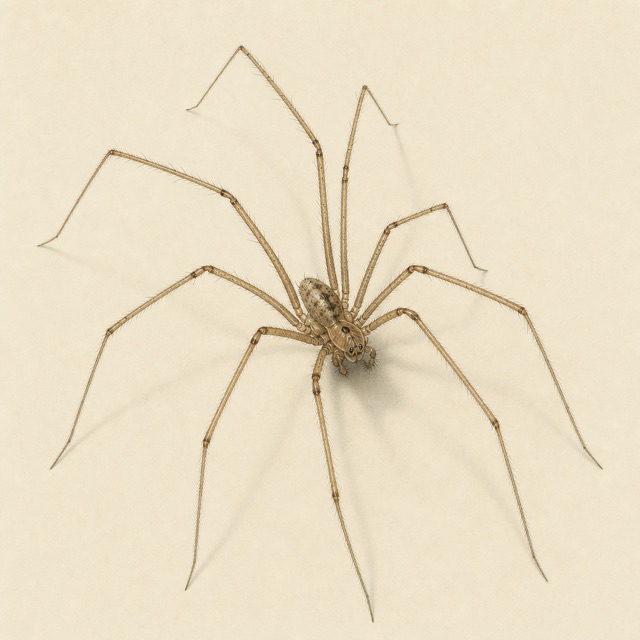
Those delicate, long-legged spiders hanging upside-down in your basement corners are cellar spiders—often called daddy longlegs spiders. While they look creepy and create messy cobwebs, they're actually beneficial predators that eat other spiders and insects. If their populations have gotten out of hand, here's how to reclaim your space without harsh chemicals.
Cellar Spiders: Complete Guide are identifiable by their Pale yellow, light brown, or gray with translucent appearance coloring and Body: 1/4 - 3/8 inch, Leg span: up to 2 inches size. Scientific name: Pholcidae family (Pholcus phalangioides). They have distinct physical features that help differentiate them from similar pests.
Signs of Infestation
- •Physical sightings of the pest in or around the affected area
- •Damage patterns characteristic of this pest's feeding or nesting behavior
- •Droppings, shed skins, or other biological evidence of infestation
Key Inspection Areas
- •Areas where Dark, damp areas including basements, cellars, crawl spaces, closets, and garage corners is commonly found
- •Entry points and harborage sites specific to this pest
- •Food and water sources that attract this pest
When to Inspect
Inspect during peak activity times for this pest. Check regularly during their active season (Year-round indoors, most noticeable in fall when seeking shelter).
Inspection Tools
Flashlight for inspecting dark areas, appropriate traps for monitoring
Understand Why They're There
Cellar spiders congregate where they find prey—other spiders, mosquitoes, and small insects. They're attracted to moisture and undisturbed spaces. Before eliminating them, recognize they're eating other pests in your home. If you're seeing dozens of cellar spiders, you likely have an underlying insect problem that needs addressing first.
Vacuum Away Existing Populations
Use a vacuum with a hose attachment to remove cellar spiders, their webs, and egg sacs from corners, ceiling joints, and window frames. They're fragile and easily sucked up. Do this weekly in problem areas—cellar spiders won't return to spots that are regularly disturbed. Immediately dispose of the vacuum bag or empty the canister outside to prevent escapes.
Reduce Moisture and Humidity
Install a dehumidifier in basements and crawl spaces, keeping humidity below 50%. Fix leaky pipes, improve ventilation, and ensure proper drainage around your foundation. Cellar spiders need moisture to survive—a dry environment makes your space much less hospitable. Use a hygrometer to monitor humidity levels in problem areas.
Eliminate Their Food Sources
Address the insects that cellar spiders feed on by sealing food containers, fixing screen tears, and using appropriate pest control for flies, mosquitoes, or other spiders. Install yellow or sodium vapor bulbs outside to attract fewer insects to entry points. Without prey, cellar spiders will relocate or die off naturally within weeks.
Seal Entry Points and Cracks
Caulk gaps around windows, doors, pipes, and utility lines with silicone sealant. Install door sweeps and repair damaged window screens. Focus on basement windows and foundation cracks where cellar spiders commonly enter. Use expanding foam for larger gaps, then trim and paint for a finished look.
Apply Residual Insecticides (If Necessary)
For persistent infestations, spray a residual insecticide like Suspend SC, Talstar P, or Demon WP around baseboards, corners, and entry points. These products remain effective for 30-90 days. Apply to areas where spiders walk, not their webs—direct contact with treated surfaces is necessary. Always follow label directions and avoid spraying where children or pets frequent.
Use Glue Traps for Monitoring
Place sticky traps like Catchmaster or TERRO Spider & Insect Traps along baseboards and in corners to catch wandering cellar spiders. These traps help you identify high-activity areas and monitor whether your control efforts are working. Replace traps monthly or when they collect significant dust and debris.
Maintain Regular Prevention Habits
Keep storage areas organized—boxes off the floor on shelves reduces hiding spots. Vacuum or sweep problem areas every 1-2 weeks to disrupt web-building. Store seasonal items in sealed plastic bins rather than cardboard boxes. Regular disturbance and cleanliness are your best long-term defenses against cellar spider populations rebuilding.
- 1Eliminate food sources and properly store food items
- 2Reduce moisture and fix any water leaks
- 3Seal entry points and potential access routes
- 4Maintain cleanliness and reduce clutter that provides harborage
- 5Monitor regularly and address problems early before populations grow
Are cellar spiders dangerous or venomous?
Cellar spiders are venomous but completely harmless to humans. Their fangs are too small and weak to penetrate human skin, and they're non-aggressive. The myth that they're "the most venomous spider but can't bite humans" is false—their venom is mild and only effective on small insects. They're actually beneficial, eating potentially harmful spiders like brown recluses.
What's the difference between cellar spiders and daddy longlegs?
True daddy longlegs (harvestmen) are arachnids but not spiders—they have one body segment and don't produce silk or venom. Cellar spiders are actual spiders with two body segments that build webs. Both have extremely long legs, which causes the naming confusion. If it's hanging in a web, it's a cellar spider, not a harvestman.
Why do cellar spiders shake their webs violently when disturbed?
This behavior, called "whirling," is a defense mechanism. When threatened, cellar spiders vibrate rapidly in their webs to blur their outline, making it harder for predators to target them accurately. It can also shake loose debris or confuse attacking insects. This behavior is harmless to humans and shows the spider feels threatened.
How quickly do cellar spiders reproduce?
Female cellar spiders can lay 20-30 eggs at a time in loosely woven silk sacs, which they carry in their jaws until hatching. In warm indoor conditions, they can produce multiple egg sacs per year. Spiderlings mature in 2-3 months, so populations can grow rapidly if left unchecked. Regular cleaning disrupts this reproductive cycle effectively.
Will cellar spiders leave on their own?
Cellar spiders will only leave if conditions become unsuitable—meaning no food, too dry, or constant disturbance. They can live 2+ years indoors with adequate prey and moisture, so waiting them out isn't practical. However, if you eliminate their food sources and reduce humidity, they'll naturally decline over several weeks without needing chemical intervention.
Quick Facts
- Size
- Body: 1/4 - 3/8 inch, Leg span: up to 2 inches
- Color
- Pale yellow, light brown, or gray with translucent appearance
- Habitat
- Dark, damp areas including basements, cellars, crawl spaces, closets, and garage corners
- Active Season
- Year-round indoors, most noticeable in fall when seeking shelter
Danger Level: Low
This pest is primarily a nuisance but can be eliminated with DIY methods.