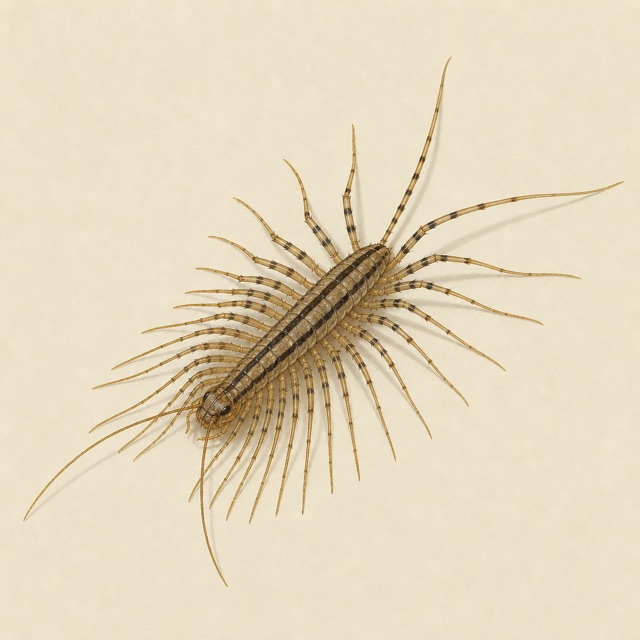
Seeing a centipede dart across your bathroom floor at night is startling, but these fast-moving arthropods are actually beneficial predators that eat other pests. However, their presence usually signals a moisture problem and an abundant food source of insects in your home. While they're mostly harmless, most homeowners prefer to keep these many-legged visitors outside where they belong.
House centipedes are 1 to 1.5 inches long with flattened, segmented yellowish-brown bodies. They have 15 pairs of long, striped legs (30 total), long antennae, and can move very quickly. They have large compound eyes and poison claws behind the head.
Similar Pests
Millipedes are slower, rounder, have two pairs of legs per segment, and curl up when disturbed. Silverfish are smaller, wingless, tear-drop shaped, and have 3 tail filaments.
Signs of Infestation
- •Fast-moving centipedes running across floors, walls, or ceilings, especially at night
- •Sightings in damp areas like bathrooms, basements, laundry rooms, and crawl spaces
- •Presence of other small insects (centipedes feed on them, indicating a prey population)
- •Centipede molts (shed exoskeletons) in hidden areas
Key Inspection Areas
- •Bathrooms, laundry rooms, and basements with high humidity
- •Under sinks, tubs, and in floor drains where moisture accumulates
- •Behind washing machines, water heaters, and sump pumps
- •Crawl spaces, outdoor debris, and mulch beds near foundations
When to Inspect
Inspect at night when centipedes hunt actively. Check during humid weather or after rain when activity increases. Presence of centipedes indicates other insects are present (their prey).
Inspection Tools
Flashlight for night inspection, dehumidifier to reduce moisture, sticky traps to monitor activity
Identify Your Centipede Species
House centipedes have 15 pairs of long, striped legs and can move incredibly fast, while outdoor species are shorter and darker. House centipedes are harmless and rarely bite humans, but their presence indicates other pest problems since they feed on spiders, bed bugs, termites, cockroaches, and silverfish. If you're seeing multiple centipedes regularly, you likely have both a moisture issue and a prey insect population they're hunting.
Fix Moisture Problems Immediately
Centipedes require high humidity to survive and won't establish populations in dry environments. Use a dehumidifier in basements and crawl spaces to keep humidity below 50%, fix leaky pipes and faucets, improve bathroom ventilation with exhaust fans, and ensure your gutters direct water away from your foundation. This single step will make your home inhospitable to centipedes more effectively than any pesticide.
Eliminate Their Food Source
Since centipedes are predators, controlling other insects will starve them out naturally. Apply indoor pest control products like Advion Cockroach Gel Bait for roaches, Cimexa insecticidal dust in wall voids for various insects, and treat for any active pest infestations you identify. Reducing prey insects will force centipedes to relocate elsewhere for food.
Seal Entry Points
Walk around your home's perimeter and seal cracks in the foundation, gaps around utility penetrations, and spaces under doors with weatherstripping. Pay special attention to basement windows, crawl space vents (which should have screens), and where pipes enter the building. Use caulk for small gaps and expandable foam for larger openings—centipedes can squeeze through surprisingly small spaces.
Apply Residual Perimeter Treatment
Create a chemical barrier around your home's exterior using products like Talstar P, Suspend SC, or Demon WP. Spray a 3-foot band along the foundation and 3 feet up the exterior walls, focusing on entry points and damp areas. Treat mulch beds, under porches, and around basement window wells where centipedes hide during the day. Reapply every 60-90 days for continued protection.
Use Sticky Traps for Monitoring
Place glue traps along baseboards, in corners, and near suspected entry points to catch centipedes and monitor activity levels. These traps also catch the prey insects centipedes are hunting, giving you insight into what other pest problems you need to address. Check and replace traps weekly to gauge whether your control measures are working.
Reduce Outdoor Harborage Sites
Remove leaf litter, mulch, stones, and wood piles from directly against your foundation—keep them at least 2 feet away. Trim vegetation so it doesn't touch your home, and reduce thick ground cover near the house. Centipedes thrive in these moist, protected outdoor spaces and easily migrate indoors from there.
Consider Professional Help for Severe Infestations
If you're seeing more than 5-10 centipedes per week despite your efforts, you likely have a significant moisture problem or hidden pest infestation that requires professional diagnosis. Pest control professionals can perform moisture assessments, use thermal imaging to find water intrusion, and apply professional-grade products in wall voids and crawl spaces that aren't DIY-accessible. Severe centipede activity often indicates structural issues that need attention.
- 1Reduce indoor humidity below 50% using dehumidifiers in basements and crawl spaces
- 2Fix leaky pipes, faucets, and drainage issues that create damp conditions
- 3Seal cracks and gaps around doors, windows, and foundation with caulk or weatherstripping
- 4Remove piles of leaves, mulch, stones, and firewood from around foundation
- 5Eliminate other insects (centipede prey) through sanitation and exclusion
- 6Install door sweeps and repair damaged weatherstripping on exterior doors
Seasonal Note
Centipedes migrate indoors during wet weather and in fall. Seal entry points and reduce moisture before seasonal migrations.
Are centipedes dangerous or do they bite?
House centipedes can technically bite, but they rarely do and their small jaws usually can't penetrate human skin. Even when they do bite (which requires significant provocation), the result is similar to a mild bee sting with minor pain and swelling. They're not medically dangerous and don't carry diseases. The bigger concern is what their presence indicates about other pests and moisture in your home.
Why do I keep finding centipedes in my bathroom?
Bathrooms provide the perfect environment for centipedes: high humidity, moisture from showers and sinks, and often prey insects like silverfish and drain flies. They frequently get trapped in bathtubs and sinks because they can't climb smooth surfaces. Installing a bathroom exhaust fan, fixing leaky fixtures, and wiping down wet surfaces will make your bathroom less appealing to them.
Should I kill centipedes or let them be?
This depends on your tolerance level and the severity of infestation. A single house centipede occasionally seen is actually beneficial—it's killing other pests for you and indicates a healthy predator-prey balance. However, frequent sightings mean you have both moisture problems and abundant prey insects, both of which need addressing. Focus on prevention and environmental modification rather than just killing individual centipedes.
What's the fastest way to get rid of centipedes?
The fastest approach combines immediate moisture reduction with residual pesticide barriers. Run dehumidifiers in damp areas, apply Talstar P or similar around your home's perimeter, seal obvious entry points, and place sticky traps to catch active centipedes. You should see significant reduction within 1-2 weeks, but complete elimination requires addressing the underlying moisture and prey insect issues that attracted them in the first place.
Do centipedes mean I have a dirty house?
No, centipedes have nothing to do with cleanliness—they're attracted to moisture and prey insects, not dirt or clutter. However, clutter provides more hiding spots and can indicate areas with poor air circulation and higher humidity. Even immaculate homes can have centipede problems if there's water intrusion in the basement, poor ventilation in crawl spaces, or plumbing leaks behind walls.
Quick Facts
- Size
- 1-1.5 inches (body), up to 3-4 inches including legs
- Color
- Grayish-yellow with three dark stripes down the back
- Habitat
- Damp, dark areas like basements, bathrooms, crawl spaces, and under sinks
- Active Season
- Year-round indoors, most active spring through fall
Danger Level: Low
This pest is primarily a nuisance but can be eliminated with DIY methods.