Those tiny red welts that itch like crazy after a summer hike? You've met chiggers—microscopic mites that feast on your skin cells and leave you miserable for weeks. The good news: despite the folklore, they don't burrow under your skin, and with the right approach, you can eliminate them from your yard and stop the torment.
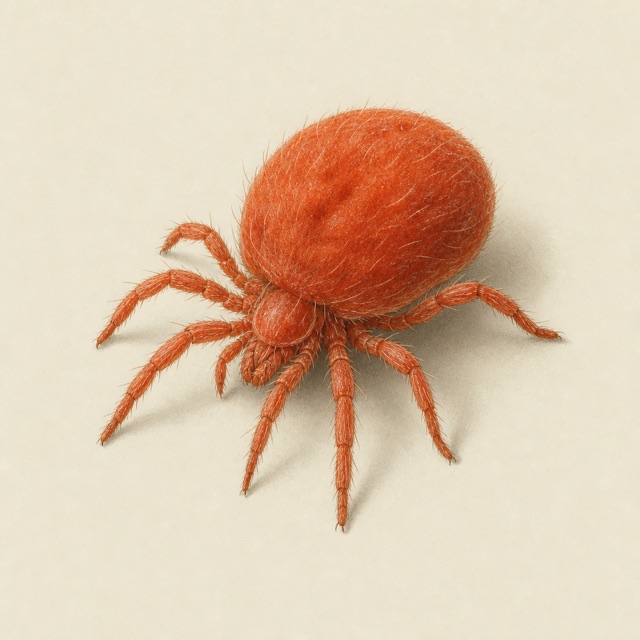
Chigger larvae (the biting stage) are nearly microscopic, 1/150 to 1/120 inch, and bright red or orange. They have 6 legs in the larval stage (8 as adults). Adults and nymphs are harmless and live in soil; only larvae bite humans.
Similar Pests
Clover mites are larger (visible), dark red, and don't bite. Harvest mites is another name for chiggers. Bed bugs are much larger and brown, not red.
Signs of Infestation
- •Intensely itchy red welts or hives, often around ankles, waistband, or areas where clothing fits tightly
- •Bites appearing several hours after being in grassy, weedy, or brushy outdoor areas
- •Red, pimple-like bumps with a central raised area
- •Bites concentrated in groups or lines where larvae clustered on skin
Key Inspection Areas
- •Tall grass, weedy fields, and brushy areas in yards or trails
- •Edges of forests, overgrown lawns, and unmowed ditches
- •Berry patches, gardens with dense vegetation, and leaf litter
- •Shaded areas with moist soil and thick ground cover
When to Inspect
Chiggers are most active late spring through early fall, especially in warm, humid weather. Inspect areas before outdoor activities. Larvae climb onto hosts in early morning or late afternoon.
Inspection Tools
Magnifying glass (chiggers are nearly invisible), white paper or cardboard placed on ground to see crawling larvae
Treat Your Skin Immediately After Exposure
If you've been in chigger territory, shower with hot soapy water within 1-2 hours—this kills larvae before they attach. Scrub vigorously with a washcloth, focusing on ankles, waistband areas, and behind knees. Wash all clothing in hot water immediately. Apply anti-itch cream with hydrocortisone or calamine lotion to existing bites, and resist scratching to prevent infection.
Identify Chigger Hotspots in Your Yard
Chiggers thrive in unmowed areas with tall grass, weeds, and brush—especially shaded, damp spots. Look for them along woodland borders, overgrown fence lines, and areas with thick ground cover. They avoid direct sunlight and well-maintained lawns. Place a black piece of cardboard flat on suspect areas; if tiny red or yellow dots start crawling up within minutes, you've found them.
Mow and Clear Vegetation Aggressively
Cut your grass to 3 inches or shorter and keep it maintained weekly during chigger season. Remove leaf litter, brush piles, and thick ground cover where chiggers hide. Trim back vegetation along fence lines and property edges. Create a gravel or mulch barrier between wooded areas and your lawn—this dry zone deters chigger migration into recreational spaces.
Apply Outdoor Insecticide Treatment
Spray affected areas with bifenthrin-based products like Talstar P or permethrin concentrates such as Martin's Permethrin 10%. Focus on tall grass, brush areas, and the perimeter where woods meet lawn—not your entire yard. Mix according to label directions and apply with a pump sprayer, treating up to a height of 2 feet. Reapply every 4-6 weeks during peak season for continuous protection.
Use Sulfur as a Natural Deterrent
For chemical-free control, apply garden sulfur dust to problem areas using a spreader or hand-cranked duster. Sulfur won't kill chiggers but creates an environment they avoid. You can also dust sulfur powder on shoes, socks, and pant legs before outdoor activities—it's old-school but effective. Reapply after rain, as sulfur washes away easily.
Treat Yourself Preventively Before Outdoor Activity
Before hiking or yard work in chigger areas, spray clothing (not skin) with permethrin-based sprays like Sawyer Permethrin or Repel Permethrin. Apply DEET or picaridin repellent to exposed skin, concentrating on ankles and openings. Tuck pants into boots and wear long sleeves. This barrier approach is far more effective than trying to kill every chigger in the environment.
Maintain Long-Term Yard Control
Keep grass short and remove thatch buildup, which holds moisture chiggers need. Improve drainage in damp areas and increase sun exposure by trimming tree branches. Consider replacing high-maintenance ground covers with mulch in shaded areas. Regular maintenance makes your yard naturally inhospitable to chiggers, reducing the need for chemical treatments over time.
- 1Mow lawns regularly and keep grass short (below 3 inches) to reduce chigger habitat
- 2Remove brush, weeds, and overgrown vegetation from yard edges and trails
- 3Apply sulfur dust or spray permethrin to lawn and landscape beds in late spring
- 4Wear long pants, long sleeves, and tuck pants into socks when in chigger-prone areas
- 5Apply DEET or permethrin repellent to clothing and shoes before outdoor activities
- 6Shower immediately after outdoor exposure and wash clothes in hot water
Seasonal Note
Chiggers are most active late spring through early fall. Treat yard in May before populations peak.
Do chiggers actually burrow under your skin?
No—this is a persistent myth. Chigger larvae attach to your skin and inject enzymes that dissolve skin cells, which they then drink. They don't burrow; they feed from the surface, typically for 3-4 days before dropping off. The itchy red welts are your body's allergic reaction to their saliva, not tunnels under your skin.
Why do chigger bites itch so intensely and for so long?
Chiggers inject digestive enzymes that break down skin cells, triggering a powerful immune response. Your body forms a hardened tube called a stylostome around the feeding site, and this reaction continues causing itching for 1-2 weeks even after the chigger is long gone. Antihistamines and hydrocortisone cream help manage the inflammatory response better than trying to remove something that's not there.
Will treating my entire lawn with pesticides eliminate chiggers?
Blanket lawn treatment is overkill and unnecessary. Chiggers only thrive in specific microclimates—shaded, moist areas with tall vegetation. Targeted treatment of brush lines, overgrown areas, and woodland edges is far more effective and environmentally responsible. Well-maintained, sunny lawns naturally repel chiggers without any chemical intervention.
Can chiggers infest my home or live in my bed?
No, chiggers cannot establish themselves indoors. They require outdoor humidity and vegetation to survive. Once they've fed and dropped off your body (or been washed off), they can't reattach or reproduce inside. Unlike bed bugs or fleas, chiggers are purely an outdoor problem—you don't need to treat your home, just wash exposed clothing and bedding.
What's the fastest way to stop chigger bite itching?
Apply an anti-itch cream with 1% hydrocortisone or calamine lotion several times daily. Take oral antihistamines like Benadryl or Zyrtec to reduce the allergic response. A hot shower (as hot as you can tolerate) temporarily disrupts the itch signal, providing relief for several hours. Avoid scratching—breaking the skin can lead to bacterial infection and prolonged healing.
Quick Facts
- Size
- 1/150 inch (larvae), barely visible to naked eye
- Color
- Bright red to orange (visible as tiny dots)
- Habitat
- Tall grass, weeds, brush, woodland edges, and overgrown lawns with high moisture
- Active Season
- Late spring through early fall (peak: June-September)
Danger Level: Medium
This pest can cause health issues or property damage if left untreated.