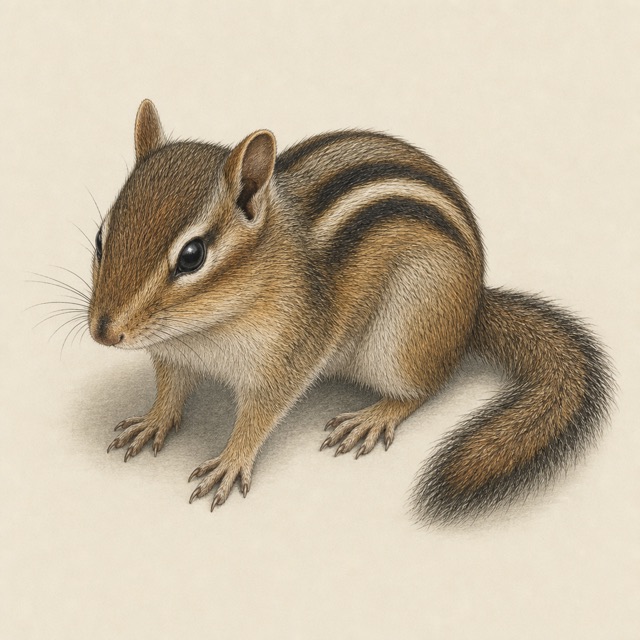
Chipmunks may look adorable, but their relentless burrowing can undermine foundations, patios, and retaining walls. These small rodents also raid gardens, bird feeders, and flower bulbs, causing significant landscape damage if populations go unchecked.
Chipmunks are small, striped rodents easily recognized by the five dark and two light stripes running along their backs from head to rump. They have large cheek pouches used for transporting food and are noticeably smaller than squirrels, typically weighing 1 to 5 ounces.
Similar Pests
Often confused with thirteen-lined ground squirrels, which have spots within their stripes rather than solid stripes. Tree squirrels are significantly larger and lack dorsal stripes entirely.
Signs of Infestation
- •Small 2-inch diameter burrow entrances near foundations, sidewalks, or rock walls with no visible dirt pile
- •Uprooted flower bulbs and seed husks scattered around garden beds
- •Chatter-like vocalizations and high-pitched chirps from woodpiles or stone walls
- •Shallow digging holes in lawn and garden soil where food is cached
Key Inspection Areas
- •Foundation perimeter and along basement walls
- •Stone walls, rock gardens, and retaining walls
- •Woodpiles, brush piles, and dense shrub borders
- •Near bird feeders and vegetable gardens
When to Inspect
Early morning or late afternoon when chipmunks are most actively foraging. Inspect during spring when they emerge from winter torpor and begin establishing new burrows.
Inspection Tools
Flashlight for examining burrow openings, a small mirror to check behind structures, and garden gloves for probing potential entry holes
Identify active burrow locations
Walk your property perimeter looking for small, clean burrow openings about 2 inches in diameter. Unlike other rodent burrows, chipmunk entrances typically lack dirt mounds because they carry excavated soil away in their cheek pouches. Mark each location with a small flag.
Eliminate food sources
Remove or secure all accessible food including bird feeders, fallen fruit, pet food, and open trash. Rake up acorns, seeds, and nuts regularly. This single step can reduce chipmunk activity by up to 80 percent on your property.
Set up live traps
Place small cage-style live traps near active burrows and along fence lines. Bait with peanut butter, sunflower seeds, or whole peanuts. Set traps in early morning and check every few hours. Relocate captured chipmunks at least 5 miles away per local wildlife regulations.
Apply granular repellents
Spread commercial chipmunk repellent granules containing putrescent egg solids or capsaicin around garden beds, burrow entrances, and foundation lines. Reapply every 30 days and after heavy rain for continued effectiveness.
Install exclusion barriers
Secure quarter-inch hardware cloth over dryer vents, foundation gaps, and any openings larger than 2 inches. Bury the barrier at least 8 inches below grade in an L-shape to prevent burrowing underneath.
Use natural deterrents strategically
Plant daffodils, garlic, and marigolds around vulnerable garden areas as natural chipmunk deterrents. Scatter predator urine granules or place used cat litter near burrow entrances to create a perceived predator presence.
Monitor and maintain long-term
Check traps and repellent stations weekly throughout the active season. Inspect previously sealed burrows monthly for signs of reopening. Maintain a clean yard free of ground-level food sources to prevent new chipmunk populations from establishing.
- 1Remove bird feeders or switch to chipmunk-proof models with baffles and catch trays
- 2Clear woodpiles, brush, and dense ground cover at least 15 feet from your home's foundation
- 3Install L-shaped hardware cloth barriers 12 inches deep along foundations and garden beds
- 4Store birdseed, pet food, and grass seed in sealed metal or heavy plastic containers
- 5Trim low-hanging branches and shrubs that provide cover near structures
- 6Fill existing burrow entrances with gravel and soil to discourage reuse
Seasonal Note
Focus prevention efforts in early spring before chipmunks establish new burrow systems. Fall cleanup of fallen fruits, nuts, and seeds reduces food sources that attract overwintering populations.
Do chipmunks cause structural damage to homes?
Yes. While individual chipmunks cause less damage than larger rodents, extensive burrowing near foundations can undermine concrete slabs, porches, stairs, and retaining walls. Over several seasons, colonies can create tunnel networks up to 30 feet long that compromise structural stability.
Will mothballs get rid of chipmunks?
Mothballs are not an effective or legal chipmunk deterrent. Using mothballs outdoors violates EPA regulations, and the chemicals pose health risks to children, pets, and wildlife. Use EPA-registered repellents specifically labeled for chipmunks instead.
What is the fastest way to get rid of chipmunks?
The fastest approach combines removing food sources with live trapping. Set multiple traps baited with peanut butter near active burrows and check them every few hours. Most homeowners can significantly reduce chipmunk populations within 1 to 2 weeks using this method.
Are chipmunks dangerous to humans or pets?
Chipmunks rarely pose a direct danger but can carry fleas, ticks, and occasionally rabies. They may bite if cornered or handled. Their burrows can also create tripping hazards in yards and undermine walkways.
When are chipmunks most active during the year?
Chipmunks are most active from March through October. They enter a state of torpor (not true hibernation) during winter, waking periodically to eat from food caches. Peak activity and reproduction occur in spring and early summer.
Quick Facts
- Size
- 5 to 6 inches (body), plus 3 to 4 inch tail
- Color
- Reddish-brown with five dark brown stripes along the back and lighter underside
- Habitat
- Wooded areas, gardens, yards, stone walls, and areas with dense ground cover near structures
- Active Season
- Spring through fall; most active March to October
Danger Level: Low
This pest is primarily a nuisance but can be eliminated with DIY methods.