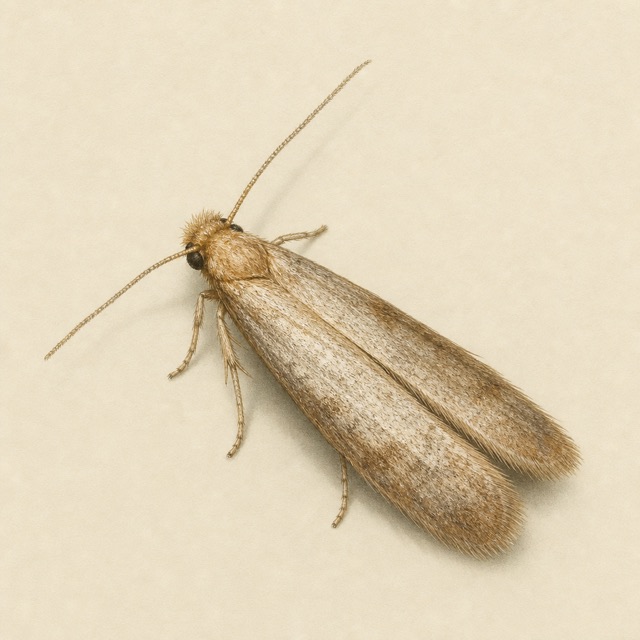
Discovering mysterious holes in your favorite wool sweater or silk scarf is the calling card of clothes moths. These sneaky fabric destroyers cause millions in damage annually, yet most homeowners never actually see the culprit—it's the larvae, not the adult moths, eating through your wardrobe. The good news? With the right approach, you can eliminate them completely and protect your textiles for good.
Clothes Moths: Complete Guide are identifiable by their Golden buff to pale brown with silky sheen coloring and 1/4 - 1/2 inch (adults) size. Scientific name: Tineola bisselliella (webbing) or Tinea pellionella (casemaking). They have distinct physical features that help differentiate them from similar pests.
Signs of Infestation
- •Physical sightings of the pest in or around the affected area
- •Damage patterns characteristic of this pest's feeding or nesting behavior
- •Droppings, shed skins, or other biological evidence of infestation
Key Inspection Areas
- •Areas where Dark closets, storage boxes, upholstered furniture, carpets, and undisturbed areas with natural fibers is commonly found
- •Entry points and harborage sites specific to this pest
- •Food and water sources that attract this pest
When to Inspect
Inspect during peak activity times for this pest. Check regularly during their active season (Year-round indoors, more active in warmer months).
Inspection Tools
Flashlight for inspecting dark areas, appropriate traps for monitoring
Identify the Infestation Source
Inspect all natural fiber items including wool, silk, cashmere, fur, and feathers. Look for tiny holes, silken webbing, cocoons, or small cream-colored larvae (they look like tiny white caterpillars). Check overlooked areas like the back of closets, under furniture, and inside stored luggage. Adult moths are weak fliers that avoid light, so if you see moths near lamps, those are likely harmless pantry moths instead.
Remove and Treat Infested Items
Bag all infested clothing immediately to prevent spread. Washable items should go through a hot water cycle (at least 120°F) followed by a high-heat dryer cycle for 30 minutes—this kills all life stages. For dry-clean-only items, either get them professionally cleaned or freeze them at 0°F for at least 72 hours in sealed bags. Discard heavily damaged items that are beyond repair to eliminate egg reservoirs.
Deep Clean All Storage Areas
Vacuum every inch of your closets, drawers, and storage spaces, paying special attention to corners, cracks, and baseboards where larvae hide. Use the crevice tool to get into tight spaces. Immediately dispose of the vacuum bag outside your home. Wipe down all surfaces with a mixture of white vinegar and water, or use a diluted solution of Lysol to kill remaining eggs and larvae.
Deploy Pheromone Traps
Place pheromone traps like Terro Clothes Moth Traps or MothPrevention traps in closets and storage areas. These use sex pheromones to attract and trap male moths, breaking the breeding cycle. Position traps at shelf height or higher since adult moths prefer elevated areas. Replace traps every 3 months, and monitor catch rates to gauge infestation severity—a sudden increase means you need to reinspect for missed larvae hotspots.
Apply Targeted Insecticide Treatment
For severe infestations, spray closet corners, baseboards, and cracks with a residual insecticide containing permethrin or deltamethrin like Suspend SC or Demon WP. Focus on areas where carpet meets walls and behind baseboards. Never spray directly on clothing—this is for structural treatment only. For upholstered furniture harboring larvae, use CimeXa insecticidal dust in seams and crevices, as it's fabric-safe and highly effective against larvae.
Implement Natural Deterrents
Cedar products (blocks, hangers, or rings) naturally repel adult moths but won't kill eggs or larvae—refresh cedar by sanding lightly every few months to release oils. Place lavender sachets, dried rosemary, or cloves in drawers and closets as additional deterrents. Household Essentials CedarFresh products work well for ongoing prevention. These methods work best after you've eliminated the active infestation through cleaning and treatment.
Store Clothing Properly
Store off-season woolens and delicate fabrics in airtight containers or sealed plastic bags—moths cannot penetrate these barriers. Before storage, ensure all items are freshly cleaned, as moths are attracted to body oils, sweat, and food stains. Add cedar rings or lavender sachets to storage containers for extra protection. Avoid cardboard boxes, which larvae can chew through and which may already contain eggs from the manufacturing facility.
Maintain Long-Term Prevention
Regularly air out and inspect stored clothing every 2-3 months, bringing items into sunlight when possible—moths hate light and disturbance. Keep closets well-lit and ventilated, as moths prefer dark, undisturbed spaces. Brush wool coats and sweaters after wearing to remove eggs before they hatch. Continue using pheromone traps year-round as an early warning system, and vacuum closets monthly to prevent reinfestation.
- 1Eliminate food sources and properly store food items
- 2Reduce moisture and fix any water leaks
- 3Seal entry points and potential access routes
- 4Maintain cleanliness and reduce clutter that provides harborage
- 5Monitor regularly and address problems early before populations grow
What's the difference between clothes moths and pantry moths?
Clothes moths (buff-colored, 1/4 inch) avoid light and are rarely seen flying around. Pantry moths (Indian meal moths) are larger, have distinctive wing patterns, and are attracted to light. If moths are flying near your kitchen or lights, they're pantry moths. Clothes moths hide in dark closets and their larvae eat fabric, while pantry moth larvae infest dry foods like grains and cereals.
Can clothes moths damage synthetic fabrics?
Clothes moth larvae primarily feed on natural animal fibers like wool, silk, cashmere, fur, and feathers because they need keratin protein. However, they'll damage blended fabrics to reach natural fibers and may chew through synthetics to access food sources underneath. Pure synthetic materials like polyester and nylon alone won't sustain them, but soiled synthetic clothing with food stains or body oils can still attract them.
How long does it take to completely eliminate a clothes moth infestation?
Expect 2-4 months for complete elimination with consistent treatment. The clothes moth life cycle takes 4-6 months from egg to adult, so you need to break the cycle completely. You'll see adult moths caught in traps for several weeks even after treatment because pupae continue emerging. Keep monitoring with pheromone traps for at least 3 months after seeing your last moth to confirm eradication.
Are clothes moths dangerous to humans or pets?
No, clothes moths pose no health risk to humans or pets—they don't bite, sting, or spread disease. The damage is purely economic, destroying valuable textiles and heirlooms. The insecticides used for treatment (when applied correctly to structural areas, not directly on clothing) are also low-risk. The main concern is the emotional and financial cost of losing irreplaceable wool rugs, vintage clothing, or family heirloom fabrics.
Why do I keep getting clothes moths even after treatment?
Recurring infestations usually mean you missed a reservoir of larvae or eggs in overlooked items like old upholstered furniture, wool rugs, pet beds with natural fibers, or stored items in attics and basements. Moths can also re-enter your home on secondhand clothing, antique furniture, or rugs purchased at estate sales. Always quarantine and inspect new textile items, especially vintage or used goods, and check less-obvious breeding sites like taxidermy, piano felts, or old wool insulation.
Quick Facts
- Size
- 1/4 - 1/2 inch (adults)
- Color
- Golden buff to pale brown with silky sheen
- Habitat
- Dark closets, storage boxes, upholstered furniture, carpets, and undisturbed areas with natural fibers
- Active Season
- Year-round indoors, more active in warmer months
Danger Level: Medium
This pest can cause health issues or property damage if left untreated.