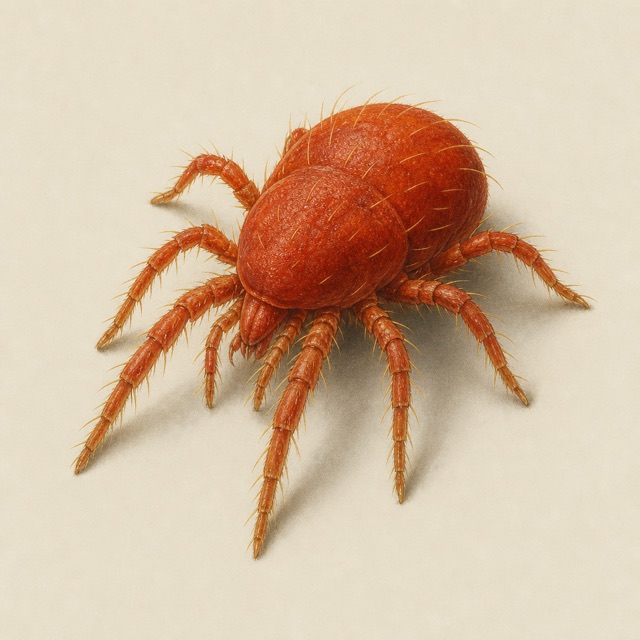
Those tiny red dots crawling on your sunny windowsills aren't baby spiders—they're clover mites, and they're invading by the thousands. While completely harmless to humans and pets, these microscopic lawn dwellers can leave red stains on curtains and walls when crushed, turning a minor nuisance into a frustrating cleaning nightmare. The good news? A few strategic treatments can stop them in their tracks.
Clover Mites: Complete Guide are identifiable by their Reddish-brown to dark red coloring and 1/64 inch (smaller than a pinhead) size. Scientific name: Bryobia praetiosa. They have distinct physical features that help differentiate them from similar pests.
Signs of Infestation
- •Physical sightings of the pest in or around the affected area
- •Damage patterns characteristic of this pest's feeding or nesting behavior
- •Droppings, shed skins, or other biological evidence of infestation
Key Inspection Areas
- •Areas where Lawns, gardens, tree bark, sunny foundation walls, and siding; migrate indoors through windows and tiny cracks is commonly found
- •Entry points and harborage sites specific to this pest
- •Food and water sources that attract this pest
When to Inspect
Inspect during peak activity times for this pest. Check regularly during their active season (Spring and fall (most active during temperature extremes)).
Inspection Tools
Flashlight for inspecting dark areas, appropriate traps for monitoring
Identify Clover Mites vs Other Red Bugs
Confirm you're dealing with clover mites by looking for their distinctive front legs that extend forward like antennae—they're much longer than their other legs. Use a white paper towel to crush one; clover mites leave a bright red stain that's pigment from plant chlorophyll, not blood. If you see them clustered on sunny sides of your home in spring or fall, you've got a positive ID.
Create a Vegetation-Free Barrier Zone
Pull back grass, ground covers, and plants at least 18-24 inches from your foundation—this is the single most effective prevention strategy. Clover mites feed on lawn grasses and clover, so creating this bare strip or filling it with gravel eliminates their food source near entry points. This buffer zone also helps you spot where they're congregating before they enter your home.
Apply Perimeter Insecticide Treatment
Spray a residual insecticide like Talstar P or Tempo SC Ultra around your foundation, focusing on the first 3 feet up the wall and 10 feet out onto the lawn. Mix according to label directions and apply with a pump sprayer, paying special attention to sunny southern and western exposures where clover mites congregate. Reapply every 30-60 days during active seasons for continuous protection.
Seal Entry Points and Window Gaps
Clover mites can squeeze through openings the width of a human hair, so caulk all foundation cracks, window frames, and door thresholds with a quality silicone sealant. Install or replace weatherstripping on doors and windows, and ensure window screens fit tightly without gaps. Focus on sunny exposures first, as these are their preferred entry zones.
Vacuum Up Indoor Invaders (Don't Crush Them)
Use a vacuum with a hose attachment to remove clover mites from windowsills, walls, and curtains—never swat or crush them, as they leave stubborn red stains. Empty the vacuum bag or canister immediately into an outdoor trash can. For heavy infestations, vacuum daily during peak migration periods until outdoor treatments take effect.
Reduce Over-Fertilization of Your Lawn
Clover mites thrive on lush, over-fertilized lawns with high nitrogen content. Scale back your fertilization schedule and avoid heavy spring applications that create the thick, succulent grass they love. A slightly less vigorous lawn near your foundation is actually beneficial for clover mite control without sacrificing overall lawn health.
Apply Lawn Treatment for Heavy Infestations
For severe lawn infestations, treat grass areas within 20 feet of your home with bifenthrin or lambda-cyhalothrin products like Bifen IT. Apply in early spring before populations explode, focusing on sunny areas where you see reddish masses moving. Water lightly after application to help the product penetrate the thatch layer where mites live.
Monitor and Maintain Seasonal Defenses
Mark your calendar for early April and late September—the two peak clover mite seasons—and inspect sunny walls for activity. Reapply perimeter treatments before you see the mites, not after they've invaded. Keep your vegetation barrier maintained year-round, as this passive defense works 24/7 without any chemicals or ongoing costs.
- 1Eliminate food sources and properly store food items
- 2Reduce moisture and fix any water leaks
- 3Seal entry points and potential access routes
- 4Maintain cleanliness and reduce clutter that provides harborage
- 5Monitor regularly and address problems early before populations grow
Are clover mites dangerous to humans or pets?
Clover mites are completely harmless—they don't bite, sting, or transmit diseases to humans or pets. They don't even feed on anything in your home; they're just plant-eaters that accidentally wander inside. The only damage they cause is cosmetic red staining on fabrics and surfaces when crushed, which can be annoying but poses no health risk whatsoever.
Why do I suddenly have thousands of clover mites?
Clover mites reproduce rapidly in spring and fall when temperatures are moderate, and populations can explode into the millions in a healthy lawn. They migrate up walls en masse to escape temperature extremes or seek better feeding grounds, and your home's sunny foundation provides the perfect warm refuge. Over-fertilized lawns with thick grass near the house create ideal breeding grounds that lead to these overwhelming invasions.
How do I remove clover mite stains from walls and curtains?
Blot (don't rub) fresh stains immediately with a damp cloth and mild detergent; rubbing spreads the pigment deeper into fabrics. For dried stains on walls, use a magic eraser sponge or a paste of baking soda and water, testing in an inconspicuous area first. On washable fabrics, pre-treat with enzyme-based stain removers like OxiClean before laundering in cold water—hot water can set the stain permanently.
Will clover mites go away on their own?
Clover mites will naturally disappear when temperatures become too extreme (hot summer or freezing winter), but they'll return every spring and fall without fail if conditions remain favorable. Without intervention, you'll experience the same invasion cycle year after year. Creating a vegetation barrier and applying preventive treatments breaks this cycle and provides long-term relief rather than just waiting out each seasonal wave.
Can I use diatomaceous earth for clover mites?
Diatomaceous earth (DE) has limited effectiveness against clover mites because they're so tiny and can simply walk around treated areas. While DE works well for larger crawling insects, clover mites are better controlled with liquid residual insecticides that create an impassable barrier. If you prefer non-chemical options, focus instead on the vegetation-free barrier zone and physical exclusion through caulking, which provide excellent control without any pesticides.
Quick Facts
- Size
- 1/64 inch (smaller than a pinhead)
- Color
- Reddish-brown to dark red
- Habitat
- Lawns, gardens, tree bark, sunny foundation walls, and siding; migrate indoors through windows and tiny cracks
- Active Season
- Spring and fall (most active during temperature extremes)
Danger Level: Low
This pest is primarily a nuisance but can be eliminated with DIY methods.