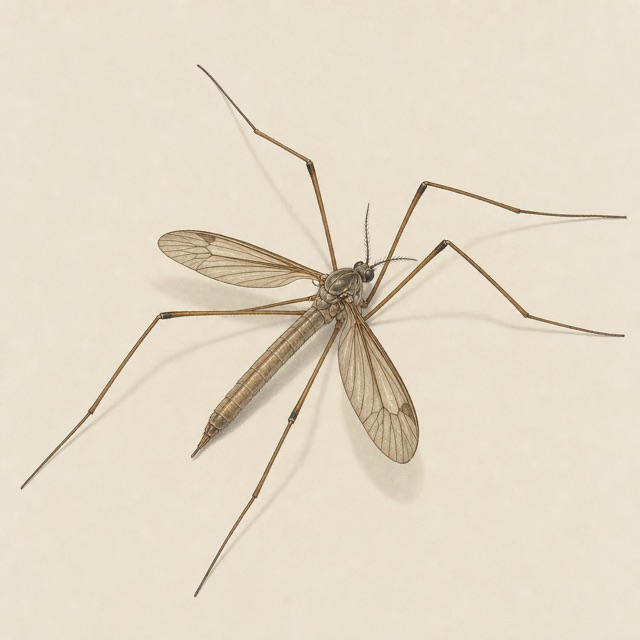
Crane flies look like giant mosquitoes but are completely harmless to humans — they don't bite, sting, or carry disease. However, their larvae (leatherjackets) can cause serious damage to lawns by feeding on grass roots. If you have brown patches appearing in your lawn each spring, crane fly larvae may be the culprit. Here's how to protect your turf.
Adult crane flies resemble oversized mosquitoes with extremely long, fragile legs and slender bodies. They measure 1 to 2.5 inches including legs. They have a single pair of wings, V-shaped wing venation, and no functional mouthparts as adults. They're clumsy fliers attracted to lights at night.
Similar Pests
Often mistaken for giant mosquitoes, but crane flies have much longer legs, don't bite, and lack the piercing mouthparts of mosquitoes. Mosquito hawks (robber flies) are stockier and actually catch prey in flight.
Signs of Infestation
- •Large, leggy flies clustering around porch lights and windows at night in late summer
- •Brown or dead patches in the lawn that peel back easily, especially in spring
- •Gray-brown, worm-like larvae (leatherjackets) found just below the soil surface
- •Birds pecking aggressively at lawn areas — they're feeding on the larvae below
Key Inspection Areas
- •Lawn areas showing brown patches or thinning turf, especially in shaded or moist spots
- •Just below the soil surface in affected lawn areas — dig down 1-2 inches to find larvae
- •Around exterior lights where adult crane flies congregate at night
- •Garden beds and moist soil areas adjacent to damaged lawn
When to Inspect
Check for larvae in early spring (March-April) or late fall (September-October) when they're actively feeding near the soil surface. Adults emerge in late summer through fall. Test for larvae by soaking a 1-square-foot section of lawn with soapy water — larvae will surface within 10 minutes.
Inspection Tools
Spade or trowel for soil inspection, bucket of soapy water for larval flush test, flashlight for checking adult activity at night
Confirm crane fly larvae are causing lawn damage
Soak a 1-square-foot section of damaged lawn with soapy water (2 tablespoons dish soap per gallon). If more than 25 leatherjackets surface within 10 minutes, treatment is warranted.
Apply beneficial nematodes to the lawn
Steinernema feltiae nematodes are the most effective biological control. Apply in early fall or spring when soil temperatures are 50-65F. Water the lawn before and after application. Nematodes enter and kill larvae within 48 hours.
Apply a lawn insecticide if needed
For severe infestations, apply a granular insecticide containing chlorantraniliprole (GrubEx) or trichlorfon (Dylox) to affected areas. Water in thoroughly. Chemical treatment is most effective in fall when larvae are small.
Improve lawn drainage and reduce moisture
Aerate compacted areas, fix drainage issues, and avoid overwatering. Crane flies lay eggs in moist soil — drier conditions discourage egg-laying and make the environment less favorable for larvae.
Overseed and repair damaged areas
Overseed thin or damaged lawn areas in early fall with appropriate grass seed. A thick, healthy lawn can tolerate moderate crane fly larval feeding without visible damage.
Reduce adult crane fly attraction to your home
Switch exterior lights to yellow or sodium vapor bulbs. Close blinds at night during peak adult emergence (August-September). Adults are harmless but enter homes through open doors and windows.
Monitor lawn health in spring
Check repaired areas in spring for signs of continued damage. Repeat the soapy water flush test. If larval counts remain above 25 per square foot, retreat with nematodes or insecticide.
- 1Maintain a healthy, thick lawn through proper mowing, fertilizing, and overseeding to outcompete larval damage
- 2Improve lawn drainage — crane flies prefer moist, compacted soil for egg laying
- 3Dethatch lawns in fall to reduce habitat for larvae near the soil surface
- 4Aerate compacted soil in fall to improve drainage and reduce egg-laying sites
- 5Reduce exterior lighting or switch to yellow bulbs to minimize adult attraction to your home
- 6Encourage natural predators — birds, ground beetles, and parasitic wasps all feed on crane fly larvae
Seasonal Note
Prevention timing is critical. Treat for larvae in early fall (September-October) when eggs hatch, or early spring (March-April) when larvae resume feeding. Adult crane flies are harmless and don't require treatment.
Do crane flies bite?
No. Adult crane flies cannot bite — they have no functional mouthparts and don't feed at all. They're often called 'mosquito hawks' but they don't eat mosquitoes either. They exist only to mate and lay eggs.
Are crane flies dangerous?
Adult crane flies are completely harmless to humans and pets. The only concern is their larvae (leatherjackets), which can damage lawns by feeding on grass roots. Healthy lawns can usually tolerate low to moderate larval populations.
Why are there so many crane flies around my house?
Adult crane flies emerge from lawn soil in late summer and fall and are strongly attracted to lights. Large swarms near your home indicate a healthy population in nearby lawn areas. Reducing exterior lighting helps.
What are leatherjackets?
Leatherjackets are crane fly larvae — gray-brown, legless, worm-like grubs up to 1.5 inches long with tough, leathery skin. They live in the top 2-3 inches of soil and feed on grass roots, causing brown patches in lawns.
When is the best time to treat for crane flies?
Early fall (September-October) is ideal because larvae are small and vulnerable. Early spring (March-April) is the second-best window when larvae resume feeding near the surface. Summer treatment is ineffective because larvae are deep in the soil.
Quick Facts
- Size
- 1 - 2.5 inches (adults, including legs)
- Color
- Grayish-brown with long, delicate legs
- Habitat
- Lawns, meadows, gardens, and moist soil areas
- Active Season
- Adults emerge in late summer to fall; larvae damage lawns in fall and spring
Danger Level: Low
This pest is primarily a nuisance but can be eliminated with DIY methods.