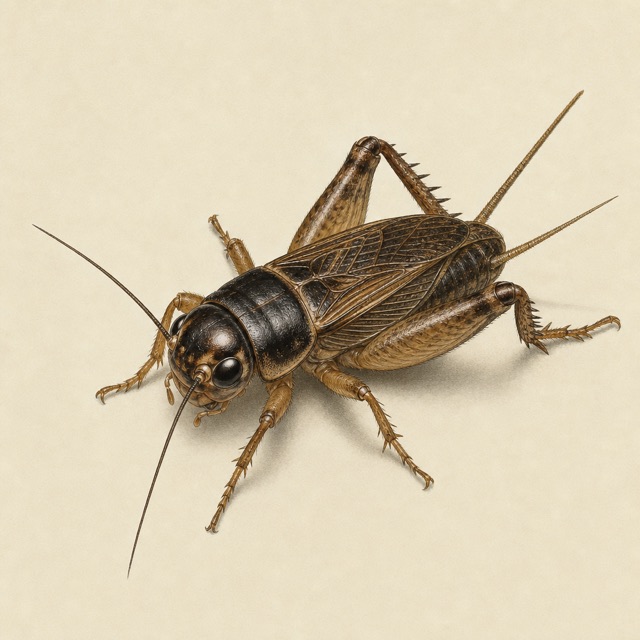
That relentless chirping at 3 AM isn't just annoying—it's a male cricket serenading potential mates right inside your home. While a single cricket might seem harmless, these jumping invaders often arrive in numbers during fall, and their constant noise can drive even the most patient homeowner to desperation. The good news? Crickets are one of the easier pests to eliminate once you understand their behavior.
House crickets are 3/4 to 1 inch long, light yellowish-brown with three dark bands across the head. They have long antennae (longer than body), large hind legs for jumping, and cylindrical bodies. Field crickets are larger and black.
Similar Pests
Grasshoppers have shorter antennae (shorter than body) and are usually green. Katydids are green and have longer, leaf-like wings. Camel crickets (cave crickets) have humped backs and no wings.
Signs of Infestation
- •Loud chirping sounds at night from males calling for mates
- •Crickets hopping near lights, windows, or doors at night (attracted to light)
- •Small irregular holes chewed in fabrics, paper, or plants
- •Frass (small dark droppings) near hiding spots in basements or garages
Key Inspection Areas
- •Basements, crawl spaces, and garages with damp conditions
- •Near water heaters, furnaces, and fireplaces where it's warm
- •Behind appliances, in storage boxes, and cluttered areas
- •Outside in tall grass, mulch, woodpiles, and landscape stones
When to Inspect
Inspect at night when crickets are most active and calling. Check late summer and fall when populations peak and cooler weather drives them indoors.
Inspection Tools
Flashlight for night inspection, sticky traps to catch crickets, listening for chirping to locate nests
Locate Their Entry Points and Hiding Spots
Start by tracking where the chirping is coming from—crickets typically hide in dark, warm areas like basements, crawl spaces, and behind appliances. Check around doors, windows, foundation cracks, and utility penetrations where they're sneaking inside. Use a flashlight at night when they're most active to spot them; they'll often be near floor-level hiding spots like cardboard boxes, laundry piles, or cluttered storage areas.
Seal Up Exterior Cracks and Gaps
Crickets slip through surprisingly small openings, so grab some weatherstripping, door sweeps, and caulk to seal entry points. Focus on gaps under doors (install door sweeps if missing), cracks in your foundation, and spaces around windows, pipes, and vents. This is your most important long-term defense—crickets are drawn to the warmth and light of your home as temperatures drop, so blocking their access prevents future invasions.
Apply Indoor Granular Bait in Problem Areas
Use Niban Granular Bait or Intice 10 Perimeter Bait in areas where you've seen or heard crickets—basements, garages, utility rooms, and along baseboards. Crickets are attracted to these food-based baits and will consume them, dying within 24-48 hours. Apply in small amounts in cracks, crevices, and behind appliances where pets and kids won't access them.
Create a Perimeter Barrier Outside
Spray a residual insecticide like Talstar P or Bifen I/T around your home's exterior foundation, creating a 3-foot barrier up the wall and out from the foundation. Pay special attention to entry points, window wells, and areas with heavy vegetation. Crickets crossing this treated zone will pick up the insecticide and die, preventing new invaders from getting inside—reapply every 2-3 months during cricket season.
Reduce Outdoor Attractants
Crickets thrive in moisture and organic debris, so pull mulch back at least 12 inches from your foundation and keep grass trimmed short. Remove piles of leaves, firewood, stones, and other hiding spots near your home's exterior. Turn off exterior lights at night or switch to yellow "bug lights"—bright white lights attract crickets and other insects that congregate near doors and windows.
Use Sticky Traps for Stragglers
Place glue boards or sticky traps along baseboards, in corners, and near known cricket pathways to catch individuals that made it inside. Trapper Max or Catchmaster glue boards work well and also serve as monitoring tools to see if your other efforts are working. Check and replace traps every few days—you'll likely catch the most crickets in the first week.
Vacuum and Remove Hiding Spots Indoors
Crickets hide in clutter, so tidy up basements, garages, and storage areas to eliminate their preferred hiding spots. Vacuum thoroughly along baseboards, in corners, and under furniture to remove any crickets, eggs, or debris. Keep storage boxes off the floor using shelving, and store firewood outside rather than in the garage or basement.
Monitor and Maintain Your Defenses
Cricket invasions are seasonal, peaking in late summer and fall when they seek warm overwintering sites. Reapply your exterior barrier spray before cricket season begins (late July/August) and inspect weatherstripping and door sweeps annually. If you continue hearing crickets despite these efforts, check for moisture issues in crawl spaces or basements—excess humidity makes your home especially attractive to these moisture-loving insects.
- 1Reduce outdoor lighting or switch to yellow bug lights (crickets are attracted to bright lights)
- 2Seal cracks around doors, windows, foundations, and utility entry points
- 3Remove piles of firewood, leaves, stones, and debris from around foundation
- 4Fix leaky outdoor faucets and eliminate standing water sources
- 5Install door sweeps and weatherstripping on all exterior doors and garage doors
- 6Keep grass mowed and vegetation trimmed away from house
Seasonal Note
Crickets migrate indoors in fall when temperatures drop. Seal entry points in late summer before migrations begin.
Why do I only have crickets at night?
Crickets are nocturnal and do most of their chirping, feeding, and moving around after dark. During the day, they hide in dark, secluded spots like behind appliances, in closets, or under furniture. The males chirp at night to attract females, which is why the noise seems so much worse when you're trying to sleep—they're literally most active when your house is quietest.
Can crickets cause any real damage to my home?
Crickets are mostly just annoying rather than destructive, but they can cause minor damage in large numbers. They'll occasionally chew on fabrics like wool, silk, and cotton (especially if soiled with food or sweat), and may nibble on paper or plants. The biggest issue is really the incessant chirping and the fact that they attract predators like spiders and centipedes into your home.
How long do crickets live indoors?
House crickets can live 8-10 weeks indoors if they find adequate food and moisture, continuing to chirp and potentially reproduce during that time. However, most crickets that accidentally wander inside die much sooner from lack of food, moisture, or appropriate habitat. Field crickets that invade homes in fall typically only survive a few weeks indoors before dying naturally, but that's still plenty of time to drive you crazy with chirping.
What's the fastest way to catch a cricket in my bedroom?
Set up a homemade trap using a jar or bowl with a few breadcrumbs or a piece of apple inside—place it where you heard the cricket and leave it overnight. Alternatively, wait until you hear chirping, approach slowly with a flashlight, and use a cup and piece of paper to trap it against the wall. Crickets jump erratically when startled, so slow, deliberate movements work better than lunging at them.
Do crickets come back every year?
Yes, cricket invasions are seasonal and will recur annually, especially in late summer and fall when outdoor temperatures drop. They're seeking warm places to overwinter, and if your home provided good shelter once, they'll try again. The key to breaking the cycle is maintaining exterior barriers, sealing entry points before cricket season, and eliminating outdoor attractants so they never make it inside in the first place.
Quick Facts
- Size
- 3/4 - 1 inch
- Color
- Light brown to black, depending on species
- Habitat
- Outdoor vegetation, mulch, basements, garages, and warm hiding spots near ground level
- Active Season
- Late summer through fall (peak invasion period)
Danger Level: Low
This pest is primarily a nuisance but can be eliminated with DIY methods.