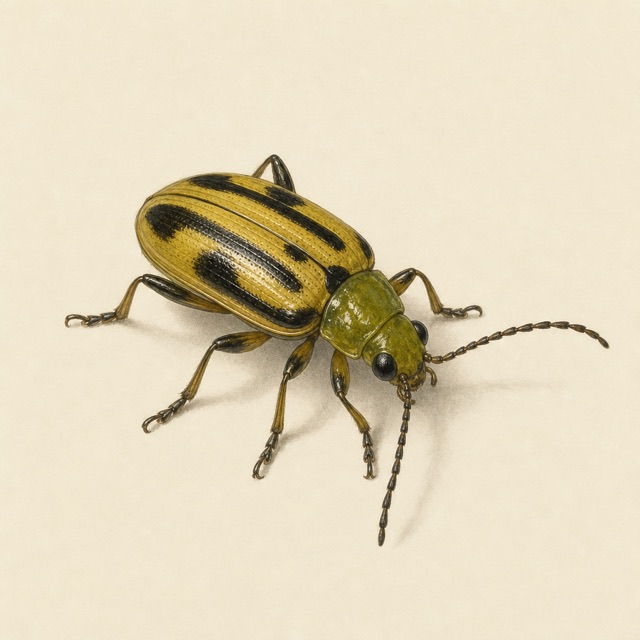
Cucumber beetles are one of the most damaging pests for cucurbit crops, attacking cucumbers, melons, squash, and pumpkins. Beyond direct feeding damage to leaves, flowers, and fruit, these beetles transmit bacterial wilt and cucumber mosaic virus, diseases that can kill plants within days. Early detection and rapid response are essential to protect your harvest.
Cucumber beetles are small, oval-shaped beetles approximately a quarter inch long. The striped cucumber beetle has a yellow-green body with three distinct black longitudinal stripes on its wing covers. The spotted cucumber beetle has a similar body color but displays twelve black spots instead of stripes.
Similar Pests
Striped cucumber beetles can be confused with western corn rootworm beetles, which are slightly larger and lack the distinct head coloring. Spotted cucumber beetles may be confused with ladybugs, but their elongated oval shape and yellow-green color distinguish them.
Signs of Infestation
- •Ragged holes in leaves and petals of cucurbit plants
- •Scarring and feeding damage on fruit rinds
- •Wilting plants that do not recover with watering (indicates bacterial wilt)
- •Beetles clustering on flowers and at the base of plants
Key Inspection Areas
- •On flowers and leaf undersides of cucumber, squash, and melon plants
- •At the base of cucurbit stems where beetles congregate
- •Under plant debris and mulch near cucurbit beds
- •On seedlings and transplants within the first two weeks of planting
When to Inspect
Inspect during warm mornings when beetles are active but slower-moving. Check transplants daily for the first two weeks after planting, as this is the most vulnerable period.
Inspection Tools
Yellow sticky traps for monitoring, hand lens for identifying species, row cover material for protection
Install yellow sticky traps
Place yellow sticky traps at plant canopy height throughout your cucurbit beds to monitor beetle populations. Check traps twice weekly and record counts. Action thresholds are generally one beetle per plant for seedlings and five per plant for established vines.
Apply floating row covers
Cover cucurbit beds with lightweight floating row covers immediately after transplanting or seed emergence. Secure edges with soil, boards, or landscape staples. Remove covers when female flowers appear to allow pollination, or hand-pollinate under covers.
Hand-pick beetles in early morning
In cool early-morning temperatures, beetles are sluggish and easy to pick off plants. Drop them into a bucket of soapy water. For small gardens, this can be an effective daily control method during peak emergence.
Apply neem oil or pyrethrin spray
Spray plants with neem oil (using azadirachtin-based concentrate) or OMRI-listed pyrethrin at dusk to avoid harming pollinators. Coat both upper and lower leaf surfaces thoroughly. Reapply every seven to ten days and after rain.
Use trap crops strategically
Plant Blue Hubbard squash or a highly attractive cucurbit variety as a perimeter trap crop two weeks before your main crop. Concentrate beetle control efforts on the trap crop using insecticidal sprays to intercept beetles before they reach your primary plants.
Apply beneficial nematodes to soil
Drench soil with Heterorhabditis bacteriophora nematodes in spring and late summer to target cucumber beetle larvae in the soil. Water the area thoroughly before and after application and apply during overcast conditions or evening hours.
Remove and destroy infected plants
If plants show symptoms of bacterial wilt (leaves wilting irreversibly, sticky sap strand test positive), remove and destroy the entire plant immediately. Do not compost infected material. This prevents beetles from spreading the disease to healthy plants.
- 1Use floating row covers over cucurbit seedlings immediately after planting and remove only when flowering begins for pollination
- 2Delay planting cucurbits until early summer to avoid the peak first-generation beetle emergence
- 3Apply kaolin clay spray to plants as a physical deterrent that coats leaves with a white film beetles avoid
- 4Interplant cucurbits with radishes, tansy, or catnip which may repel cucumber beetles
- 5Rotate cucurbit crops to a different bed each year to break the beetle life cycle
- 6Remove crop debris immediately after harvest to eliminate overwintering sites
Seasonal Note
Adult cucumber beetles overwinter in leaf litter and garden debris, emerging in late spring. Fall cleanup is critical, and spring trap-cropping with early-planted squash can lure beetles away from your main crop.
Can cucumber beetles kill my plants?
Yes, cucumber beetles can kill plants both through heavy feeding damage on seedlings and by transmitting bacterial wilt disease. Bacterial wilt blocks the plant's vascular system and can kill a cucumber or melon vine within one to two weeks of infection.
Do cucumber beetles bite humans?
Cucumber beetles do not bite or sting humans. They are exclusively plant feeders. However, handling large numbers may cause minor skin irritation in sensitive individuals from the beetles' defensive secretions.
What is the sticky sap test for bacterial wilt?
Cut a wilting stem near the base and touch the cut surface to a knife blade. Slowly pull the knife away. If a thin, sticky thread of bacterial ooze stretches between the stem and knife, the plant is infected with bacterial wilt and should be removed.
Will cucumber beetles eat tomatoes?
Cucumber beetles strongly prefer cucurbit crops but may feed on other plants including tomatoes, beans, corn, and various flowers when cucurbits are unavailable. Damage to non-cucurbit crops is usually minor.
How many generations of cucumber beetles occur per year?
Cucumber beetles typically produce one to two generations per year depending on climate. In warmer regions, two full generations can develop, meaning beetle pressure can intensify in late summer as the second generation emerges.
Quick Facts
- Size
- 0.25 inches long
- Color
- Striped species: yellow-green with three black stripes; Spotted species: yellow-green with twelve black spots
- Habitat
- Cucurbit gardens, melon patches, squash fields, and surrounding weedy areas
- Active Season
- Late spring through early fall, adults emerge when soil temperatures reach 65°F
Danger Level: Medium
This pest can cause health issues or property damage if left untreated.