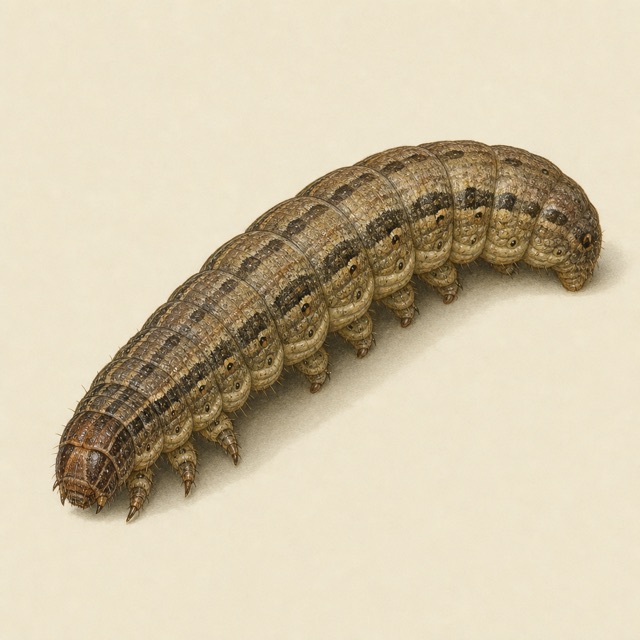
Cutworms are among the most frustrating garden pests, attacking at night to sever young seedlings at the soil line like tiny invisible lumberjacks. Gardeners often wake to find their newly transplanted tomatoes, peppers, or flowers toppled overnight with no visible culprit in sight. These plump, soil-dwelling caterpillars are the larvae of several species of night-flying moths and can destroy an entire flat of transplants in a single evening.
Cutworms are smooth, plump caterpillars that curl into a tight C-shape when disturbed. They range in color from gray and brown to greenish-black with various mottled patterns depending on species. They hide in the top inch of soil during the day and emerge at night to feed. Common species include the black cutworm, variegated cutworm, and army cutworm.
Similar Pests
Cutworm damage (stems cut at soil level) can be confused with rabbit or slug feeding, but the clean, angled cut through the stem is distinctive. Grubs (white, C-shaped larvae of beetles) are found in soil but feed on roots rather than cutting stems. Armyworms are related but feed above ground in groups.
Signs of Infestation
- •Young plants cut off cleanly at or just below the soil surface
- •Toppled seedlings lying on the ground with stems severed
- •Plump, curled caterpillars found in the top inch of soil near damaged plants
- •Damage occurring exclusively overnight, with new plants cut each morning
Key Inspection Areas
- •In the top one to two inches of soil within six inches of damaged plants
- •Under garden debris, rocks, and mulch near affected seedlings
- •In grassy or weedy areas adjacent to garden beds
- •Around the base of transplants and direct-seeded crops
When to Inspect
Inspect at night with a flashlight when cutworms are actively feeding above ground. During the day, dig carefully in the top two inches of soil around recently damaged plants to find the curled caterpillars hiding near their last meal.
Inspection Tools
Flashlight for nighttime inspections, small trowel for digging around damaged plants, cardboard or tin cans for making plant collars
Install stem collars on transplants
Place physical barriers around each transplant stem at planting time. Cut cardboard toilet paper rolls in half, slit them lengthwise, and wrap around stems, pushing one inch into the soil and leaving two inches above ground. Alternatively, use three-inch sections of tin cans or plastic cups with the bottoms removed.
Search and destroy cutworms in soil
After finding a cut plant, dig carefully in the soil within a six-inch radius and one to two inches deep. You will almost always find the culprit curled in a C-shape nearby. Destroy any cutworms found. Check all adjacent transplants at the same time.
Conduct nighttime patrols
Go out with a flashlight two to three hours after dark and inspect the base of transplants. Cutworms will be on the soil surface feeding or climbing stems. Hand-pick and destroy them. Two to three consecutive nights of patrol can dramatically reduce the active population.
Apply Bt granules or spray to soil
Broadcast Bt var. kurstaki granules on the soil surface around transplants in the evening. Cutworms ingest the Bt while feeding on treated plant material at the soil line. Alternatively, spray liquid Bt on the lower stems and surrounding soil. Reapply weekly and after rain.
Use bran bait with Bt
Mix moistened wheat bran with Bt var. kurstaki concentrate and a small amount of molasses. Scatter the bait around the base of transplants in the evening. Cutworms are attracted to the bran, ingest the Bt, and die within one to three days. This is a highly effective organic method.
Apply diatomaceous earth around stems
Create a ring of food-grade diatomaceous earth two inches wide around each transplant stem on the soil surface. The abrasive particles damage cutworm skin as they crawl through it. Reapply after rain or irrigation as diatomaceous earth loses effectiveness when wet.
Prepare beds properly before planting
Cultivate garden beds and remove all weeds, grass, and crop debris at least two to three weeks before transplanting. This starves any existing cutworms and may cause them to leave or die. Avoid planting directly into recently tilled sod or weedy ground where cutworm populations are highest.
- 1Install physical collars around transplant stems at planting time using cardboard tubes or tin cans with bottoms removed
- 2Prepare garden beds two to three weeks before planting to starve cutworms of food before transplants arrive
- 3Remove weeds and grass from garden beds well in advance of planting
- 4Till or cultivate soil before planting to expose and kill cutworm larvae and pupae
- 5Delay transplanting until seedlings have thick, sturdy stems that are harder to cut
- 6Encourage natural predators such as ground beetles, birds, toads, and parasitic wasps
Seasonal Note
Cutworm moths lay eggs on grasses, weeds, and crop stubble in late summer and fall. Larvae may overwinter in soil or eggs may hatch in early spring. The highest-risk period is the first four to six weeks after spring planting when stems are thin and tender.
Why do cutworms cut plants but not eat them?
Cutworms actually do feed on the severed plant, but they typically consume only a portion of the stem and leaves before retreating underground at dawn. A single cutworm may cut several plants in one night, feeding briefly on each, which is why the damage appears disproportionate to the feeding.
Will cutworms attack established plants?
Cutworms primarily threaten young seedlings and small transplants with thin, tender stems. Once plants develop woody or thick stems over one-quarter inch in diameter, cutworms generally cannot sever them. Some climbing cutworm species may feed on foliage of larger plants.
How do I know if I have cutworms before they damage my plants?
Prepare beds early and monitor for cutworm presence by placing small bait stations (moistened bran piles) on the soil surface in the evening. Check under them in the morning. You can also look for cutworm moths (small, brownish-gray night-flying moths) around outdoor lights in spring.
Do cutworms live in raised beds?
Cutworms can infest raised beds, especially if the bed contains soil with organic matter and is accessible to egg-laying moths. However, raised beds with clean soil mixes and good weed management generally have fewer cutworm problems than in-ground gardens.
What is the best material for cutworm collars?
Cardboard toilet paper or paper towel tubes cut to three-inch sections are effective and biodegradable. Tin cans with both ends removed, plastic cups with bottoms cut out, and even aluminum foil wrapped loosely around stems also work. The key is that the collar extends one inch below and two inches above the soil surface.
Quick Facts
- Size
- 1 to 2 inches long when mature
- Color
- Gray, brown, or greenish-black, often with mottled or striped patterns; curl into a C-shape when disturbed
- Habitat
- Garden soil, especially in beds with heavy organic matter, grass, or weed cover
- Active Season
- Early spring through early summer, most damaging to spring transplants and seedlings
Danger Level: Medium
This pest can cause health issues or property damage if left untreated.