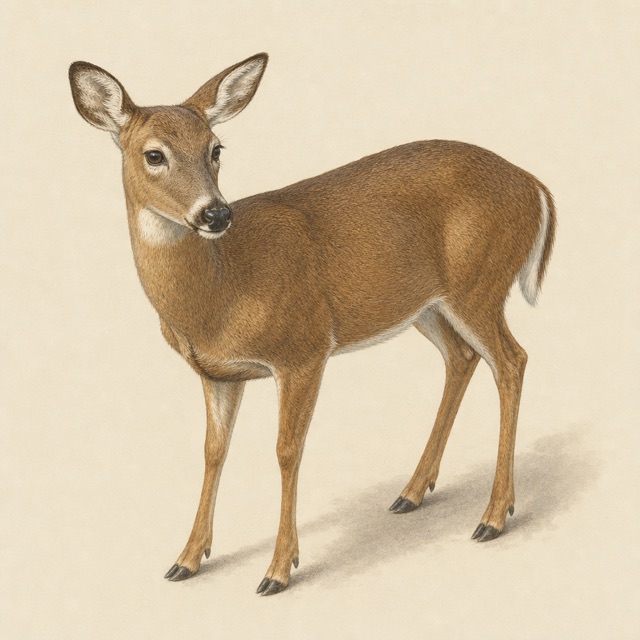
Deer cause over 1 billion dollars in agricultural and landscape damage annually in the United States, and suburban deer populations continue to grow as development encroaches on their habitat. From devouring hostas and tulips to stripping bark from ornamental trees, deer are the most economically damaging wildlife pest for homeowners and gardeners.
White-tailed deer and mule deer are large, graceful herbivores with slender legs, large ears, and a distinctive bounding gait. Males (bucks) grow antlers annually, shedding them in late winter. Females (does) and fawns travel in small family groups. Their large brown eyes and excellent hearing make them highly alert to predators and human activity.
Similar Pests
Elk are significantly larger with different antler structure and are uncommon in most suburban settings. Deer browse damage is distinguished from rabbit damage by the height of feeding (above 2 feet) and the ragged, torn edges of browsed stems, since deer lack upper front teeth and tear rather than cut plant material.
Signs of Infestation
- •Ragged, torn edges on browsed plants above 2 feet high, rather than clean cuts
- •Bark stripped and shredded on young trees from antler rubbing during fall rut
- •Oval, pellet-shaped droppings about half an inch long found in clusters
- •Heart-shaped split-hoof tracks approximately 2 to 3 inches long in garden soil and mulch
Key Inspection Areas
- •Vegetable gardens, rose beds, hosta plantings, and tulip beds
- •Young ornamental and fruit trees, especially smooth-barked varieties
- •Property edges where lawns meet wooded areas or hedgerows
- •Along established deer trails visible as worn paths through vegetation
When to Inspect
Deer feed primarily at dawn and dusk. Inspect gardens in early morning for fresh browse damage. In fall, check young trees daily for antler rub damage. Use a trail camera on property edges to identify deer travel patterns and population size.
Inspection Tools
Trail camera for monitoring activity, flashlight for dawn and dusk observation, measuring tape to document damage height and extent, and garden flags to mark browse lines and trail crossings
Identify deer travel patterns and feeding preferences
Set up trail cameras along property edges and near damaged areas to determine when and where deer enter your property. Note which plants are being targeted, as this guides repellent selection and fencing priorities. Track populations to understand whether you are dealing with a few individuals or a larger herd.
Install deer fencing around priority areas
Erect 8-foot tall fencing around vegetable gardens and high-value landscape plantings. Use black polypropylene deer netting for less visible fencing or welded wire for maximum durability. Ensure the fence is staked tightly to the ground with no gaps at the bottom. For smaller gardens, a double fence system with two 4-foot fences spaced 4 feet apart can be effective, as deer are reluctant to jump into a confined space.
Apply repellent treatments on a rotation schedule
Spray commercial deer repellent on unprotected ornamental plants, shrub borders, and tree foliage up to 6 feet high. Alternate between egg-based and capsaicin-based products every few applications to prevent habituation. Apply in dry weather and reapply every 2 to 4 weeks and after any rainfall exceeding half an inch.
Protect young trees from antler rub damage
Install commercial tree guards, wire cages, or PVC pipe sleeves around the trunks of all young trees with trunk diameters under 4 inches. Guards should extend from the ground to at least 5 feet high. Bucks select smooth-barked trees for rubbing, so prioritize maples, birches, and fruit trees.
Deploy motion-activated deterrents
Position motion-activated sprinklers along identified deer trails and at garden access points. These deliver a startling burst of water when deer approach. Supplement with motion-activated lights or ultrasonic devices. Relocate these deterrents every 2 to 3 weeks, as deer eventually learn to avoid or ignore stationary devices.
Transition to deer-resistant plantings
Gradually replace heavily browsed ornamental plants with deer-resistant alternatives. Deer rarely eat daffodils, lavender, catmint, salvia, ornamental grasses, boxwood, and barberry. Use these as protective borders around more vulnerable plants. No plant is completely deer-proof when populations are high, but resistant varieties dramatically reduce damage.
Implement a long-term integrated management plan
Combine fencing, repellents, resistant plantings, and deterrents for the most effective results. No single method provides complete protection against persistent deer. Review and adjust your strategy each season based on damage patterns. In areas with severe deer pressure, contact your state wildlife agency about community deer management programs or hunting permits.
- 1Install 8-foot tall deer fencing around high-value garden areas using polypropylene mesh or welded wire
- 2Plant deer-resistant species as a border around vulnerable plants, using varieties like boxwood, barberry, lavender, and Russian sage
- 3Apply commercial deer repellent containing putrescent egg solids, blood meal, or capsaicin to vulnerable plants every 2 to 4 weeks
- 4Wrap young tree trunks with commercial tree guards or wire cages to prevent antler rubbing damage
- 5Install motion-activated sprinklers along deer travel routes and near garden entrances
- 6Maintain a clear sightline around gardens by trimming low branches, as deer avoid open areas where they feel exposed
Seasonal Note
Apply repellents before plants begin spring growth and continue through the growing season. Install antler rub guards on young trees by September before the fall rut begins. In winter, deer pressure on remaining green plants like arborvitae and yews intensifies when natural browse is scarce.
What is the most effective way to keep deer out of a garden?
An 8-foot tall fence is the single most reliable deer deterrent. Deer can jump heights of 7 to 8 feet from a standstill, so fences below this height are not consistently effective. For less visible options, black polypropylene deer netting is nearly invisible from 20 feet away while providing a strong physical barrier.
Do deer repellents actually work?
Commercial deer repellents containing putrescent egg solids or capsaicin provide moderate protection when applied consistently. Their effectiveness ranges from 50 to 85 percent depending on deer pressure and alternative food availability. They work best as part of an integrated approach with fencing and resistant plantings, not as a sole protection method.
What plants will deer absolutely not eat?
While no plant is truly deer-proof under extreme browsing pressure, deer very rarely eat daffodils, alliums, foxglove, lavender, Russian sage, catmint, barberry, boxwood, and most ornamental grasses. These are excellent choices for high-deer-pressure areas and as protective borders around more vulnerable plants.
Will Irish Spring soap keep deer away?
Some homeowners report short-term success hanging bars of strong-smelling soap near gardens, but controlled studies show inconsistent results. Deer habituate to the smell quickly, often within a few weeks. Commercial repellents with proven active ingredients are significantly more effective and longer-lasting.
Why are deer such a problem in suburban areas?
Suburban development creates ideal deer habitat by combining food-rich gardens and lawns with nearby wooded shelter, while eliminating natural predators like wolves and mountain lions. Hunting restrictions in residential areas allow populations to grow unchecked. Some suburban areas now support deer densities 10 to 20 times higher than the land can sustainably support.
Quick Facts
- Size
- 4 to 7 feet long; 100 to 300 pounds depending on species and sex
- Color
- Reddish-brown in summer transitioning to grayish-brown in winter, with a white underbelly and white tail underside
- Habitat
- Forest edges, suburban neighborhoods, parks, gardens, agricultural fields, and any areas where wooded cover meets open feeding areas
- Active Season
- Year-round; heaviest garden damage from spring through fall; bark rubbing damage peaks during fall rut season (October through December)
Danger Level: Low
This pest is primarily a nuisance but can be eliminated with DIY methods.