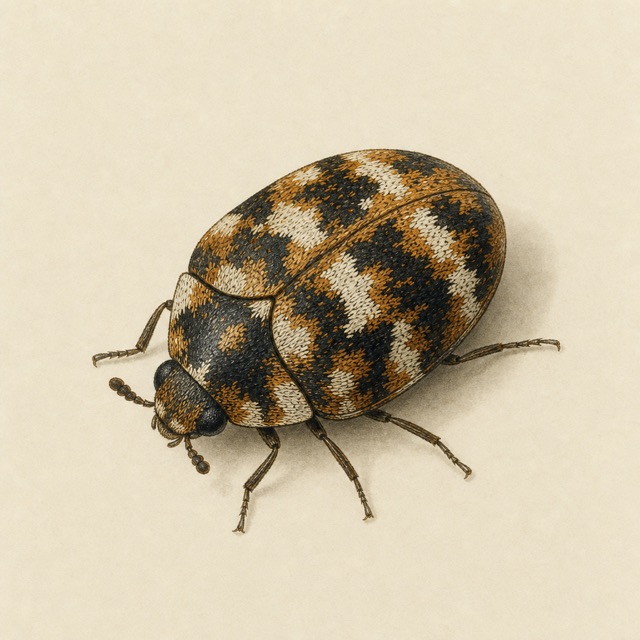
Dermestid beetles are nature's cleanup crew—but when they invade your home, they'll feast on everything from wool sweaters to taxidermy. These tiny beetles and their voracious larvae cause thousands in damage to fabrics, furs, stored foods, and natural fiber items. The key to elimination is understanding their lifecycle and targeting both adult beetles and the destructive larvae stage.
Dermestid Beetles: Complete Guide are identifiable by their Black, brown, or mottled with scales; larvae are tan/brown and hairy coloring and 1/16 - 1/2 inch (adults), larvae up to 1/4 inch size. Scientific name: Dermestidae family. They have distinct physical features that help differentiate them from similar pests.
Signs of Infestation
- •Physical sightings of the pest in or around the affected area
- •Damage patterns characteristic of this pest's feeding or nesting behavior
- •Droppings, shed skins, or other biological evidence of infestation
Key Inspection Areas
- •Areas where Natural fiber materials, dead insects, pet hair, stored foods, wool carpets, museum collections is commonly found
- •Entry points and harborage sites specific to this pest
- •Food and water sources that attract this pest
When to Inspect
Inspect during peak activity times for this pest. Check regularly during their active season (Year-round indoors; adults most active spring and summer).
Inspection Tools
Flashlight for inspecting dark areas, appropriate traps for monitoring
Identify the Species and Infestation Source
Determine which dermestid species you're dealing with—carpet beetles, hide beetles, or larder beetles each prefer different materials. Look for shed larval skins (hollow, brown, fuzzy casings), fecal pellets, and irregular holes in fabrics. Check windowsills for dead adult beetles, as they're attracted to light. Inspect wool clothing, carpets under furniture, taxidermy, dried flowers, pet food storage, and forgotten corners of closets.
Deep Clean and Vacuum Thoroughly
Vacuum everywhere with a HEPA filter vacuum, focusing on carpet edges, baseboards, closet corners, under furniture, and inside air vents where larvae hide. Use the crevice tool along baseboards and in carpet-to-wall junctions. Immediately seal and dispose of the vacuum bag outside, or empty canisters into sealed plastic bags. Steam clean carpets if possible—the heat kills eggs and larvae that vacuuming misses.
Treat Infested Fabrics and Materials
Wash all infested clothing, linens, and fabrics in hot water (130°F minimum) followed by a hot dryer cycle for 30+ minutes. For non-washable items like wool coats or delicate fabrics, seal them in plastic bags and freeze for 72 hours at 0°F or below. Dry cleaning also effectively kills all life stages. Discard heavily damaged items that are beyond saving—they'll continue harboring eggs.
Apply Residual Insecticide to Breeding Areas
Spray a residual insecticide like Temprid FX, Suspend SC, or Demand CS along baseboards, carpet edges, closet perimeters, and under furniture where larvae develop. Focus on dark, undisturbed areas where natural fibers accumulate. For direct fabric treatment on carpets and rugs, use CimeXa insecticidal dust in cracks and crevices—it's desiccant-based and remains effective for months when kept dry.
Use Pheromone Traps for Monitoring
Place species-specific pheromone traps like Revenge Carpet Beetle Traps or Safer Brand traps in closets, under beds, and along windows to monitor adult beetle activity. These traps help you identify ongoing infestations and gauge treatment effectiveness. Replace traps every 3 months or when full. A sudden increase in trapped beetles indicates a nearby breeding source you haven't found yet.
Seal Entry Points and Remove Attractions
Caulk cracks around windows, doors, and foundation penetrations where adult beetles enter from outdoors. Install or repair window screens to prevent flying adults from entering. Remove bird nests, wasp nests, and dead insects from attics, chimneys, and wall voids—these are prime food sources that attract dermestids. Clean out pet hair accumulation behind appliances and furniture.
Protect Vulnerable Items Long-Term
Store wool, fur, silk, and feather items in airtight plastic containers or vacuum-sealed bags with cedar blocks or lavender sachets as mild deterrents. Use acid-free tissue paper for delicate items. Keep storage areas clean and inspect items every 3-6 months. For valuable collections like taxidermy or entomology specimens, consider Nuvan ProStrips in sealed display cases—they release vapor that prevents infestations.
Maintain Prevention Practices
Vacuum regularly focusing on edges and corners where lint and hair accumulate. Immediately clean up dead insects on windowsills and around light fixtures. Rotate stored clothing seasonally and inspect for damage. Keep humidity below 50% with dehumidifiers, as dermestid larvae develop faster in humid conditions. Schedule professional pest control if infestations persist despite DIY efforts—hidden colonies in walls may require specialized treatment.
- 1Eliminate food sources and properly store food items
- 2Reduce moisture and fix any water leaks
- 3Seal entry points and potential access routes
- 4Maintain cleanliness and reduce clutter that provides harborage
- 5Monitor regularly and address problems early before populations grow
What's the difference between carpet beetles and clothes moths?
Carpet beetles are beetles with hard wing covers and their larvae are hairy/fuzzy caterpillar-like creatures that cause the damage. Clothes moths are actual moths whose larvae are smooth white caterpillars that spin silk webbing. Carpet beetle larvae eat a wider variety of materials including pet food and dead insects, while clothes moth larvae are more specialized fabric feeders. Both damage natural fibers, but their appearance and treatment strategies differ significantly.
Can dermestid beetles infest my entire house?
Yes, especially if you have multiple food sources like wool carpeting, natural fiber upholstery, stored clothing, and accumulated pet hair. They'll establish breeding colonies wherever suitable food and undisturbed conditions exist. However, infestations are usually concentrated in specific areas—closets, storage rooms, carpeted bedrooms, or wherever natural fibers accumulate. Comprehensive cleaning and treatment can eliminate widespread infestations within 4-8 weeks with diligent effort.
Are dermestid beetles dangerous to humans or pets?
Dermestid beetles themselves don't bite humans or spread disease, but their larvae have irritating hairs that can cause allergic reactions or dermatitis in sensitive individuals. Some people experience skin irritation or respiratory issues from larval hairs becoming airborne. The real danger is economic—they cause significant damage to valuable clothing, carpets, furniture, and irreplaceable items like heirlooms or collections. Pets are generally unaffected unless they have allergic reactions to the larvae.
Why do I keep finding carpet beetles even after cleaning?
You're likely missing a hidden breeding source such as accumulations in air ducts, wall voids with dead insects, old rodent nests, or forgotten storage boxes. Adult beetles also fly in from outdoors attracted to flowers and light, then find materials inside to lay eggs on. Each female lays 40-90 eggs, so even a few missed larvae can restart the cycle. Check less obvious areas like behind baseboards, inside light fixtures, piano felts, and underneath wall-to-wall carpeting edges.
How long does it take to completely eliminate a dermestid beetle infestation?
Expect 6-12 weeks for complete elimination with proper treatment, since you need to break the lifecycle and wait for residual insecticides to kill emerging larvae. The lifecycle from egg to adult takes 2-12 months depending on species, temperature, and food availability. Continue monitoring with pheromone traps for at least 3 months after seeing the last beetle. Persistent infestations lasting longer typically indicate a hidden breeding source you haven't discovered or treated yet.
Quick Facts
- Size
- 1/16 - 1/2 inch (adults), larvae up to 1/4 inch
- Color
- Black, brown, or mottled with scales; larvae are tan/brown and hairy
- Habitat
- Natural fiber materials, dead insects, pet hair, stored foods, wool carpets, museum collections
- Active Season
- Year-round indoors; adults most active spring and summer
Danger Level: Medium
This pest can cause health issues or property damage if left untreated.