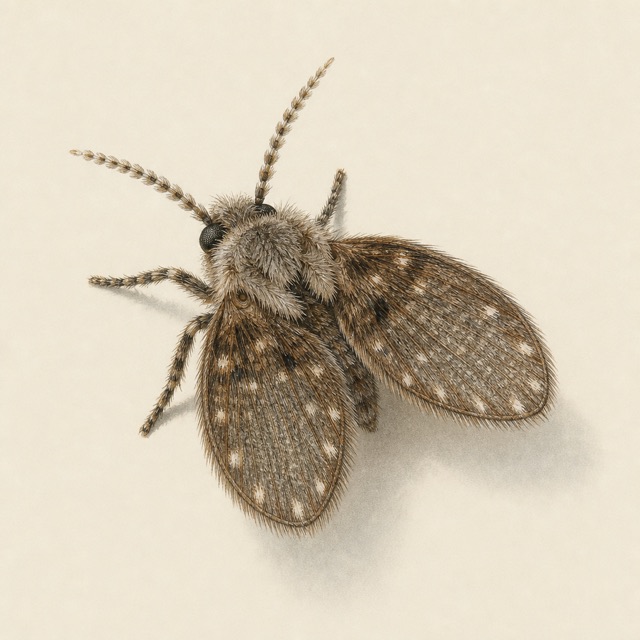
Those tiny, fuzzy-winged flies hovering around your sink aren't fruit flies—they're drain flies, and they're breeding in the slimy gunk inside your pipes. These moth-like insects thrive in the organic film that builds up in drains, and a single breeding site can produce hundreds of flies. The good news? Once you eliminate their larval habitat, they disappear quickly.
Drain flies (moth flies) are tiny (1/16 to 1/8 inch), gray or tan, fuzzy-bodied flies with large, leaf-shaped hairy wings held roof-like over the body at rest. They are weak fliers and hop short distances rather than flying long paths.
Similar Pests
Fruit flies are smaller, tan or brown, and have red eyes. Gnats are more active fliers. Phorid flies are faster and run erratically.
Signs of Infestation
- •Small moth-like flies resting on bathroom or kitchen walls near sinks and drains
- •Flies hopping short distances or flying weakly when disturbed
- •Slimy organic buildup (biofilm) inside drains where larvae develop
- •Sudden appearance of many flies near floor drains, shower drains, or sink drains
Key Inspection Areas
- •Bathroom sink, shower, and tub drains with organic buildup
- •Kitchen sink drains and garbage disposal units
- •Floor drains in basements, laundry rooms, and utility sinks
- •Leaky pipes, drip pans, and condensation trays under appliances
When to Inspect
Inspect during the day when flies rest on walls near breeding sites. Check drains at night with a flashlight to see larvae in slime. Problem is year-round indoors.
Inspection Tools
Flashlight to inspect drains, drain brush to check for slime buildup, tape test (tape over drain overnight to catch emerging adults)
Identify the Breeding Source
Use the tape test to confirm which drain is the problem. Before bed, place strips of clear packing tape sticky-side-down over suspect drains, leaving a small gap for air. Check the tape in the morning—adult flies will be stuck to it. Test all drains including floor drains, shower drains, sinks, and basement drains since multiple sites are often involved.
Mechanically Remove the Biofilm
Pour boiling water down the drain, then use a stiff drain brush or Drain Weasel tool to physically scrub the pipe walls. Drain flies lay eggs in the gelatinous biofilm coating the inside of pipes, and you need to break this up mechanically. Focus on the first 2-3 feet of pipe where most breeding occurs. Chemical drain cleaners like Drano won't effectively remove this biofilm and can damage pipes.
Apply Enzymatic Drain Cleaner
Use an enzyme-based drain cleaner like Green Gobbler Drain Gel or Bio-Clean to digest organic matter that mechanical cleaning missed. These products contain bacteria and enzymes that break down the sludge, hair, and grease where larvae thrive. Apply according to directions, typically overnight when drains aren't in use, and repeat daily for at least a week to eliminate eggs and larvae at different development stages.
Treat with Biological Larvicide
For severe infestations or hard-to-reach drains, apply an IGR (insect growth regulator) foam like Gentrol or a larvicide containing Bacillus thuringiensis israelensis (Bti) such as Drain Gel products. These disrupt the fly life cycle by preventing larvae from maturing into adults. Apply to all affected drains and any floor drains or cleanout access points in your basement or crawlspace.
Establish a Maintenance Schedule
Flush all drains weekly with boiling water followed by a vinegar and baking soda treatment to prevent biofilm regrowth. For infrequently used drains like basement floor drains or guest bathroom sinks, pour water down them weekly to prevent the P-trap from drying out, which allows sewer gases and flies to enter. Consider using drain covers or screens to catch debris before it builds up.
Check Outdoor and Hidden Sources
Inspect gutters, French drains, septic systems, and outdoor drainage for standing water with organic debris. Check under appliances for leaks, inspect crawlspace condensation issues, and look for any damp areas with organic matter. Drain flies can breed in washing machine drain pans, AC condensate lines, and even moist areas under damaged flooring.
Control Adult Flies
While addressing the source, reduce adult populations with targeted methods. Use a handheld vacuum to physically remove resting adults from walls near breeding sites. Place apple cider vinegar traps (vinegar with a drop of dish soap) near affected drains to monitor and trap adults. For faster knockdown, apply a crack-and-crevice treatment with Raid or Hot Shot aerosol around drain areas, avoiding direct application into drains.
Verify Elimination and Prevent Recurrence
After one week of treatment, repeat the tape test to confirm no new adults are emerging. The complete life cycle is 7-20 days, so you should see results within two weeks. Maintain prevention habits like regular drain cleaning, fixing leaks promptly, and ensuring proper ventilation in damp areas to keep drain flies from returning.
- 1Clean drains weekly with enzymatic drain cleaner or stiff brush to remove biofilm
- 2Pour boiling water down drains to kill larvae and dissolve organic buildup
- 3Fix leaky pipes and eliminate standing water in drip pans and condensation trays
- 4Use drain covers or screens to prevent flies from emerging
- 5Clean garbage disposals regularly and avoid letting food waste accumulate
- 6Increase ventilation in bathrooms and laundry rooms to reduce moisture
Seasonal Note
Drain flies breed year-round indoors. Regular drain cleaning prevents infestations — once established, they're hard to eliminate.
Why do I have drain flies if my drains seem clean?
Drain flies breed in the biofilm coating pipe walls several inches below the visible drain opening, not in the water itself. Even a thin layer of organic slime in a pipe elbow, overflow hole, or unused drain can support a breeding population. The buildup happens gradually and isn't visible without inspection tools or by removing the drain cover.
How long does it take to get rid of drain flies completely?
With consistent treatment, you should see a significant reduction within 3-5 days and complete elimination in 1-2 weeks. The key is disrupting the breeding cycle by removing biofilm and preventing new eggs from hatching. If flies persist beyond two weeks, you haven't found all breeding sites—expand your search to other drains or hidden moisture sources.
Can drain flies come up through the toilet?
Yes, drain flies can emerge from toilets if there's organic buildup under the rim, in the siphon jet holes, or in connected plumbing. They're more common in rarely-used toilets where biofilm can develop undisturbed. Clean under the rim with a toilet brush and pumice stone, and consider treating the drain line with an enzymatic cleaner by pouring it directly into the bowl.
Are drain flies harmful or do they spread disease?
Drain flies are considered nuisance pests rather than health hazards. While they breed in unsanitary conditions, they rarely transmit diseases to humans. In extremely rare cases, they've been associated with myiasis (larval infection) in vulnerable individuals, but this is exceptionally uncommon. The main issue is that their presence indicates organic buildup in your plumbing that should be addressed.
Will bleach kill drain fly larvae in my pipes?
Bleach is largely ineffective against drain flies because it flows quickly through pipes without breaking down the protective biofilm where larvae live. Even if some bleach contacts larvae, the organic matter neutralizes its effectiveness. Boiling water, mechanical scrubbing, and enzymatic cleaners that digest the biofilm itself are far more effective solutions than chemical drain cleaners.
Quick Facts
- Size
- 1/16 - 1/8 inch
- Color
- Gray or tan with fuzzy, moth-like wings
- Habitat
- Drains, sewers, septic tanks, and areas with organic slime buildup
- Active Season
- Year-round indoors, summer peak outdoors
Danger Level: Low
This pest is primarily a nuisance but can be eliminated with DIY methods.