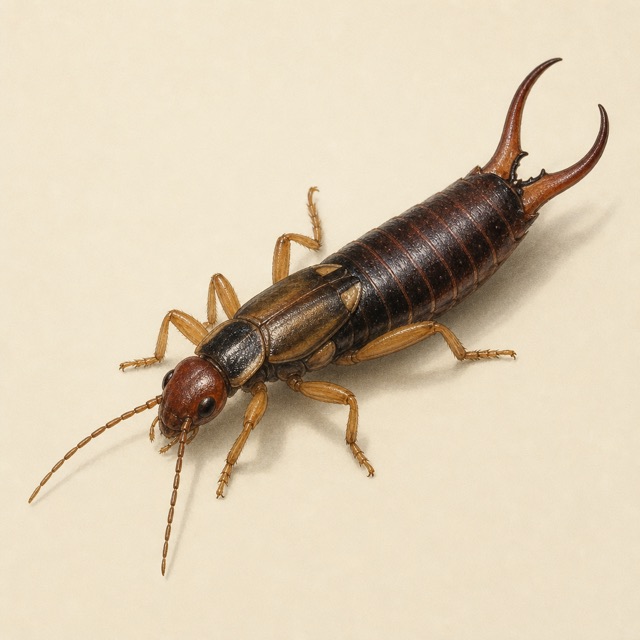
Those creepy pincher-wielding bugs hiding under your flowerpots aren't as dangerous as they look, but they're definitely unwelcome guests. Earwigs love damp spaces and can quickly multiply in gardens, crawl spaces, and bathrooms if conditions are right. While their fearsome pincers (cerci) rarely break human skin, these nocturnal scavengers can damage seedlings and invade homes by the dozens.
Earwigs are 1/2 to 3/4 inch long, elongated, flattened, dark reddish-brown to black. They have prominent pincers (forceps) at the rear end — curved in males, straighter in females. They have short forewings and membranous hindwings (rarely fly), and thread-like antennae.
Similar Pests
Rove beetles have similar body shape but lack prominent rear pincers and have shorter wing covers. Silverfish are wingless and have 3 tail filaments, not pincers.
Signs of Infestation
- •Earwigs hiding in damp mulch, under stones, or in stacks of firewood
- •Irregular holes or ragged edges chewed in plant leaves, especially hostas and dahlias
- •Earwigs congregating indoors in damp basements, bathrooms, or laundry rooms
- •Musty odor from defensive scent glands when crushed or disturbed
Key Inspection Areas
- •Under mulch, landscape stones, firewood, and boards in gardens
- •In flower pots, plant saucers, and outdoor furniture cushions
- •Damp basements, crawl spaces, and laundry rooms indoors
- •Around foundations, door thresholds, and window wells
When to Inspect
Inspect at night when earwigs are active foragers. Check during humid weather or after rain. Peak activity is late spring through summer. Look under objects during the day where they hide.
Inspection Tools
Flashlight for night inspection, rolled newspaper traps, lifting boards/pots to expose hiding spots
Eliminate Moisture Sources
Earwigs thrive in damp environments, so your first line of defense is moisture control. Fix leaky faucets, improve drainage around your foundation, and use dehumidifiers in basements to keep humidity below 50%. Remove wet leaves, decomposing plant matter, and any standing water near your home's perimeter.
Remove Outdoor Hiding Spots
Clear away mulch, leaf piles, firewood, and decorative rocks within 2 feet of your foundation. Earwigs use these as daytime shelters and breeding grounds. Store firewood at least 20 feet from your house and elevate it off the ground. Trim bushes and ground cover away from the foundation to increase sunlight and airflow.
Seal Entry Points
Earwigs enter through surprisingly small gaps around doors, windows, pipes, and foundation cracks. Apply weatherstripping to doors and windows, and use caulk to seal cracks in your foundation. Install door sweeps on all exterior doors, paying special attention to garage doors where gaps are often largest.
Set Up Oil Traps
Create simple but effective traps using shallow containers filled with 1/2 inch of vegetable oil and a drop of bacon grease or fish oil as bait. Place these traps near infested areas at dusk, as earwigs are nocturnal. They'll crawl in overnight and drown. Empty and refresh traps every 2-3 days until you see numbers decline significantly.
Apply Diatomaceous Earth Barriers
Spread food-grade diatomaceous earth (like Harris or Safer Brand) in a 2-inch band around your home's foundation, focusing on entry points. This natural powder scratches earwigs' exoskeletons and causes dehydration. Reapply after rain. For indoor use, dust behind appliances, in cracks, and along baseboards where moisture accumulates.
Use Targeted Insecticides
For heavy infestations, apply a residual spray like Talstar P or Suspend SC around the foundation, creating a 3-foot barrier up the wall and 6-10 feet out from the base. Spray mulched areas, under decks, and other harboring spots. Indoors, use crack-and-crevice treatments with Delta Dust in wall voids and CimeXa in humid areas like bathrooms.
Deploy Granular Baits in the Garden
Scatter granular insecticide like Ortho Bug-Geta or Sevin around garden beds, under shrubs, and in mulched areas where earwigs congregate. Water lightly after application to activate the bait. This method is particularly effective for protecting seedlings and controlling large outdoor populations before they migrate indoors.
Implement Long-Term Prevention
Switch from organic mulches to inorganic options like gravel or rubber near your foundation. Keep gutters clean and downspouts directed away from the house. Consider installing a gravel or stone border around your home to create a dry barrier. Regularly inspect and vacuum up any indoor stragglers before populations can establish.
- 1Remove mulch, leaf litter, and debris from around foundation and door thresholds
- 2Fix leaky outdoor faucets, hoses, and drainage issues creating damp areas
- 3Seal cracks around doors, windows, and foundations with caulk or weatherstripping
- 4Switch outdoor lights to yellow bug lights to reduce attraction
- 5Keep gutters clean and ensure downspouts drain water away from foundation
- 6Store firewood away from house and off the ground
Seasonal Note
Earwigs migrate indoors during wet weather in spring/summer. Reduce outdoor harborage before rainy season.
Do earwigs really crawl into people's ears?
This is a persistent myth with no scientific basis. Earwigs have no interest in crawling into human ears and there are virtually no documented cases of this happening. The name likely comes from their hindwing shape, which resembles a human ear when unfolded. They're much more interested in hiding under damp objects than exploring ear canals.
Can earwigs bite or pinch humans?
While earwigs have intimidating-looking pincers (cerci), they rarely use them on humans and the pinch is generally harmless—about equivalent to a light squeeze. They're not venomous and don't transmit diseases. Males have curved pincers while females have straighter ones, but neither can break human skin under normal circumstances.
Why am I suddenly seeing so many earwigs in my house?
Earwig invasions typically happen during hot, dry spells or after heavy rains when they seek shelter indoors. Large populations build up in mulch, ground cover, or under debris near your foundation, then migrate inside through small cracks. If you're seeing dozens at once, you likely have a moisture problem and nearby outdoor breeding sites that need addressing.
Are earwigs harmful to my garden plants?
Earwigs have a mixed reputation in gardens. While they feed on aphids, mites, and insect eggs (beneficial), they also chew irregular holes in tender seedlings, lettuce, and flower petals (problematic). The damage is usually cosmetic rather than catastrophic. If populations are high and you're seeing significant plant damage, targeted control in garden beds is justified.
What's the fastest way to get rid of earwigs indoors?
For immediate results, vacuum up visible earwigs and empty the bag outside. Then place rolled-up newspapers dampened with water in affected areas overnight—earwigs will crawl inside, and you can dispose of them in the morning. Simultaneously, apply diatomaceous earth along baseboards and entry points, and address any moisture issues like leaky pipes or poor ventilation that attracted them initially.
Quick Facts
- Size
- 1/2 - 3/4 inch
- Color
- Dark reddish-brown to black
- Habitat
- Moist areas under mulch, rocks, logs, garden debris, and in damp basements or crawl spaces
- Active Season
- Spring through fall (most active June-August)
Danger Level: Low
This pest is primarily a nuisance but can be eliminated with DIY methods.