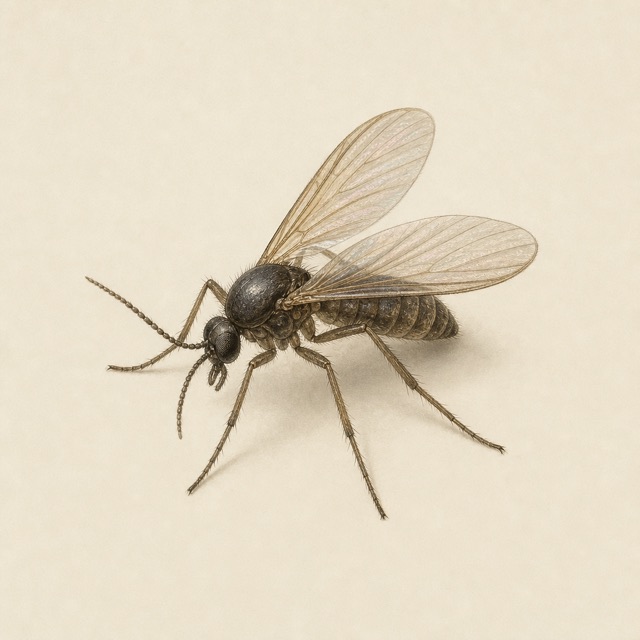
Those tiny black flies hovering around your houseplants aren't just annoying—they're fungus gnats, and their larvae are secretly munching on your plants' roots. While adult gnats are mostly a nuisance, a serious infestation can damage seedlings and weaken mature plants. The good news? Breaking their lifecycle is straightforward once you understand their weakness: they need consistently moist soil to survive.
Fungus Gnats: Complete Guide are identifiable by their Dark gray to black with translucent wings coloring and 1/16 - 1/8 inch (adults) size. Scientific name: Bradysia spp., Sciaridae family. They have distinct physical features that help differentiate them from similar pests.
Signs of Infestation
- •Physical sightings of the pest in or around the affected area
- •Damage patterns characteristic of this pest's feeding or nesting behavior
- •Droppings, shed skins, or other biological evidence of infestation
Key Inspection Areas
- •Areas where Indoor potted plants, greenhouses, overwatered soil rich in organic matter, mushroom farms is commonly found
- •Entry points and harborage sites specific to this pest
- •Food and water sources that attract this pest
When to Inspect
Inspect during peak activity times for this pest. Check regularly during their active season (Year-round indoors; spring through fall outdoors).
Inspection Tools
Flashlight for inspecting dark areas, appropriate traps for monitoring
Let Your Soil Dry Out Between Waterings
The single most effective step is addressing overwatering. Allow the top 2-3 inches of soil to dry completely before watering again—this kills larvae and makes the environment inhospitable for egg-laying. Fungus gnat larvae need constantly moist conditions to survive, and most houseplants actually prefer drier soil between waterings anyway. Use your finger to check moisture levels before reaching for the watering can.
Apply Beneficial Nematodes to Infected Soil
Steinernema feltiae nematodes (available as NaturesGoodGuys or Arbico Organics products) are microscopic predators that hunt and kill fungus gnat larvae in the soil. Mix the nematodes with water according to package directions and drench your soil thoroughly. Apply in the evening since they're sensitive to UV light, and keep soil moist for 7-10 days after application to help them establish. This biological control is safe for plants, pets, and people.
Top Dress Soil with Sand or Diatomaceous Earth
Add a 1/2-inch layer of horticultural sand, perlite, or food-grade diatomaceous earth (like Harris or Safer Brand) on top of your potting soil. This creates a dry barrier that prevents adult gnats from laying eggs in the soil and kills any that try to emerge. Sand is the most effective long-term solution since it doesn't break down or blow away easily.
Set Up Yellow Sticky Traps for Adults
Place yellow sticky traps (TERRO or Garsum brand work well) horizontally just above soil level or stake them into pots to catch adult gnats. While traps won't eliminate an infestation alone, they significantly reduce the breeding population and help you monitor whether your treatment is working. Replace traps weekly during active infestations.
Use Mosquito Bits or Dunks for Larvae Control
Summit Mosquito Bits contain Bacillus thuringiensis israelensis (BTI), a bacteria that specifically targets gnat and mosquito larvae without harming plants or beneficial insects. Sprinkle bits directly on soil and water in, or steep them in your watering can for 30 minutes before using. Alternatively, break up Mosquito Dunks and place pieces in saucers or watering cans. Reapply every 2-3 weeks.
Apply Hydrogen Peroxide Soil Drench
Mix one part 3% hydrogen peroxide with four parts water and drench the soil thoroughly. The solution kills larvae and eggs on contact while adding oxygen to the soil, then breaks down into harmless water. This method works quickly but needs to be repeated every 3-5 days for 2-3 weeks since it doesn't have residual effects. Let soil dry between treatments.
Repot Severely Infested Plants
For plants with severe infestations, your best bet is to completely remove old soil, rinse roots gently, trim any damaged or rotting roots, and repot in fresh, sterile potting mix. This gives you a clean slate and removes the larvae population entirely. Dispose of old soil in sealed bags—don't reuse it or compost it.
Prevent Future Infestations with Better Practices
Avoid bringing in contaminated soil by using quality potting mix from sealed bags rather than outdoor garden soil. Remove dead leaves and debris from soil surfaces where gnats like to lay eggs. Ensure pots have proper drainage holes and don't let water sit in saucers for extended periods. Consider bottom-watering plants to keep the soil surface dry while still hydrating roots.
- 1Eliminate food sources and properly store food items
- 2Reduce moisture and fix any water leaks
- 3Seal entry points and potential access routes
- 4Maintain cleanliness and reduce clutter that provides harborage
- 5Monitor regularly and address problems early before populations grow
How long does it take to get rid of fungus gnats completely?
With consistent treatment, you can eliminate fungus gnats in 2-4 weeks. The key is breaking their lifecycle: eggs hatch in 3-4 days, larvae feed for about 2 weeks, then pupate for 3-4 days before emerging as adults that live 7-10 days. You need to maintain treatments through at least one complete cycle to catch all life stages. Combining methods (like BTI for larvae plus sticky traps for adults) speeds up the process significantly.
Are fungus gnats harmful to humans or just plants?
Fungus gnats are essentially harmless to humans—they don't bite, sting, or transmit diseases. They're primarily a nuisance when flying around your face or landing in drinks. However, their larvae can damage plant roots, particularly on seedlings, cuttings, and plants with already compromised root systems. Mature, healthy plants usually tolerate minor infestations without significant harm, though heavy populations can stunt growth and cause yellowing leaves.
Why do I keep getting fungus gnats even after treatment?
Recurring infestations usually mean you're either overwatering, bringing in new contaminated plants or soil, or not treating long enough to break the complete lifecycle. Check that you're allowing soil to dry adequately between waterings—this is the most common culprit. Also inspect any new plants before bringing them home, and quarantine them for a week or two. If you buy soil in bulk or store open bags, gnats may be breeding in the bag itself.
Can I use regular vinegar traps for fungus gnats like I would for fruit flies?
Apple cider vinegar traps catch some fungus gnats but are far less effective than yellow sticky traps positioned near soil level. Fungus gnats are more attracted to the color yellow and the smell of moist soil than to fermenting fruit scents. If you want to try vinegar, use apple cider vinegar with a drop of dish soap in a shallow dish near plants, but don't rely on this as your primary control method—it won't catch enough adults to make a real difference.
Is it safe to use these treatments around pets and children?
Most fungus gnat treatments are very safe when used properly. Beneficial nematodes, BTI products (Mosquito Bits/Dunks), and sticky traps are non-toxic to mammals. Food-grade diatomaceous earth is safe but shouldn't be inhaled in large quantities, so apply carefully. Hydrogen peroxide diluted to the recommended strength is harmless once it breaks down. Keep concentrated products stored safely, and position sticky traps where curious pets won't get stuck to them.
Quick Facts
- Size
- 1/16 - 1/8 inch (adults)
- Color
- Dark gray to black with translucent wings
- Habitat
- Indoor potted plants, greenhouses, overwatered soil rich in organic matter, mushroom farms
- Active Season
- Year-round indoors; spring through fall outdoors
Danger Level: Low
This pest is primarily a nuisance but can be eliminated with DIY methods.