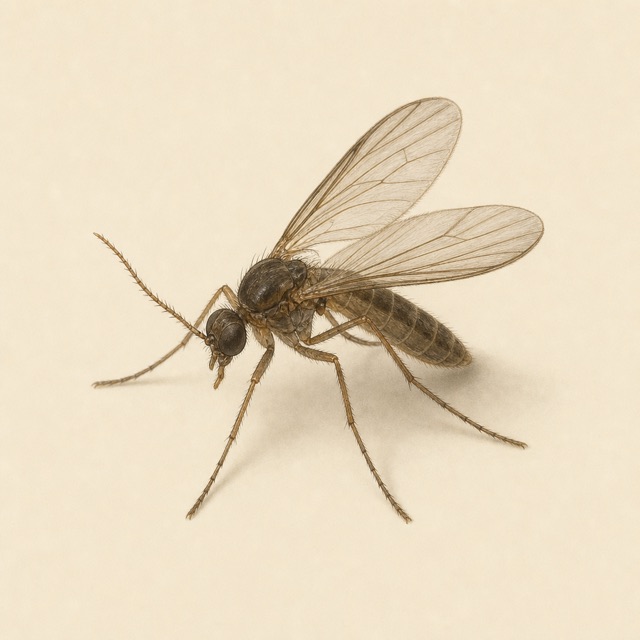
Gnats are tiny flying insects that seem to appear out of nowhere and multiply rapidly in kitchens, bathrooms, and around houseplants. Whether you're dealing with fruit flies, fungus gnats, or drain gnats, the key to elimination is identifying the breeding source. Here's how to get rid of every type of gnat for good.
Gnats are tiny flies typically 1/16 to 1/8 inch long. The term covers several species: fruit flies (tan with red eyes), fungus gnats (dark with long legs), and drain flies (fuzzy, moth-like wings). All are weak fliers that hover around their breeding sources.
Similar Pests
Fruit flies are often confused with fungus gnats — fruit flies are tan with red eyes and hover near food; fungus gnats are dark-bodied and hover near potted plants. Drain flies have a distinctive fuzzy, moth-like appearance and are found near drains.
Signs of Infestation
- •Tiny flies hovering around fruit bowls, trash cans, or sink drains
- •Small dark flies rising from potted plant soil when disturbed
- •Clouds of tiny insects near windows or light sources
- •Tiny larvae or pupae visible in drain buildup or the top layer of potting soil
Key Inspection Areas
- •Fruit bowls, compost containers, and recycling bins with residue
- •Potted plant soil, especially if overwatered or containing organic amendments
- •Kitchen and bathroom drains with organic buildup
- •Wet mops, damp rags, and spills under appliances
When to Inspect
Gnats are visible throughout the day but are most noticeable near their breeding sources. To identify drain gnats, cover drains with tape overnight — gnats emerging from the drain will stick to the tape. For fungus gnats, place yellow sticky traps near plant soil.
Inspection Tools
Yellow sticky traps, clear tape for drain testing, magnifying glass for species identification, flashlight for checking under appliances
Identify the gnat type and breeding source
Fruit flies (tan, red eyes) breed in overripe fruit and fermented liquids. Fungus gnats (dark, long legs) breed in moist potting soil. Drain flies (fuzzy wings) breed in drain gunk. Correct identification determines the right fix.
Remove or treat the breeding source
For fruit flies: discard all overripe fruit and clean containers. For fungus gnats: let soil dry out completely and add a layer of sand on top. For drain flies: treat drains with enzyme cleaner (InVade Bio Drain) to dissolve the organic film they breed in.
Set up apple cider vinegar traps
Fill small jars with apple cider vinegar, add a drop of dish soap to break surface tension, and cover with plastic wrap poked with small holes. Place near problem areas. This catches adult fruit flies effectively.
Deploy yellow sticky traps
Place yellow sticky traps near houseplants (for fungus gnats), near fruit bowls, and in windows. These trap adult gnats and help monitor population levels. Replace when full.
Treat potted plant soil for fungus gnats
Apply Mosquito Bits (BTI) to the soil surface and water them in. BTI is a biological larvicide that kills fungus gnat larvae in the soil without harming plants. Let the top layer of soil dry completely between waterings.
Deep clean all potential breeding sites
Clean under appliances, empty and scrub recycling bins, wipe down garbage disposals with ice and salt, and clean any areas with spilled liquid or decaying organic matter.
Continue trapping for 2 weeks after source removal
Even after removing the breeding source, adult gnats may persist for 1-2 weeks. Keep vinegar traps and sticky traps active to catch remaining adults. If gnats persist beyond 2 weeks, you've missed a breeding source.
- 1Store ripe fruit in the refrigerator and discard overripe or damaged produce immediately
- 2Clean kitchen drains weekly with an enzyme drain cleaner to remove organic buildup
- 3Avoid overwatering houseplants and let the top inch of soil dry between waterings
- 4Empty and clean trash cans regularly; use bins with tight lids
- 5Rinse all bottles and cans before placing in recycling bins
- 6Wipe up spills immediately and don't leave wet sponges, mops, or rags sitting out
Seasonal Note
Gnats are most problematic in summer and fall when warm temperatures accelerate breeding. Late summer fruit harvests and fall houseplant maintenance often trigger indoor gnat explosions.
Where are gnats coming from in my house?
Gnats breed in decaying organic matter — overripe fruit, drain buildup, wet potting soil, or forgotten spills under appliances. They don't come from outside in most cases; they're breeding somewhere in your home.
Do gnats bite?
Common indoor gnats (fruit flies, fungus gnats, drain flies) do not bite. If you're being bitten by tiny flies indoors, you may have biting midges (no-see-ums) or sand flies, which require different treatment.
Why do I have gnats in winter?
Indoor gnats breed year-round in heated homes. Winter gnats are usually fungus gnats from overwatered houseplants or drain flies from infrequently used drains. Check potting soil moisture and run water through unused drains weekly.
Does the vinegar trap actually work?
Apple cider vinegar traps work very well for fruit flies specifically. They're less effective for fungus gnats (use yellow sticky traps) and drain flies (use enzyme drain cleaner). Match the trap to the gnat species.
How fast do gnats multiply?
Fruit flies can go from egg to adult in just 8-10 days in warm conditions, and each female lays up to 500 eggs. That's why a few gnats can become hundreds in under two weeks if the breeding source isn't eliminated.
Quick Facts
- Size
- 1/16 - 1/8 inch
- Color
- Black, brown, or tan depending on species
- Habitat
- Overripe fruit, moist soil, drain buildup, and decaying organic matter
- Active Season
- Year-round indoors, peak in summer and fall
Danger Level: Low
This pest is primarily a nuisance but can be eliminated with DIY methods.