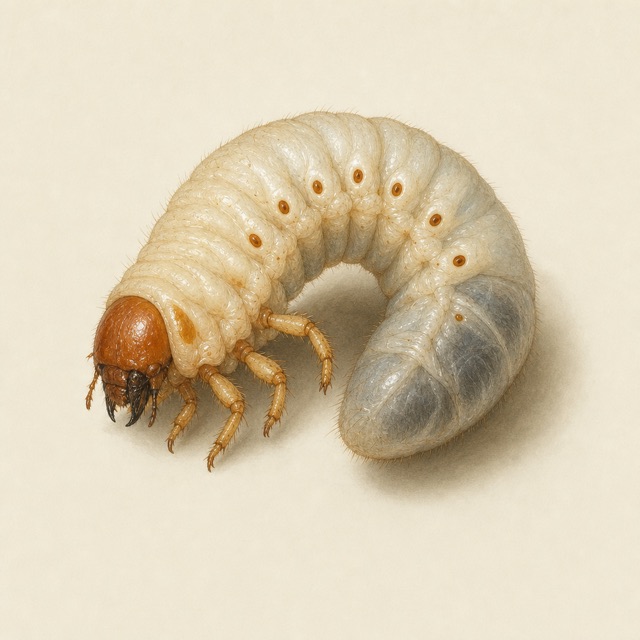
Those brown, dying patches in your otherwise healthy lawn? You're probably dealing with grubs—the C-shaped larvae of beetles that feast on grass roots from below. These plump, cream-colored pests can destroy entire sections of turf before you even realize they're there, and they attract secondary damage from animals digging for an easy meal.
White grubs (beetle larvae) are C-shaped, soft-bodied, whitish to cream-colored, 1/4 to 1.5 inches long depending on species. They have brown heads, 6 small legs near the head, and wrinkled, segmented bodies. Japanese beetle grubs have a V-shaped rastral pattern of spines.
Similar Pests
Billbug larvae are legless. Crane fly larvae are grayish and lack distinct legs. Root maggots are smaller and lack visible legs and head capsules.
Signs of Infestation
- •Brown irregular patches in lawn that peel back easily like loose carpet
- •Increased bird, skunk, raccoon, or mole activity digging for grubs in turf
- •Grubs visible when pulling back dead turf sections (5-10+ per square foot indicates damage threshold)
- •Damaged grass roots when inspecting soil beneath brown patches
Key Inspection Areas
- •Lawns with brown irregular patches that peel back easily
- •Turf areas with high bird, skunk, or raccoon digging activity
- •Well-irrigated lawns (grubs thrive in moist soil)
- •Sunny lawn areas (grubs prefer warm soil near surface)
When to Inspect
Inspect in late summer or early fall when grubs are largest and feeding heavily. Check in spring for grubs that overwintered. Soil temperature 50-70°F brings grubs near surface (top 2-3 inches).
Inspection Tools
Spade or trowel to cut and lift turf sections, bucket of soapy water to drive grubs to surface (soap drench test), flashlight for spotting grubs in soil
Confirm You Have a Grub Problem
Pull back a square foot of turf in the damaged area—if it lifts easily like carpet, check the soil. More than 5-10 grubs per square foot means you need treatment. Look for C-shaped, cream-colored larvae with six legs near the head. You'll also notice increased animal activity (birds, raccoons, skunks) digging up your lawn to feed on them.
Time Your Treatment Correctly
Apply curative treatments in late summer to early fall when grubs are young and actively feeding near the surface. For preventive control, treat in late spring to early summer before eggs hatch. Grubs are most vulnerable when they're small (under 1/2 inch), so timing is everything—mature grubs in late fall are harder to kill and may require higher doses.
Choose Your Insecticide Strategy
For curative treatment, use products with trichlorfon (Dylox) or carbaryl (Sevin) which work fast on active infestations. For preventive treatment, apply imidacloprid (Merit, Bayer Season-Long Grub Control) or chlorantraniliprole (GrubEx) in early summer. Water immediately after application—grubs live in soil, so the product needs to penetrate down to reach them.
Try Biological Controls for Eco-Friendly Options
Apply beneficial nematodes (Steinernema species) during early morning or evening when soil is moist and temperatures are 60-90°F. Mix with water and spray over affected areas, then irrigate immediately. For long-term prevention, use Milky Spore (Paenibacillus popilliae) which specifically targets Japanese beetle grubs and can persist in soil for years, though it takes time to establish.
Water Your Lawn Properly After Treatment
Most grub treatments require 1/4 to 1/2 inch of water immediately after application to move the product into the root zone where grubs feed. Use a rain gauge or empty tuna can to measure. Don't overwater—you want the product in the top 2-3 inches of soil, not leached deeper where grubs don't live.
Repair Damaged Turf and Monitor
Once grubs are eliminated, overseed thin or dead patches and keep soil moist until grass establishes. Apply starter fertilizer to encourage root growth. Check problem areas every few weeks by lifting turf edges to ensure grubs are gone. Mark your calendar to inspect again next season—beetle cycles repeat annually.
Implement Preventive Lawn Care Practices
Maintain healthy turf with proper mowing height (3-4 inches), deep but infrequent watering, and appropriate fertilization—stressed lawns are more susceptible to grub damage. Avoid overwatering in summer when beetles lay eggs, as moist soil attracts egg-laying females. Consider leaving sections of lawn slightly drier during peak beetle season (June-July) if grubs are a recurring problem.
Address Adult Beetles to Break the Cycle
Reduce future grub populations by managing adult beetles in early summer. Hand-pick Japanese beetles from plants in morning when they're sluggish, or use targeted sprays on ornamentals (but avoid treating flowers when pollinators are active). Beetle traps often attract more beetles than they catch, so skip those unless placed far from your property.
- 1Apply preventive grub control (imidacloprid or clothianidin) in late spring/early summer before eggs hatch
- 2Water lawn after application to move insecticide into root zone where grubs feed
- 3Avoid overwatering lawns — grubs thrive in moist soil
- 4Maintain healthy turf through proper mowing, fertilizing, and aeration to tolerate grub feeding
- 5Apply beneficial nematodes to soil in late summer when grubs are small and vulnerable
- 6Leave some grubs for natural predators (birds, moles) — low populations don't cause damage
Seasonal Note
Preventive applications in June-July protect lawns from late summer/fall damage. Curative treatments work best in late summer when grubs are small.
When is the best time to treat for grubs?
Late July through September is optimal for curative treatment when grubs are small and actively feeding. For preventive control, apply products in May through early July before eggs hatch. Avoid treating in late fall or winter when grubs have burrowed deep and are dormant—they won't be feeding, so treatments are far less effective.
How do I know if my brown lawn patches are from grubs or something else?
Grub-damaged turf pulls up easily like loose carpet because roots are severed. Check the soil beneath—if you find 10 or more C-shaped white larvae per square foot, grubs are your problem. Other signs include irregular brown patches that expand over time and increased activity from animals digging small holes. If turf doesn't lift easily and roots are intact, consider drought stress, disease, or chinch bugs instead.
Are grubs harmful to humans or pets?
Grubs themselves are harmless to people and pets—they only eat grass roots. However, some chemical grub treatments can be toxic if ingested, so keep children and pets off treated lawns according to label directions (usually until the area dries). Beneficial nematodes and Milky Spore are completely safe alternatives with no restrictions.
Will grubs come back after treatment?
Yes, grubs can return annually because adult beetles fly in each summer to lay eggs. One successful treatment kills current grubs but doesn't prevent new infestations next year. For ongoing protection, apply preventive treatments each late spring, maintain healthy turf practices, or use Milky Spore for long-lasting Japanese beetle grub suppression that builds over time.
Can I treat grubs organically without chemicals?
Absolutely. Beneficial nematodes (Steinernema and Heterorhabditis species) are highly effective when applied properly during warm, moist conditions. Milky Spore works specifically for Japanese beetle grubs and persists for years. You can also promote natural predators like birds and improve soil health with compost to create a less favorable environment, though these methods work better as prevention than cure for severe infestations.
Quick Facts
- Size
- 1/4 - 2 inches long
- Color
- Cream or grayish-white body with brown head
- Habitat
- Soil beneath lawns, gardens, and turf areas, typically 1-3 inches below surface
- Active Season
- Most damaging in late summer and fall; also spring feeding before pupation
Danger Level: High
This pest poses significant health or property risks. Act quickly and consider professional help.
Top Products
Recommended for How to Get Rid of Grubs: Complete Lawn Treatment Guide
View All Products →