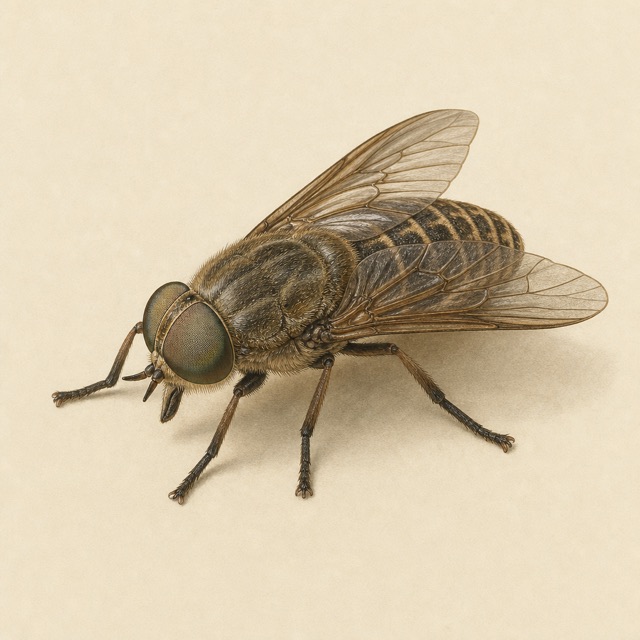
Horse flies deliver one of the most painful bites of any insect. Their scissor-like mouthparts slash skin to feed on blood, causing bleeding wounds, swelling, and sometimes allergic reactions. They're relentless daytime biters that are notoriously difficult to control, but the right combination of traps, repellents, and habitat management can significantly reduce their numbers.
Horse flies are large, robust flies ranging from 3/8 to over 1 inch long. They have wide bodies, large colorful compound eyes (often iridescent green or banded), and short antennae. Only females bite — they need blood meals for egg development. Their flight is fast and direct.
Similar Pests
Deer flies are closely related but smaller with patterned wings and colored eyes. Bot flies are similar in size but hairy and don't bite humans in the US. Robber flies are similar-sized predatory flies but have a distinctly different body shape and a bearded face.
Signs of Infestation
- •Painful bites while outdoors near water, woods, or livestock areas during daytime
- •Large dark flies buzzing aggressively around people, animals, and vehicles
- •Bleeding bite wounds that continue to ooze — horse fly bites cut skin rather than pierce it
- •Persistent flies that circle and repeatedly attack despite being swatted away
Key Inspection Areas
- •Near ponds, streams, marshes, and any standing water where larvae develop
- •Pastures and fields near livestock or horses
- •Edge areas between woods and open sunny fields
- •Pool areas, lakefronts, and waterfront properties
When to Inspect
Horse flies are daytime biters, most active on warm, sunny, calm days. They're less active on overcast or windy days. Peak activity is typically mid-morning through late afternoon during summer months (June-August).
Inspection Tools
No special inspection tools needed — horse flies make their presence known by biting. Black or dark-colored clothing and movement attract them, as does carbon dioxide from exertion.
Identify horse fly breeding habitat on your property
Horse fly larvae develop in moist soil near water — pond edges, stream banks, marshes, and wet pastures. Identify and map these areas on your property. Complete elimination isn't possible if you're near a large water source, but population reduction is achievable.
Set up horse fly traps
Install Manning-style or H-Trap horse fly traps in sunny areas near water and activity zones. These use dark-colored targets that attract horse flies visually, then funnel them into a collection container. Place multiple traps 50-100 feet apart for best coverage.
Build or buy a dark ball trap
A black beach ball or inflatable ball suspended from a string and coated with sticky adhesive (Tanglefoot) is a proven DIY horse fly trap. Hang it at about 3-4 feet high in sunny areas where horse flies are active. The dark, moving target mimics an animal.
Apply permethrin spray to outdoor areas
Spray permethrin-based products on vegetation around patios, decks, and outdoor gathering areas. This provides a short-term knockdown barrier. Reapply every 2-3 weeks during peak season.
Use personal repellents with DEET or picaridin
Apply repellent with 25-30% DEET or 20% picaridin to exposed skin. Treat clothing with permethrin spray. These won't eliminate horse flies but significantly reduce bites during outdoor activity.
Create a breeze barrier for outdoor spaces
Install high-velocity fans on porches, decks, and outdoor dining areas. Horse flies are poor fliers in wind — a strong fan creating sustained airflow of 10+ mph effectively keeps them away from seating areas.
Manage water and breeding sites
Drain or fill unnecessary standing water. Keep pond edges mowed short. Manage manure and compost away from living areas. While you can't eliminate all breeding habitat, reducing it lowers local populations over time.
- 1Wear light-colored clothing outdoors — horse flies are attracted to dark colors and movement
- 2Use DEET-based or permethrin-treated repellent on exposed skin and clothing
- 3Drain or fill any unnecessary standing water sources on your property
- 4Install fans on porches and outdoor seating areas — horse flies are weak fliers in wind
- 5Keep livestock areas clean and manure managed to reduce breeding sites
- 6Avoid outdoor activity during peak hours (10am-4pm) on hot, sunny days near water
Seasonal Note
Horse fly season runs from late May through September in most areas, peaking in July. Breeding occurs near water, so properties near ponds, streams, or wetlands will have the highest pressure.
Why do horse fly bites hurt so much?
Unlike mosquitoes that pierce skin with a needle-like mouthpart, horse flies use scissor-like mandibles to slash skin and lap up the pooling blood. This creates a larger wound, more pain, and often continued bleeding after the fly leaves.
Can horse flies transmit diseases?
Horse flies can mechanically transmit some diseases to livestock (like equine infectious anemia) but disease transmission to humans is rare in the US. The main health concerns are painful bites, allergic reactions, and secondary infection of bite wounds.
Why can't I just spray my yard for horse flies?
Horse flies breed in moist soil near water, often over a wide area. Sprays only kill flies on contact and don't reach breeding sites. Trapping is far more effective for sustained population reduction. Area sprays provide temporary relief only.
What attracts horse flies to me?
Horse flies are attracted to dark colors, movement, body heat, carbon dioxide, and certain body odors. Wearing dark clothing and being physically active outdoors in the heat dramatically increases your attractiveness to horse flies.
Do horse fly traps really work?
Yes. Manning-style traps and dark ball traps can catch hundreds of horse flies per day when placed correctly in sunny locations near activity areas. Multiple traps working together can noticeably reduce the local population over weeks.
Quick Facts
- Size
- 3/8 - 1.25 inches
- Color
- Dark brown, gray, or black, often with iridescent green or purple eyes
- Habitat
- Near water sources, wetlands, pastures, and wooded areas
- Active Season
- Late spring through summer, peak June-August
Danger Level: Medium
This pest can cause health issues or property damage if left untreated.