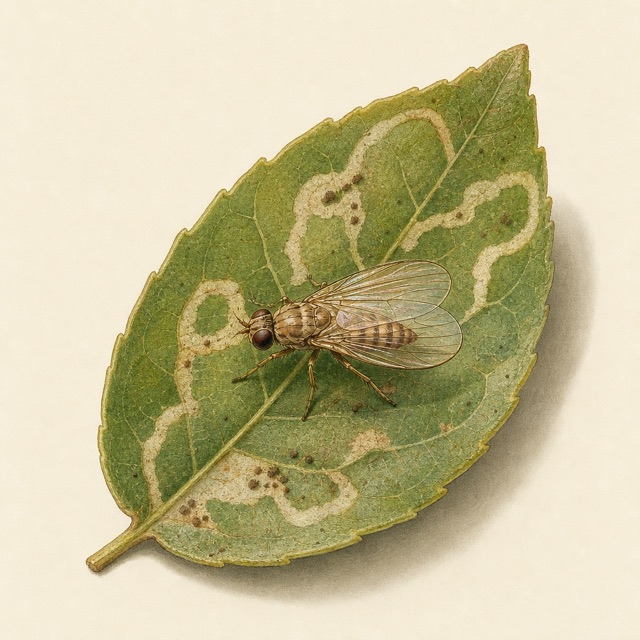
Leaf miners are the larvae of various flies, moths, and beetles that tunnel between the upper and lower surfaces of leaves, creating distinctive winding trails or blotchy patches. While leaf miner damage is rarely fatal to established plants, it is unsightly on ornamentals and can significantly reduce yields in vegetable gardens, especially on spinach, chard, beets, and citrus.
Leaf miners are identified by the distinctive tunnels (mines) they create within leaf tissue rather than by the insects themselves, which are tiny and seldom seen. Mines appear as pale, winding serpentine trails or irregular blotches on leaves. Holding an affected leaf up to light reveals the tiny larva or its frass trail inside the mine.
Similar Pests
Leaf miner trails may be confused with slug or snail damage (which occurs on leaf surfaces, not internally), fungal leaf spots (which lack tunnels when held to light), or mechanical damage from hail. The key distinction is that leaf miner damage occurs between leaf surfaces, creating a translucent window when backlit.
Signs of Infestation
- •Winding, serpentine white or pale trails on leaf surfaces
- •Irregular blotch-shaped pale patches on leaves
- •Tiny puncture marks on leaf surfaces from adult female egg-laying
- •Small, pale larvae visible inside mines when leaves are held up to light
Key Inspection Areas
- •Spinach, chard, beet greens, and lettuce in vegetable gardens
- •Citrus, holly, boxwood, and columbine in ornamental plantings
- •Birch, elm, and oak tree foliage
- •Greenhouse crops including chrysanthemums and tomatoes
When to Inspect
Monitor weekly from spring through fall. Look for the earliest mines in mid to late spring as the first generation of adults begins laying eggs. Check leaf undersides for tiny white eggs.
Inspection Tools
Hand lens or magnifying glass, yellow sticky traps for monitoring adult flies, row cover fabric for prevention
Identify the Type of Leaf Miner
Determine whether you are dealing with vegetable leaf miners (on spinach, chard, beets), citrus leaf miners, or ornamental leaf miners, as management strategies differ. The mine pattern helps: serpentine mines are typically from fly larvae (Agromyzidae), while blotch mines are often from moth larvae (Gracillariidae).
Remove and Destroy Infested Leaves
Pick off all leaves showing active mines and dispose of them in sealed bags in the trash -- not the compost pile. Squeezing the end of a mine trail between your fingers can crush the larva inside. On vegetable crops, harvest outer leaves regularly even if slightly mined to prevent larvae from completing development.
Install Floating Row Covers
For vegetable gardens, cover crops with lightweight floating row cover (such as Agribon AG-19) immediately after planting or transplanting. Secure edges with soil, pins, or boards to prevent adult flies from accessing plants. Row covers allow light, air, and rain to pass through while physically excluding egg-laying adults.
Apply Spinosad for Active Infestations
Spinosad is one of the few insecticides that can reach leaf miners inside their mines, as it has translaminar activity (it moves into leaf tissue). Apply spinosad-based products to foliage when mines are first noticed. Spray in the evening to protect pollinators. Repeat applications every 7-10 days as needed during active mining.
Use Neem Oil as a Systemic Deterrent
Neem oil and azadirachtin-based products act as both contact insecticides and systemic feeding deterrents. Apply neem oil spray to coat both leaf surfaces, focusing on plants showing early egg-laying punctures. When absorbed by leaves, azadirachtin disrupts larval development inside mines. Reapply every 7-14 days.
Deploy Yellow Sticky Traps
Place yellow sticky cards or stakes near susceptible plants at foliage height to trap adult leaf miner flies, which are attracted to yellow. While traps alone will not eliminate an infestation, they help monitor adult activity levels and reduce egg-laying pressure. Replace traps every 2 weeks or when heavily covered.
Encourage Natural Biological Control
Tiny parasitic wasps (Diglyphus isaea, Dacnusa sibirica) are the most important natural enemies of leaf miners and can be purchased for release in greenhouses. Outdoors, conserve native parasitoids by avoiding broad-spectrum insecticides and planting insectary plants like sweet alyssum, dill, and yarrow near susceptible crops.
- 1Cover susceptible vegetable crops with floating row covers immediately after planting to exclude egg-laying adults
- 2Remove and destroy infested leaves promptly to prevent larvae from completing development
- 3Attract and conserve parasitic wasp populations by planting small-flowered herbs like dill, fennel, and sweet alyssum
- 4Rotate vegetable crops to different beds each season to break the life cycle
- 5Clear plant debris and fallen leaves in autumn to remove overwintering pupae
- 6Use yellow sticky traps near susceptible plants to monitor and reduce adult fly populations
Seasonal Note
Deploy floating row covers over susceptible vegetable crops at planting time in spring, before the first generation of adult flies becomes active. This is the single most effective prevention method for leaf miners on edible crops.
Are leaf-mined vegetables safe to eat?
Yes, leaf-mined vegetables are safe to eat. Simply cut away the mined portions of the leaf. The mines are caused by small insect larvae and pose no health risk to humans. For spinach and chard, removing the mined areas leaves the rest of the leaf perfectly edible.
Will leaf miners kill my plants?
Leaf miners rarely kill established plants. However, heavy infestations reduce plant vigor, can significantly lower vegetable yields, and make ornamental plants unsightly. Young seedlings and transplants are more vulnerable than mature plants. Citrus leaf miners can distort new growth on young citrus trees.
Do leaf miners live in the soil?
Many leaf miner species pupate in the soil after leaving the leaf, typically in the top 1-2 inches. This is why crop rotation and clearing plant debris in fall help reduce populations. Cultivating the soil surface in late fall exposes pupae to cold and predators.
Can I use systemic insecticides for leaf miners?
Systemic insecticides can be effective because the chemical moves into leaf tissue where larvae feed. However, systemic products should never be used on edible crops. For ornamental plants and trees, systemic soil drenches with imidacloprid can reduce leaf miner damage. Always follow label restrictions.
How do I prevent leaf miners on citrus trees?
For citrus leaf miners, apply horticultural oil or spinosad to new growth flushes, as the pest targets young, tender leaves. Avoid over-fertilizing citrus in summer, as this promotes the soft new growth that leaf miners prefer. Established citrus trees tolerate moderate leaf miner damage without significant impact on fruit production.
Quick Facts
- Size
- Larvae 1/16 to 1/8 inch; adult flies 1/10 inch
- Color
- Larvae are pale green to yellowish-white; adults vary by species (small flies, moths, or beetles)
- Habitat
- Leaves of vegetables, ornamentals, fruit trees, and shade trees
- Active Season
- Spring through fall, with multiple generations per season in warm climates
Danger Level: Low
This pest is primarily a nuisance but can be eliminated with DIY methods.