Finding lice can feel mortifying, but these tiny parasites are incredibly common and have nothing to do with cleanliness. In fact, lice prefer clean hair because it's easier to attach their eggs to. With the right treatment approach and thorough follow-up, you can eliminate an infestation within 1-2 weeks.
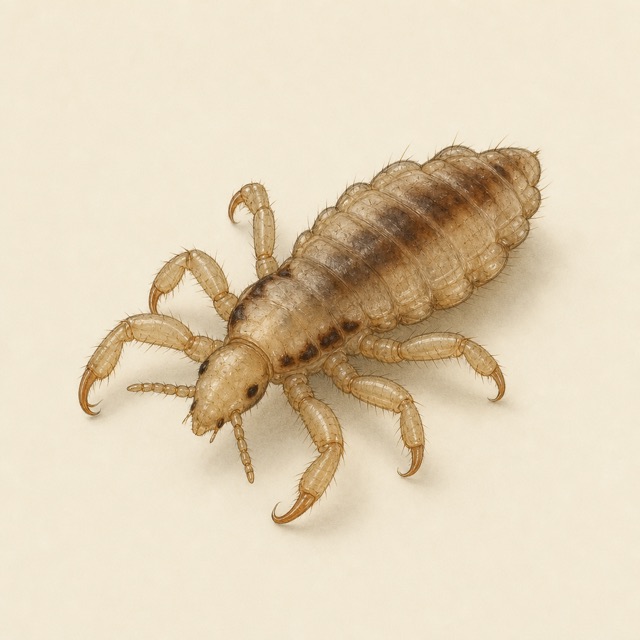
Head lice are 2-3mm (1/16 to 1/8 inch), tan to grayish-white, wingless, with 6 legs ending in hook-like claws for gripping hair shafts. Body lice are slightly larger. Nits (eggs) are tiny (0.8mm), oval, yellowish-white, and cemented to hair shafts near the scalp.
Similar Pests
Dandruff or hair product buildup can resemble nits but slides easily off hair. Nits are firmly glued and require force to remove. Fleas are darker and jump; lice crawl.
Signs of Infestation
- •Intense itching of the scalp, especially behind ears and at nape of neck
- •Small white or yellowish nits (eggs) firmly attached to hair shafts within 1/4 inch of scalp
- •Live lice crawling on scalp, visible when parting hair in bright light
- •Red bumps or sores on scalp from scratching
- •Lice or nits visible on pillowcases, hats, or clothing collars
Key Inspection Areas
- •Scalp hair, especially behind ears and at nape of neck
- •Eyebrows and eyelashes (in heavy infestations)
- •Hair shafts within 1/4 inch of scalp (nits are glued here)
- •On pillowcases, hats, hair accessories, and coat collars
When to Inspect
Inspect immediately if itching is reported or school/daycare notifies of exposure. Check weekly if outbreak is occurring in community. Lice spread most during direct head-to-head contact.
Inspection Tools
Bright light or natural sunlight, fine-toothed lice comb (metal preferred), magnifying glass to distinguish nits from dandruff, white paper towel to see combed-out lice
Confirm the Infestation
Before treating, verify you actually have lice by looking for live bugs (not just dandruff or debris). Check the scalp in bright light or sunlight, focusing behind the ears and at the nape of the neck. Look for nits (eggs) attached to hair shafts within 1/4 inch of the scalp—they're oval, yellowish-white, and don't flake off easily like dandruff. Use a fine-toothed lice comb on wet hair to catch any live lice for confirmation.
Apply an Effective Treatment Product
Use an over-the-counter treatment like Nix (permethrin 1%) or Rid (pyrethrin-based), following package directions exactly. Apply to dry hair unless directed otherwise, saturate the entire scalp and hair from roots to ends, and leave on for the full recommended time (usually 10 minutes). For resistant lice, prescription treatments like Sklice (ivermectin) or Natroba (spinosad) work better. Never use the same product more than 2-3 times if it's not working—lice may be resistant.
Comb Out Dead Lice and Nits
After rinsing the treatment, immediately comb through wet, conditioned hair with a metal nit comb (LiceMeister is excellent). Work in small sections from scalp to hair ends, wiping the comb on a white paper towel after each stroke to see what you're removing. This step is crucial—removing nits prevents re-infestation even if some are still viable. Repeat this combing process every 2-3 days for two weeks.
Retreat at the Right Time
Most treatments require a second application 7-10 days after the first to kill any newly hatched lice from eggs that survived. Mark your calendar and don't skip this step—it's where most people fail. Check the product instructions for exact timing, as it varies by treatment type. If you see new live lice before day 7, the treatment likely didn't work and you need a different product.
Clean Personal Items Strategically
Wash bedding, recently worn clothing, and towels in hot water (130°F) and dry on high heat for 30 minutes. Items that can't be washed should be sealed in plastic bags for 2 weeks or dry-cleaned. Vacuum carpets, furniture, and car seats where the infested person sat recently. Don't waste time on excessive cleaning—lice can't survive more than 1-2 days off the human head.
Treat Hairbrushes and Accessories
Soak all hair accessories, brushes, combs, and hair ties in rubbing alcohol or medicated lice shampoo for one hour, or wash in very hot water (130°F or hotter) for 10 minutes. Alternatively, seal them in a plastic bag for 2 weeks. Don't share these items until you're certain the infestation is completely gone.
Check and Treat All Household Members
Examine everyone in the household carefully, even if they're not showing symptoms—25% of people with lice don't itch. Only treat those who have confirmed live lice or nits within 1/4 inch of the scalp. Treating people preventatively wastes money and can contribute to resistance. However, everyone should be checked every 2-3 days during the treatment period.
Prevent Reinfestation
Teach children not to share hats, helmets, headphones, brushes, or hair accessories. Have kids with long hair wear it tied back at school. If lice keep returning, check with close contacts' families to ensure everyone is treating properly—one untreated source can reinfest an entire classroom or friend group. Consider a weekly check-through with a lice comb as an early detection method during outbreaks.
- 1Avoid head-to-head contact during play, sports, sleepovers, and group photos
- 2Don't share hats, helmets, hair accessories, brushes, combs, or towels
- 3Store coats and hats separately in cubbies or lockers (use hooks, not piles)
- 4Teach children to keep personal items separate at school and daycare
- 5Check children's heads weekly if lice outbreak occurs at school
- 6Wash and dry hats, bedding, and recently worn clothing on high heat if exposure suspected
Seasonal Note
Lice spread year-round but outbreaks peak when school starts (August-September). Check children weekly during outbreak periods.
Can lice jump or fly from person to person?
No, lice cannot jump, fly, or hop. They spread exclusively through direct head-to-head contact, which is why they're so common among children who play closely together. Transmission from combs, hats, or bedding is possible but much less common than most people think. Lice have claws designed specifically for gripping hair shafts, not for moving across surfaces.
Do I need to fumigate my house or throw away furniture?
Absolutely not. Lice die within 1-2 days without access to human blood, so they can't establish a population in your home. Focus your energy on treating the infested person's head thoroughly rather than excessive house cleaning. Simple vacuuming of areas where the person rested their head and washing bedding in hot water is sufficient.
Why do some families keep getting lice over and over?
Recurring infestations usually happen because of incomplete treatment (missing the second application), resistant lice requiring a different product, or reinfection from an untreated contact. Sometimes people mistake dandruff or hair debris for nits and over-treat unnecessarily. If you're stuck in a cycle, see a healthcare provider who can prescribe stronger treatments like oral ivermectin or topical Sklice, and coordinate treatment timing with your child's close contacts.
Are natural or home remedies like mayonnaise or tea tree oil effective?
While some people swear by smothering treatments (mayonnaise, olive oil, petroleum jelly), scientific studies show they're far less effective than FDA-approved treatments. These methods may kill some lice but rarely eliminate nits, leading to reinfestation. Tea tree oil shows some repellent properties but shouldn't replace proven treatments. Your best bet is starting with an evidence-based product and only trying alternatives if you have confirmed resistant lice.
How do I know when the lice are completely gone?
You're clear when you find no live lice and no new nits close to the scalp after 2-3 thorough combings over two weeks. Old nit casings far from the scalp (more than 1/4 inch) are dead or hatched and not a concern. Continue checking weekly for a month after treatment, especially during active outbreaks at school. If you find a live louse after two weeks of proper treatment, you likely need a different product or have been reinfested.
Quick Facts
- Size
- 1/16 - 1/8 inch (2-3mm)
- Color
- Tan to grayish-white, darker when fed
- Habitat
- Human scalp and hair, particularly behind ears and near the neckline
- Active Season
- Year-round (peaks during back-to-school season)
Danger Level: Medium
This pest can cause health issues or property damage if left untreated.