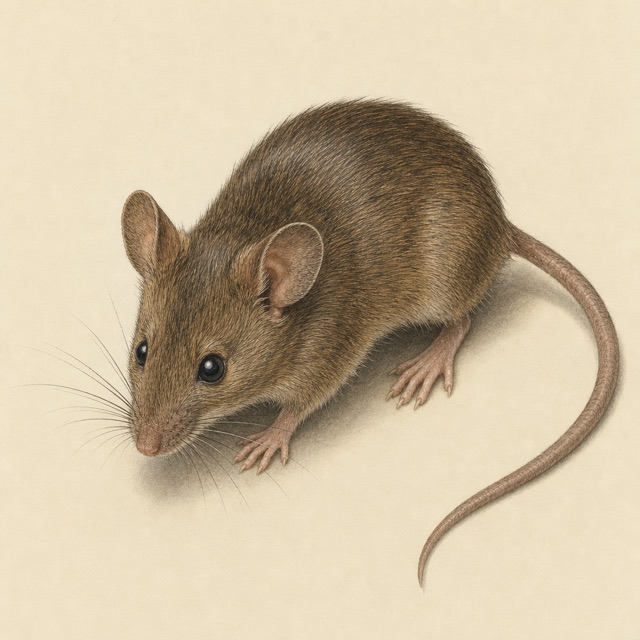
Mice multiply fast — one pair can produce 60 offspring per year. You need to act quickly and use the right combination of traps and exclusion to stop an infestation.
House mice are 2.5 to 3.5 inches body length (tail adds another 2.5-4 inches), gray to light brown, with large ears, pointed snouts, small black eyes, and long, nearly hairless tails. They weigh 1/2 to 1 ounce.
Similar Pests
Young rats are larger (3+ inches at weaning) with proportionally larger feet. Voles have short tails, small ears, and stocky bodies. Shrews have pointed noses and tiny eyes, and eat insects, not grain.
Signs of Infestation
- •Small rod-shaped droppings (1/8 to 1/4 inch) with pointed ends, found along walls or in cabinets
- •Gnaw marks on food packaging, baseboards, wires, and structural wood
- •Greasy rub marks along walls and beams from fur oils on travel routes
- •Musty urine odor in enclosed areas like cabinets and closets
- •Scratching or scurrying sounds in walls and ceilings at night
- •Nests made of shredded paper, fabric, or insulation in hidden areas
Key Inspection Areas
- •Kitchen cabinets, pantries, and under sinks near food and water
- •Behind refrigerators, stoves, dishwashers, and washing machines
- •In attics, wall voids, drop ceilings, and insulation
- •Garages, basements, and storage areas with clutter
- •Along foundations, garage door seals, and utility entry points
When to Inspect
Inspect at dusk and night when mice are most active. Check in fall when cooler weather drives mice indoors. Look for fresh droppings (shiny, soft, dark) vs. old droppings (dull, dry, gray).
Inspection Tools
Flashlight and UV blacklight (urine glows), tracking powder to reveal runways, inspection mirror to check behind appliances, gloves for handling contaminated materials
Find entry points
Mice can squeeze through a dime-sized hole. Check around pipes, the foundation, door gaps, and utility lines. Mark every hole you find.
Set snap traps aggressively
Use 6–12 Victor snap traps in your home — not 2. Place them along walls (mice run along walls), behind appliances, and under sinks. Peanut butter is the best bait.
Check traps daily
Remove dead mice promptly (use gloves). Mice can die in traps and decompose, attracting flies. Reset immediately.
Use rodenticide as backup
If traps alone aren't working, place Contrac Blox in bait stations in attics, crawl spaces, and garage corners. Never in living areas where pets can access.
Seal entry points
Once activity slows, seal every hole with steel wool and expanding foam, or metal flashing. Mice can chew through foam alone.
Sanitize affected areas
Mouse droppings can carry hantavirus. Wet down droppings with bleach solution (don't vacuum), wear a mask, and wipe up. Deep clean affected cabinets.
Maintain exclusion
Keep vegetation away from your foundation. Store food and pet food in metal or glass containers. Check your perimeter seasonally.
- 1Seal cracks and gaps larger than 1/4 inch around foundations, pipes, vents, and utility lines with steel wool and caulk
- 2Install door sweeps on all exterior doors and garage doors
- 3Store food in airtight glass or heavy plastic containers; never leave food out overnight
- 4Keep kitchen clean, wipe up crumbs and spills immediately, and take out trash daily
- 5Remove clutter in basements, attics, and garages to eliminate nesting sites
- 6Store firewood away from house and off the ground
Seasonal Note
Seal entry points in fall (September-October) before cold weather drives mice indoors. Inspect for gaps after first freeze.
How do I know if I have mice or rats?
Mice droppings are small (like rice grains, 3–6mm). Rat droppings are larger (12–20mm). Mice gnaw small clean holes; rats chew larger ragged openings. Rats are less common indoors.
Are mouse droppings dangerous?
Yes. Mouse droppings can carry hantavirus (rare but serious), Salmonella, and Leptospirosis. Always wear gloves and a mask when cleaning them up.
Does one mouse mean an infestation?
One mouse sighting often means more. Mice are social and breed rapidly. Treat aggressively from the start — don't wait to see if it goes away on its own.
What's the best mouse trap?
Classic Victor metal snap traps catch the most mice. Electronic traps (like Victor M250S) are cleaner but pricier. Glue boards are inhumane and less effective — avoid them.
Will mice leave on their own?
No. Unless their food source disappears (which is unlikely in most homes), mice will stay and breed. Active elimination and exclusion are required.
Quick Facts
- Size
- 2.5 - 4 inches
- Color
- Brown, gray, black
- Habitat
- Walls, attics, cabinets
- Active Season
- Fall - Winter
Danger Level: High
This pest poses significant health or property risks. Act quickly and consider professional help.
Top Products
Recommended for How to Get Rid of Mice: Fast and Permanent
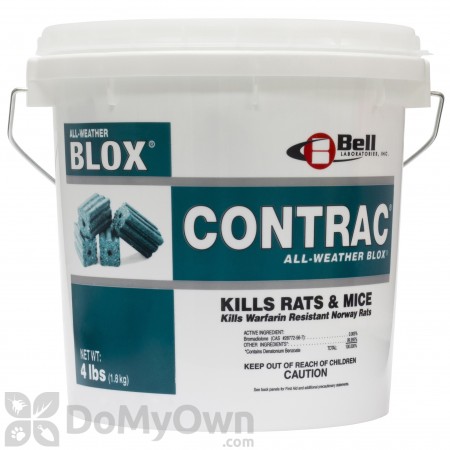
Bell Labs
Contrac Blox Rodenticide
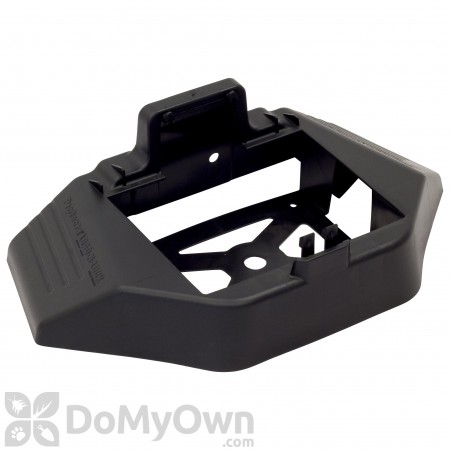
Bell Labs
Protecta LP Bait Station
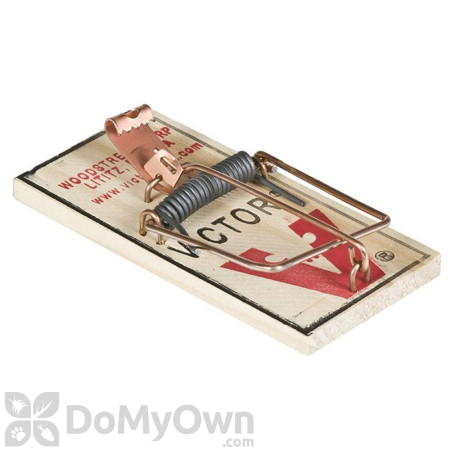
Victor
Victor Original Mouse Trap (12-Pack)