Finding dozens of millipedes curled up in your basement or crawling along your foundation? These harmless but unsettling creatures invade homes by the hundreds when outdoor conditions get too wet or dry. While they won't bite or damage your property, their sheer numbers and sudden migrations can be overwhelming without the right prevention strategy.
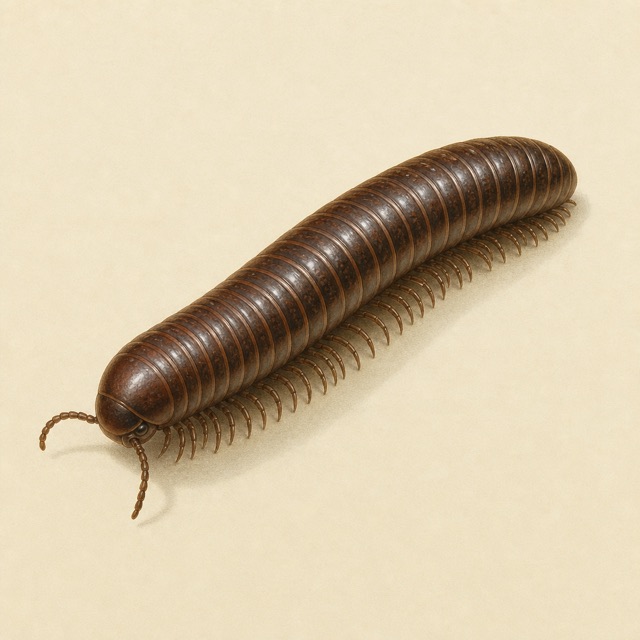
Millipedes are 1/2 to 1.5 inches long, cylindrical, segmented, dark brown to black. They have two pairs of legs per body segment (not a thousand), short antennae, and move slowly in a wave-like motion. They curl into a tight coil when disturbed.
Similar Pests
Centipedes are flatter, faster, have one pair of legs per segment, and long antennae. Wireworms are beetle larvae, smaller, and lack visible legs. Sowbugs/pillbugs are oval and have 7 pairs of legs.
Signs of Infestation
- •Slow-moving millipedes crawling on basement floors, especially after heavy rain
- •Large numbers migrating indoors in fall or during wet periods
- •Millipedes curled into tight spirals when touched or threatened
- •Yellow-brown staining or odor from defensive secretions when handled
Key Inspection Areas
- •Damp basements, crawl spaces, and ground-level bathrooms
- •Under flowerpots, mulch, leaf litter, and landscape stones outside
- •Along foundation walls, door thresholds, and basement windows
- •Compost piles, woodpiles, and rotting logs
When to Inspect
Inspect during or after heavy rain when soil becomes saturated and millipedes migrate. Check in spring and fall. Large migrations occur in autumn before winter.
Inspection Tools
Flashlight for dark corners, vacuum for collecting large numbers, dehumidifier to reduce indoor moisture
Reduce Moisture Around Your Foundation
Millipedes need moisture to survive, so your first priority is eliminating damp conditions. Fix any leaking outdoor faucets, redirect downspouts at least 6 feet from your foundation, and ensure your yard slopes away from the house. Check for standing water in window wells and keep gutters clean to prevent overflow.
Remove Organic Debris and Mulch Barriers
Pull back mulch, leaf piles, grass clippings, and wood chips at least 12 inches from your foundation—these create perfect millipede habitat. Replace organic mulch near the house with inorganic options like gravel or rubber mulch. Remove rotting wood, fallen leaves, and any vegetation touching your siding since these act as bridges for millipedes to climb.
Seal Entry Points and Cracks
Millipedes slip through surprisingly small gaps, so inspect your foundation for cracks and seal them with silicone caulk or polyurethane foam. Install or replace weatherstripping on doors, especially garage doors where gaps are common. Add door sweeps to exterior doors and ensure basement windows have tight-fitting screens or covers.
Apply Perimeter Barrier Treatment
Create a chemical barrier using products like Talstar P, Demon WP, or Suspend SC around your foundation. Spray a 3-foot band up the wall and 10 feet out from the foundation, focusing on areas where millipedes congregate. Apply during dry weather in spring before migration season starts, and reapply every 60-90 days or after heavy rain.
Use Granular Insecticide for Yard Treatment
Apply granular insecticides like Bifen LP or Talstar PL across your lawn, especially in mulched beds and along the foundation perimeter. Water the granules in lightly after application to activate them. This creates a protective zone that kills millipedes before they reach your home and is especially effective before seasonal migrations.
Deploy Indoor Barriers and Traps
For millipedes that make it inside, apply CimeXa insecticidal dust or diatomaceous earth along baseboards, in cracks, and around entry points. These desiccants physically damage their exoskeleton and work without chemicals. Vacuum up visible millipedes daily (they won't infest indoors but can gather in large numbers during migrations).
Reduce Indoor Humidity
Use dehumidifiers in basements and crawl spaces to keep humidity below 50%, making your home inhospitable to millipedes. Fix any plumbing leaks, improve ventilation in damp areas, and consider installing a vapor barrier in crawl spaces. Millipedes that wander inside will quickly dry out and die in low-humidity environments.
Monitor and Maintain Your Defenses
Check your perimeter monthly for new cracks, vegetation growth, or moisture problems that could attract millipedes. Be especially vigilant before spring and fall when millipedes migrate en masse due to weather changes. Keep a spray bottle of diluted insecticide handy for spot treatments when you notice activity increasing around your foundation.
- 1Remove mulch, leaf litter, and organic debris from around foundation
- 2Fix drainage issues and redirect downspouts away from house to reduce moisture
- 3Seal cracks around doors, windows, foundations, and utility entry points
- 4Install door sweeps and weatherstripping on exterior doors
- 5Reduce outdoor lighting or switch to yellow bug lights (millipedes are attracted to light)
- 6Use dehumidifiers in basements and crawl spaces to keep humidity below 50%
Seasonal Note
Millipedes migrate indoors during heavy rain in spring/fall. Seal entry points and improve drainage before rainy seasons.
Are millipedes dangerous or do they bite?
No, millipedes are completely harmless to humans and pets. They don't bite, sting, or carry diseases. Some species can secrete a defensive fluid that may irritate skin or smell unpleasant, but this is rare and mild. The main issue with millipedes is simply their disturbing appearance and tendency to invade in large numbers during migration periods.
Why am I suddenly seeing hundreds of millipedes?
Mass millipede migrations typically happen in spring and fall when soil moisture changes dramatically—either from heavy rain flooding their habitat or drought drying it out. They're searching for more favorable conditions and unfortunately often end up against foundations and inside homes. These migrations are temporary but can involve thousands of individuals over several days or weeks.
What's the difference between millipedes and centipedes?
Millipedes have two pairs of legs per body segment, move slowly, curl into a spiral when threatened, and eat decaying plant matter. Centipedes have one pair of legs per segment, move quickly, don't curl up, and are predators that can bite. Millipedes are harmless decomposers while centipedes are beneficial predators that can occasionally bite if handled.
Will millipedes infest my house or reproduce indoors?
No, millipedes cannot reproduce or survive long-term indoors because they require very moist conditions and feed on decaying vegetation. Any millipedes that enter your home will die within days from desiccation unless you have severe moisture problems. They're temporary invaders, not true indoor pests, so focusing on exclusion and outdoor control is most effective.
Do I need an exterminator for millipedes?
Most millipede problems can be solved with DIY methods focused on moisture control, exclusion, and perimeter treatments. However, if you're experiencing persistent invasions of hundreds or thousands despite your efforts, or if you have underlying moisture issues you can't identify, a pest control professional can provide comprehensive treatment and identify harborage areas you might have missed.
Quick Facts
- Size
- 1/2 - 2 inches (varies by species)
- Color
- Dark brown to black, sometimes with reddish bands
- Habitat
- Damp soil, leaf litter, mulch, under rocks and logs, basements
- Active Season
- Spring and fall (most active during migration periods)
Danger Level: Low
This pest is primarily a nuisance but can be eliminated with DIY methods.