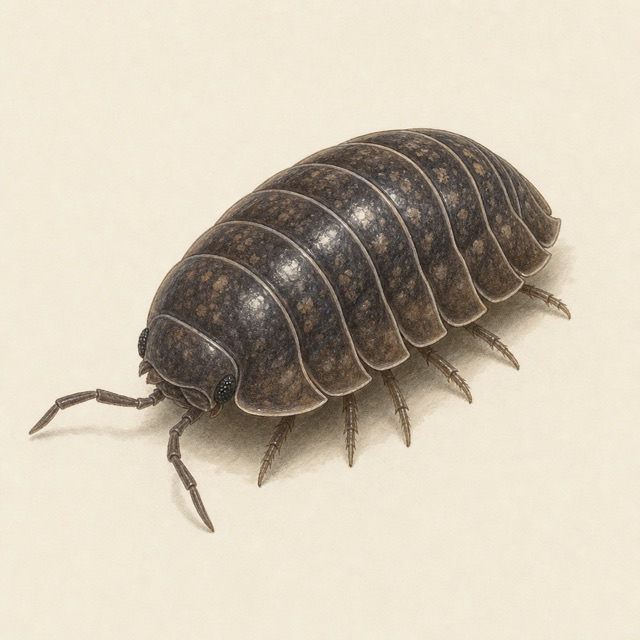
Finding those little armored bugs that roll into balls around your garden or basement? Pillbugs aren't actually insects—they're land-dwelling crustaceans more closely related to shrimp than beetles. While mostly harmless, large populations can damage seedlings and indicate serious moisture problems that attract worse pests.
Pillbugs (Roly Polies): Complete Guide are identifiable by their Dark gray to brown, segmented armor coloring and 1/4 - 1/2 inch size. Scientific name: Armadillidium vulgare. They have distinct physical features that help differentiate them from similar pests.
Signs of Infestation
- •Physical sightings of the pest in or around the affected area
- •Damage patterns characteristic of this pest's feeding or nesting behavior
- •Droppings, shed skins, or other biological evidence of infestation
Key Inspection Areas
- •Areas where Moist areas under rocks, mulch, leaf litter, wood piles, and damp basements is commonly found
- •Entry points and harborage sites specific to this pest
- •Food and water sources that attract this pest
When to Inspect
Inspect during peak activity times for this pest. Check regularly during their active season (Spring through fall (year-round in mild climates)).
Inspection Tools
Flashlight for inspecting dark areas, appropriate traps for monitoring
Identify Moisture Sources
Walk around your foundation and identify everywhere moisture accumulates—leaky gutters, air conditioner drips, overwatered garden beds, or areas with poor drainage. Pillbugs require constant moisture to breathe through their gill-like structures, so they congregate where it's damp. Use a moisture meter to check crawl spaces and basements for hidden humidity problems that might be attracting them indoors.
Remove Harborage Sites
Clear away leaf litter, grass clippings, mulch piles, and stacked wood from within 12 inches of your foundation. Flip over rocks, old boards, flower pots, and debris where pillbugs hide during the day. Store firewood at least 20 feet from your home on a rack that keeps it off the ground. This single step can reduce outdoor populations by 70-80% within a few weeks.
Fix Drainage and Reduce Watering
Extend downspouts to carry water at least 6 feet from your foundation and regrade soil so it slopes away from the house. Reduce lawn irrigation frequency and water in the morning so soil dries during the day. In garden beds, pull mulch back to 2-3 inches thick instead of deep layers that stay perpetually damp. Consider switching from wood mulch to gravel or stone in problem areas.
Seal Entry Points
Inspect your foundation for gaps around utility pipes, worn door sweeps, and cracks in concrete or siding. Seal openings with silicone caulk or expanding foam, and install or replace door sweeps on exterior doors. Pay special attention to basement window wells and crawl space vents. While pillbugs don't infest homes like true pests, they'll wander inside if conditions are right.
Apply Diatomaceous Earth Barriers
Spread food-grade diatomaceous earth (DE) like Harris or Safer Brand in a 6-inch band around your foundation, in crawl spaces, and along basement walls. The microscopic sharp edges damage their exoskeletons and absorb their moisture, causing dehydration. Reapply after rain since moisture reduces effectiveness. This non-toxic approach works great for long-term prevention without chemicals.
Use Targeted Insecticide Treatment
For heavy infestations, apply a perimeter spray like Talstar P or Ortho Home Defense around your foundation, focusing on areas where pillbugs congregate. Granular products like Bifen LP work well in mulch beds and under shrubs—just water lightly after application. These treatments create a protective barrier that lasts 2-3 months. Always follow label directions and avoid overspraying near water sources.
Set Up Beer Traps for Quick Reduction
Bury shallow containers (tuna cans work perfectly) so the rim is level with the soil and fill halfway with cheap beer. Pillbugs are attracted to the yeast, crawl in, and drown. Place traps every 10 feet in problem areas and empty daily. This old-school method can catch hundreds of pillbugs quickly and helps you monitor whether your other control efforts are working.
Monitor and Maintain Long-Term
Check your perimeter monthly for new harborage sites, moisture buildup, and pillbug activity. Keep gutters clean and ensure grading stays effective after heavy rains. In vegetable gardens, use copper barriers around seedlings or start plants in trays before transplanting to avoid the vulnerable stage when pillbugs cause the most damage. Remember that occasional pillbugs outdoors are normal—you're managing populations, not eliminating them entirely.
- 1Eliminate food sources and properly store food items
- 2Reduce moisture and fix any water leaks
- 3Seal entry points and potential access routes
- 4Maintain cleanliness and reduce clutter that provides harborage
- 5Monitor regularly and address problems early before populations grow
Are pillbugs harmful to humans or pets?
Pillbugs are completely harmless to humans and pets—they don't bite, sting, or transmit diseases. They're actually beneficial decomposers in nature, breaking down dead plant material. The only damage they cause is occasionally nibbling on tender seedlings or young plant roots when populations get large. Think of them as a nuisance indicator of moisture problems rather than a true pest.
Why do I suddenly have so many pillbugs?
Sudden pillbug populations usually indicate increased moisture from overwatering, drainage problems, or recent rain after dry periods. They may also appear in large numbers when weather changes—hot, dry conditions drive them to seek damper areas, often leading them toward homes. Check for leaky irrigation, clogged gutters, or areas where water pools after storms. Addressing the moisture source solves the pillbug problem.
What's the difference between pillbugs and sowbugs?
Pillbugs (roly polies) can roll into a complete ball when threatened, while sowbugs cannot—they just have two tail-like appendages and run away instead. Both are land crustaceans requiring moisture, but pillbugs have a more domed shape and sowbugs are flatter. The control methods are identical for both since they share the same habitat preferences and behaviors. Most people have both species but don't realize it.
Will pillbugs damage my garden or lawn?
Mature plants and established lawns are rarely damaged by pillbugs. The main risk is to tender seedlings, young transplants, and germinating seeds where they may feed on stems and roots. Strawberries and other ground fruits can also show feeding damage. In compost piles and leaf litter, pillbugs are actually beneficial decomposers. Use copper barriers or start plants indoors if you've had previous seedling damage.
How long do pillbugs live and how fast do they reproduce?
Pillbugs live 2-3 years, which is quite long for such a small creature. Females carry eggs in a pouch (like kangaroos!) and can produce 1-3 broods per year with 25-75 young each time. The young look like tiny white versions of adults and mature in about one year. This relatively slow reproduction means controlling moisture and harborage sites can significantly reduce populations within a single season.
Quick Facts
- Size
- 1/4 - 1/2 inch
- Color
- Dark gray to brown, segmented armor
- Habitat
- Moist areas under rocks, mulch, leaf litter, wood piles, and damp basements
- Active Season
- Spring through fall (year-round in mild climates)
Danger Level: Low
This pest is primarily a nuisance but can be eliminated with DIY methods.