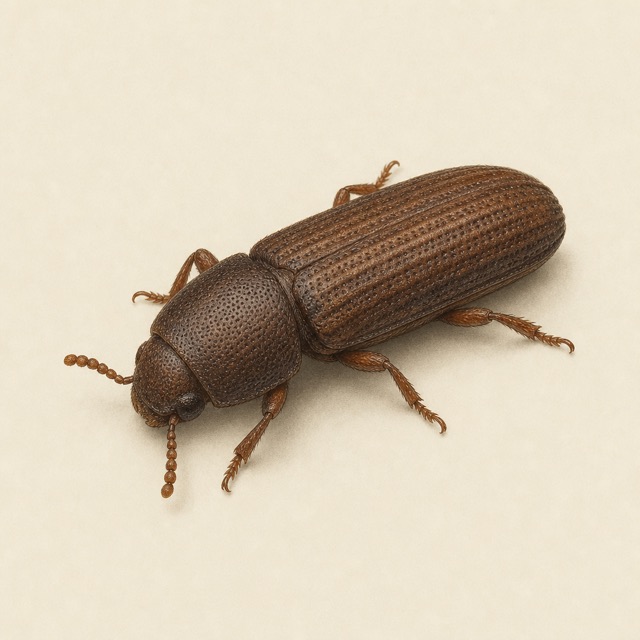
Powder post beetles are among the most destructive wood-boring insects in North America, second only to termites in the structural damage they cause. These tiny beetles reduce seasoned hardwoods to a fine, flour-like powder, often going undetected until the damage is severe. Early identification and swift action are critical to protecting your home, furniture, and hardwood flooring.
Powder post beetles are small, slender, flattened insects with elongated bodies and short antennae ending in a two-segmented club. Adults are reddish-brown to nearly black, while larvae are white, C-shaped grubs found inside wood. The damage they leave behind -- fine, talcum-like powder (frass) sifting from tiny round exit holes -- is often the first sign of infestation.
Similar Pests
Often confused with deathwatch beetles (Anobiidae) and old house borers (Cerambycidae). Deathwatch beetles produce coarser, gritty frass and prefer softwoods, while old house borers are significantly larger (up to 1 inch) and leave oval-shaped exit holes. Powder post beetle exit holes are perfectly round and about 1/32 to 1/16 inch in diameter.
Signs of Infestation
- •Fine, powdery frass (like talcum powder) accumulating beneath wood surfaces
- •Tiny round exit holes (1/32 to 1/16 inch) in hardwood surfaces
- •Weakened or crumbling wood that collapses under light pressure
- •Small reddish-brown beetles found near windows or light sources in spring
Key Inspection Areas
- •Hardwood flooring, especially in basements and crawl spaces
- •Antique furniture, picture frames, and wooden artifacts
- •Structural hardwood joists, sills, and sub-flooring
- •Stored lumber, plywood, and bamboo materials
When to Inspect
Inspect in late spring and early summer when adults are most active and exit holes are fresh. Check year-round for accumulating frass beneath wood surfaces.
Inspection Tools
Flashlight, magnifying glass, moisture meter, thin probe or awl for testing wood integrity, collection bag for frass samples
Confirm the Infestation
Examine suspected areas with a flashlight and magnifying glass. Look for fresh exit holes (clean edges, light-colored interior) and accumulating frass. Tap wood with a probe -- infested wood sounds hollow. Collect frass samples: powder post beetle frass feels like talcum powder when rubbed between fingers.
Assess the Extent of Damage
Map all affected areas throughout your home. Check adjacent rooms, floors, and connected wood structures. Use a moisture meter to identify high-moisture zones that favor beetle development. Determine whether the infestation is active (fresh frass, new holes) or historic (dark, filled holes with no fresh powder).
Remove and Replace Severely Damaged Wood
Cut out and dispose of heavily infested wood that has lost structural integrity. Bag removed wood in heavy plastic before transporting it out to prevent spreading larvae. Replace with kiln-dried, treated lumber or hardwood that has been sealed on all surfaces.
Apply Borate Wood Treatment
Treat all accessible unfinished wood surfaces with a borate-based product like Bora-Care or Timbor. Mix according to label directions and apply with a brush, roller, or sprayer. Borates penetrate the wood and kill larvae on contact while providing long-term residual protection.
Seal All Wood Surfaces
Apply polyurethane, varnish, or paint to all exposed hardwood surfaces after borate treatment has dried. A sealed surface prevents female beetles from detecting wood grain and laying eggs in pores. Pay special attention to end-grain cuts and undersides of flooring.
Reduce Moisture Levels
Install dehumidifiers in basements, crawl spaces, and attics to bring wood moisture content below 8%. Fix any plumbing leaks, improve ventilation, and ensure proper drainage around the foundation. Dry wood is inhospitable to larvae and halts development.
Monitor and Follow Up
Mark all existing exit holes with tape or paint so you can distinguish new emergence. Re-inspect quarterly for at least two years, since beetle life cycles can span 1-5 years. If new holes appear after treatment, consider professional fumigation with sulfuryl fluoride (Vikane) for severe or inaccessible infestations.
- 1Kiln-dry all lumber before use in construction or woodworking projects to kill larvae and eggs
- 2Apply borate-based wood preservatives (such as Bora-Care) to unfinished wood surfaces
- 3Seal, varnish, or paint all exposed hardwood surfaces to prevent egg-laying
- 4Maintain indoor humidity below 50% using dehumidifiers, as larvae require moisture above 8% to develop
- 5Inspect all antique furniture, reclaimed wood, and imported hardwood items before bringing them indoors
- 6Store firewood and lumber away from the home and off the ground
Seasonal Note
Focus prevention efforts in early spring before adults emerge. Apply protective finishes to any unfinished hardwood during winter months when beetles are dormant.
Can powder post beetles destroy a house?
Yes, given enough time. Powder post beetles can cause significant structural damage to hardwood framing, flooring, and joists. Unlike termites, they work slowly over years, but untreated infestations can eventually compromise structural integrity and require costly repairs.
How do I know if my powder post beetle infestation is active?
Active infestations produce fresh frass that is light in color and powdery, with exit holes that have clean, sharp edges and light-colored interiors. Place a piece of paper or tape beneath suspected holes and check for new frass accumulation over several weeks.
Do powder post beetles spread from furniture to the house?
Yes, this is one of the most common ways homes become infested. Beetles emerging from infested antique furniture, picture frames, or imported wood items can fly to and lay eggs in hardwood flooring, trim, and structural wood throughout the home.
Will freezing kill powder post beetles?
Freezing can kill powder post beetles in small items like furniture or picture frames. Items must be held at 0 degrees F (-18 degrees C) for at least 72 hours. This method is not practical for structural infestations but works well for individual pieces.
Should I hire a professional for powder post beetles?
Professional treatment is recommended for widespread or structural infestations, especially when fumigation is needed. DIY borate treatments work well for accessible, localized problems and as preventive measures, but whole-structure fumigation requires licensed pest control operators.
Quick Facts
- Size
- 1/8 to 1/4 inch (3-6 mm)
- Color
- Reddish-brown to dark brown
- Habitat
- Seasoned hardwoods including flooring, furniture, cabinetry, and structural timbers
- Active Season
- Spring and summer (adults emerge April through July)
Danger Level: High
This pest poses significant health or property risks. Act quickly and consider professional help.