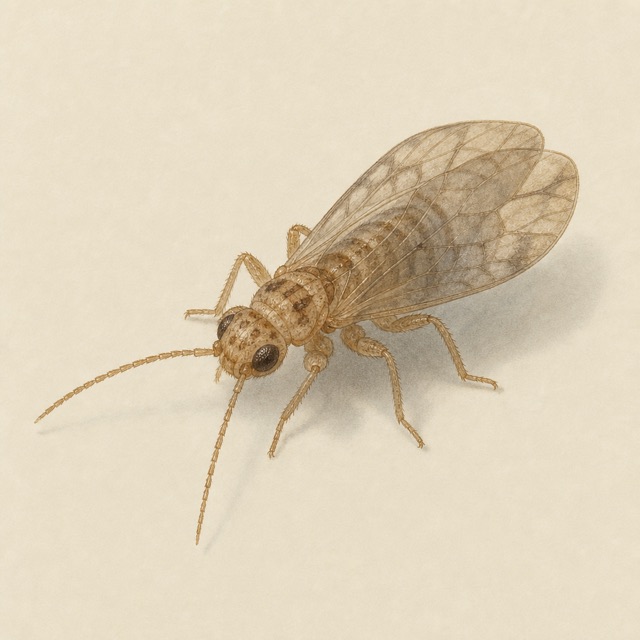
Psocids, commonly called booklice or barklice, are tiny moisture-loving insects that suddenly appear in humid areas of your home. Despite their nickname, they're not actually lice and don't bite humans—but their presence signals a humidity or mold problem that needs immediate attention. The good news? Once you control moisture levels, these harmless pests disappear quickly without expensive treatments.
Psocids (Booklice): Complete Guide are identifiable by their Translucent white, gray, or light brown coloring and 1/25 - 1/16 inch (1-2 mm) size. Scientific name: Liposcelis spp.. They have distinct physical features that help differentiate them from similar pests.
Signs of Infestation
- •Physical sightings of the pest in or around the affected area
- •Damage patterns characteristic of this pest's feeding or nesting behavior
- •Droppings, shed skins, or other biological evidence of infestation
Key Inspection Areas
- •Areas where High-humidity areas including bathrooms, kitchens, basements, stored books, cardboard boxes, and areas with mold growth is commonly found
- •Entry points and harborage sites specific to this pest
- •Food and water sources that attract this pest
When to Inspect
Inspect during peak activity times for this pest. Check regularly during their active season (Year-round indoors, most active in warm, humid months (spring through fall)).
Inspection Tools
Flashlight for inspecting dark areas, appropriate traps for monitoring
Identify the Moisture Source
Psocids only thrive when humidity exceeds 50-60%, so finding the moisture source is critical. Check for leaking pipes under sinks, condensation on windows, poorly ventilated bathrooms, or damp basements. Use a hygrometer (available for $10-15 at hardware stores) to measure humidity levels in affected rooms. If readings consistently exceed 50%, you've found your problem area.
Reduce Indoor Humidity Immediately
Lower humidity below 50% to make your home uninhabitable for psocids. Run dehumidifiers in basements and other problem areas—the hOmeLabs 4,500 Sq Ft dehumidifier works well for larger spaces. Improve ventilation by using exhaust fans during showers and cooking, opening windows when weather permits, and ensuring your dryer vents outside properly. This single step will eliminate most psocid populations within 1-2 weeks.
Remove Mold and Mildew
Psocids feed primarily on mold, mildew, and fungi, so eliminating their food source is essential. Clean affected areas with a solution of 1 part bleach to 10 parts water, or use Concrobium Mold Control for a non-toxic option. Pay special attention to bathroom grout, window sills, book storage areas, and anywhere you see discoloration. Allow surfaces to dry completely after cleaning.
Inspect and Clean Stored Items
Check stored books, papers, cardboard boxes, dried foods, and fabrics in closets or basements. Discard moldy items that can't be salvaged. For valuable books with psocids, place them in sealed bags with a few silica gel packets for 2-3 weeks to desiccate the insects. Transfer items from cardboard to plastic storage containers with tight-fitting lids to prevent future infestations.
Vacuum and Remove Visible Psocids
Vacuum all surfaces where you've seen psocids, including window sills, baseboards, shelves, and around stored items. Use the crevice attachment to reach tight spaces. Immediately dispose of the vacuum bag or empty the canister into an outdoor trash bin. Wipe down surfaces with a damp microfiber cloth afterward—psocids are so small they can escape from some vacuum filters.
Apply Desiccant Dust in Problem Areas
For persistent problems, apply CimeXa insecticide dust or food-grade diatomaceous earth in wall voids, behind baseboards, and other harboring areas. These desiccants physically damage the psocids' waxy coating, causing dehydration. Use a hand duster like the JT Eaton Duster for precise application. This provides long-term control in areas you can't easily monitor or where humidity fluctuates.
Fix Structural Issues
Address underlying problems that create humidity: repair leaking roofs or gutters, seal cracks in foundation walls, install vapor barriers in crawl spaces, and ensure proper attic ventilation. Check that bathroom and kitchen exhaust fans vent outside, not into attics. These permanent fixes prevent psocid populations from returning and protect your home from more serious moisture damage.
Monitor and Maintain Dry Conditions
Continue monitoring humidity levels weekly with your hygrometer, keeping them between 30-50% year-round. Run dehumidifiers during humid seasons and ensure good air circulation throughout your home. Regularly inspect previous problem areas for any signs of mold or psocid return. With consistent moisture control, psocids won't return—they simply cannot survive in dry environments.
- 1Eliminate food sources and properly store food items
- 2Reduce moisture and fix any water leaks
- 3Seal entry points and potential access routes
- 4Maintain cleanliness and reduce clutter that provides harborage
- 5Monitor regularly and address problems early before populations grow
Are booklice harmful to humans or do they bite?
No, psocids (booklice) do not bite humans, pets, or spread diseases. They have chewing mouthparts designed for feeding on mold, fungi, and microscopic organic matter—not for biting. While completely harmless, their presence indicates excess moisture and potential mold growth, which can cause health issues. They're considered a nuisance pest rather than a health threat.
Why do I suddenly have booklice everywhere?
Sudden psocid appearances are almost always linked to increased humidity levels—often from seasonal changes, a new leak, or poor ventilation. They reproduce rapidly when conditions are favorable (above 50% humidity with mold present), so small populations can explode in just weeks. Recent water damage, a humidifier running too high, or even storing damp items indoors can trigger an outbreak.
How long does it take to get rid of booklice?
With proper moisture control, psocid populations typically disappear within 1-3 weeks. They cannot survive or reproduce when humidity drops below 50%, and adults only live 1-4 months. If you see psocids persisting beyond three weeks, you haven't fully addressed the moisture source. Complete elimination requires maintaining low humidity consistently—temporary fixes won't work.
Can booklice infest food in my pantry?
Yes, psocids can infest stored foods, especially grains, cereals, flour, and dried goods that have been exposed to humidity. They're often mistaken for grain mites. Check pantry items for moisture damage or clumping, which indicates humidity problems. Store dry goods in airtight containers and discard any infested packages. Unlike other pantry pests, they're feeding on microscopic mold on the food, not the food itself.
Do I need to call an exterminator for booklice?
Professional pest control is rarely necessary for psocids since they're a DIY-friendly problem that responds to moisture reduction. However, if you've controlled humidity for 3-4 weeks without improvement, or can't locate the moisture source, a professional can identify hidden leaks or ventilation issues. Many pest control companies actually refer psocid problems to moisture remediation specialists since the issue is environmental, not truly pest-related.
Quick Facts
- Size
- 1/25 - 1/16 inch (1-2 mm)
- Color
- Translucent white, gray, or light brown
- Habitat
- High-humidity areas including bathrooms, kitchens, basements, stored books, cardboard boxes, and areas with mold growth
- Active Season
- Year-round indoors, most active in warm, humid months (spring through fall)
Danger Level: Low
This pest is primarily a nuisance but can be eliminated with DIY methods.