Rabbits are one of the most destructive garden pests in North America, capable of decimating vegetable gardens, flower beds, and young trees in a single season. Their rapid reproduction rate means a small rabbit problem can quickly become an overwhelming infestation without prompt action.
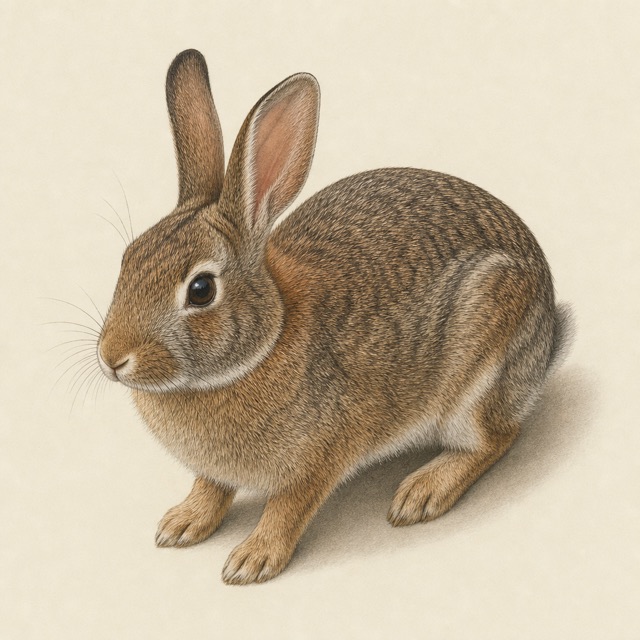
Eastern cottontail rabbits are the most common species causing garden damage across the United States. They have compact bodies with long ears, large hind legs, and the characteristic white cottontail. They are most active at dawn and dusk and can often be spotted feeding on lawns in the early morning.
Similar Pests
Jackrabbits (actually hares) are larger with longer ears and legs and prefer open grassland habitats. Groundhogs are sometimes confused with large rabbits at a distance but are much stockier and lack the cottontail. Rabbit feeding damage may be confused with deer browse, but rabbit-clipped stems show a clean 45-degree angle cut.
Signs of Infestation
- •Cleanly clipped stems and leaves on garden plants cut at a 45-degree angle near ground level
- •Small, round, pea-sized droppings scattered across the lawn and garden beds
- •Bark stripped from young trees and shrubs up to about 2 feet high, especially in winter
- •Shallow depressions (forms) in tall grass or mulch where rabbits rest during the day
Key Inspection Areas
- •Vegetable gardens, flower beds, and newly planted landscape areas
- •Under decks, sheds, porches, and dense shrub borders
- •Along fence lines, brush piles, and property edges with tall grass
- •Around young trees and ornamental shrubs, especially in winter
When to Inspect
Inspect at dawn or dusk when rabbits are most actively feeding. Look for fresh droppings, clipped vegetation, and worn trails through grass. Winter inspections should focus on bark damage to young trees and shrubs, which is often the most costly rabbit damage.
Inspection Tools
No specialized tools needed. A flashlight for dusk inspection, garden gloves, and a camera to document damage patterns help plan an effective deterrent strategy.
Assess the scope of damage and rabbit population
Survey your property at dawn or dusk to count active rabbits and identify feeding patterns. Note which plants are being targeted and where droppings are concentrated. Check under structures for nesting rabbits, called forms or warrens. This assessment determines whether you need localized plant protection or property-wide management.
Install fencing around high-value areas
Erect a fence of one-inch mesh chicken wire or welded wire around vegetable gardens, flower beds, and newly planted areas. The fence should be at least 36 inches high and buried 6 inches underground with the bottom 6 inches bent outward in an L-shape to prevent digging under. Ensure gate openings seal flush with the ground.
Protect individual trees and shrubs
Wrap young tree trunks with quarter-inch hardware cloth cylinders extending from ground level to at least 24 inches above the maximum expected snow depth. Leave 2 to 3 inches of clearance around the trunk for growth. This prevents the bark stripping that can girdle and kill young trees during winter.
Apply repellents to unprotected plants
Spray or sprinkle commercial rabbit repellent on ornamental plants, shrub borders, and other unprotected areas. Products containing putrescent egg solids, blood meal, or capsaicin are most effective. Reapply every 2 to 4 weeks and after rainfall. Rotate between different repellent types to prevent habituation.
Reduce habitat and shelter
Clear brush piles, mow tall grass, and remove dense ground cover within 50 feet of garden areas. Block access under decks, sheds, and porches with hardware cloth. Rabbits are prey animals that rely on nearby cover for safety. Removing shelter makes your property feel exposed and less attractive.
Use live traps for persistent populations
Set medium-sized live traps baited with fresh vegetables, apple slices, or dried corn near rabbit feeding areas and travel paths. Check traps at least twice daily. Contact your local wildlife agency for relocation regulations, as rules vary by jurisdiction. Live trapping is most effective in late winter when food is scarce.
Maintain defenses and adapt seasonally
Inspect fencing monthly for gaps and damage from weather, pets, or wildlife. Refresh repellent applications on a regular schedule. In fall, install tree guards before snowfall raises the effective reach of rabbits. Monitor for new rabbit activity throughout the year, as neighboring populations can quickly move in when habitat is available.
- 1Install a garden fence at least 36 inches high made of one-inch chicken wire or welded wire with the bottom buried 6 inches underground
- 2Protect individual young trees and shrubs with hardware cloth cylinders standing at least 24 inches above the expected snow line
- 3Remove brush piles, dense ground cover, and tall weeds near garden areas that provide rabbit shelter
- 4Keep lawn mowed short around garden perimeters to reduce cover for approaching rabbits
- 5Apply commercial rabbit repellent containing putrescent egg solids or capsaicin to vulnerable plants
- 6Plant rabbit-resistant species like lavender, marigolds, salvia, and catmint as borders around vegetable gardens
Seasonal Note
Install garden fencing before spring planting and tree guards before the first snow. Winter is when rabbits cause the most damage to woody plants by stripping bark. Spring is peak breeding season, so addressing populations early prevents exponential growth through summer.
What plants do rabbits avoid eating?
Rabbits generally avoid plants with strong scents, fuzzy leaves, or toxic compounds. Resistant species include lavender, rosemary, sage, marigolds, geraniums, daffodils, foxglove, and most ornamental grasses. However, hungry rabbits will eat almost anything when preferred food is scarce, so fencing remains the most reliable protection.
How fast do rabbits reproduce?
Eastern cottontails can produce 3 to 5 litters per year with 3 to 8 kits per litter. Young rabbits reach reproductive maturity in just 2 to 3 months. A single pair of rabbits can produce over 50 offspring in a year under ideal conditions, which is why early intervention is important.
Do rabbits carry diseases that affect humans?
Rabbits can carry tularemia (rabbit fever), which is transmitted through tick bites, contact with infected animals, or handling carcasses. They can also harbor fleas and ticks that transmit other diseases. Avoid handling wild rabbits with bare hands and use gloves when cleaning up heavy droppings accumulations.
Will a dog keep rabbits out of my yard?
An active outdoor dog can deter rabbits through its scent and presence, but this is not a reliable or humane rabbit management strategy. Rabbits will simply feed when the dog is indoors or asleep. Physical barriers like fencing provide consistent protection regardless of your pet's schedule.
How high can a rabbit jump?
Cottontail rabbits can jump approximately 2 to 3 feet high and squeeze through gaps as small as 3 inches. This is why garden fences should be at least 36 inches tall with one-inch mesh that prevents squeezing through. The buried L-shaped footer prevents the alternative strategy of digging under.
Quick Facts
- Size
- 14 to 18 inches long; 2 to 4 pounds (eastern cottontail)
- Color
- Grayish-brown fur with a white cotton-ball tail, lighter underside, and reddish-brown nape
- Habitat
- Suburban yards, gardens, meadows, brushy edges, under decks and sheds, and areas with dense low vegetation
- Active Season
- Year-round; most damaging to gardens from spring through fall; bark damage occurs in winter
Danger Level: Low
This pest is primarily a nuisance but can be eliminated with DIY methods.