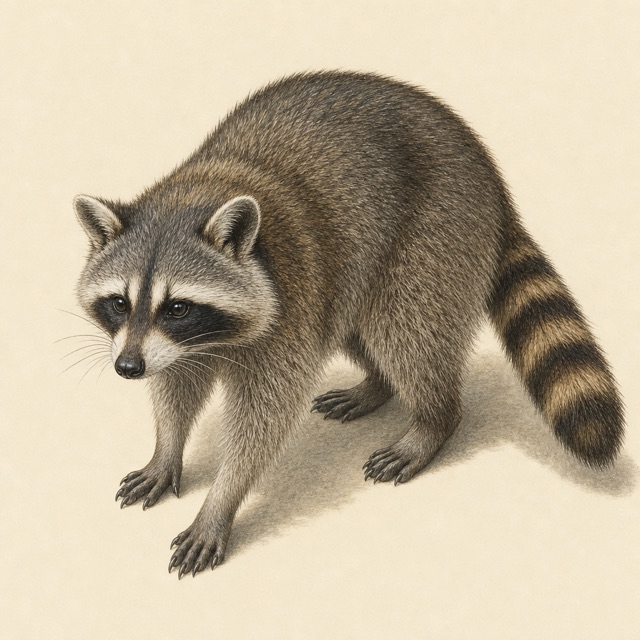
Raccoons are intelligent, highly adaptable mammals that cause thousands of dollars in property damage each year by tearing into attics, raiding trash cans, and destroying gardens. Their ability to open latches, pry off vent covers, and squeeze through surprisingly small gaps makes them one of the most challenging wildlife pests to exclude from homes.
Raccoons are medium-sized mammals with stocky bodies, dexterous front paws, and the iconic black facial mask. Adults typically weigh 10 to 30 pounds, though urban raccoons fed on human refuse can exceed 40 pounds. Their tracks show five toes on both front and hind feet resembling small human handprints.
Similar Pests
Sometimes confused with opossums at night, though opossums have white faces, hairless tails, and are generally lighter in color. Raccoon tracks are distinct from cat or dog prints due to the five-fingered hand-like shape.
Signs of Infestation
- •Overturned or damaged trash cans with garbage scattered across the yard
- •Torn soffit, fascia, or roof vent screens along the roofline
- •Large, dark droppings in concentrated latrine sites on rooftops, decks, or near tree bases
- •Heavy thumping and chittering noises in the attic during nighttime hours
Key Inspection Areas
- •Roof line, soffits, fascia boards, and gable vents
- •Chimney caps and uncapped flues
- •Crawl spaces, decks, and porch undersides
- •Trash storage areas and compost bins
When to Inspect
Inspect at dusk when raccoons leave their den to forage. Use a flashlight to check attic spaces during daytime when raccoons are typically resting. Spring inspections are critical as females seek denning sites for kits.
Inspection Tools
Strong flashlight or headlamp, binoculars for roofline inspection, ladder for roof access, and a camera or smartphone to document damage
Confirm raccoon activity and locate entry points
Inspect your roofline, soffits, and foundation at dusk to watch for raccoons emerging. Look for greasy smudge marks, pulled-up shingles, and torn screening. Use a wildlife camera near suspected entry points to confirm the species and count individuals.
Check for babies before taking action
If raccoons are in your attic between March and July, assume babies are present. Listen for high-pitched crying or chittering sounds. Never seal an entry point without confirming all animals are out, as trapped kits will die and create severe odor and secondary pest problems.
Use deterrents to encourage voluntary departure
Place bright lights, a radio tuned to talk programming, and rags soaked in apple cider vinegar or ammonia near the den site. Raccoons prefer dark, quiet spaces, so making the area unpleasant often prompts them to relocate their family on their own within a few nights.
Install a one-way exclusion door
Once you confirm no babies are present, mount a one-way exclusion device over the primary entry point. This allows raccoons to exit but prevents reentry. Leave the device in place for at least 3 to 5 days and monitor with a wildlife camera to confirm departure.
Seal all entry points permanently
After confirming the raccoons have left, remove the one-way door and seal the opening with heavy-gauge galvanized steel mesh or sheet metal secured with screws. Inspect and repair all other vulnerable points along the roofline, soffits, and vents.
Clean and sanitize the den area
Raccoon droppings carry Baylisascaris roundworm, which is dangerous to humans. Wear an N95 respirator, disposable gloves, and coveralls. Mist droppings with water to prevent dust, bag and dispose of contaminated insulation, and apply an enzyme-based cleaner to affected areas.
Maintain exclusion and reduce attractants
Conduct monthly inspections of sealed entry points for signs of tampering. Keep trash secured, pet food indoors, and fallen fruit cleaned up. Maintain trimmed tree branches and repair any new damage to roofing or soffits immediately to prevent re-infestation.
- 1Secure all trash cans with raccoon-proof lids or bungee cords and store bins in a garage or shed until collection day
- 2Cap chimneys with commercial-grade chimney caps secured with masonry screws
- 3Trim tree branches back at least 6 to 8 feet from the roofline to eliminate aerial access
- 4Install motion-activated lights and sprinklers around vulnerable entry points
- 5Close off crawl spaces and deck undersides with heavy-gauge galvanized hardware cloth
- 6Never leave pet food outdoors overnight and bring in bird feeders at dusk
Seasonal Note
Seal potential entry points in late fall before denning season begins. Avoid sealing openings from March through July when baby raccoons may be trapped inside, creating a much larger and costlier problem.
Is it legal to trap and relocate raccoons?
Laws vary by state and municipality. Many jurisdictions require a wildlife removal permit to trap raccoons, and some prohibit relocation entirely due to disease transmission concerns. Check with your state wildlife agency before trapping. In many cases, exclusion is both more effective and more legal than trapping.
Do raccoons carry diseases that affect humans?
Yes. Raccoons are the primary carrier of rabies in the eastern United States and can also transmit Baylisascaris roundworm through their feces, canine distemper, and leptospirosis. Never handle raccoons or their droppings without proper protective equipment.
Will a raccoon attack my dog or cat?
Raccoons will generally avoid confrontation but can be aggressive when cornered, protecting young, or when rabid. They are capable fighters and can seriously injure dogs and cats. Keep pets indoors at night and ensure they are up to date on rabies vaccinations.
What attracts raccoons to my yard?
The three main attractants are accessible food (trash, pet food, bird seed, gardens), water sources (ponds, fountains, pet bowls), and shelter opportunities (unsealed attics, crawl spaces, and deck undersides). Eliminating these attractants is the foundation of raccoon management.
How much does professional raccoon removal cost?
Professional raccoon removal typically costs between 300 and 600 dollars for basic trapping and exclusion. Attic cleanup and insulation replacement can add 1,000 to 5,000 dollars depending on the extent of contamination. Getting multiple quotes from licensed wildlife control operators is recommended.
Quick Facts
- Size
- 24 to 38 inches long including tail; 10 to 30 pounds
- Color
- Grayish-brown fur with a distinctive black mask across the eyes and a bushy, black-ringed tail
- Habitat
- Forests, suburban neighborhoods, attics, chimneys, crawl spaces, storm drains, and anywhere near reliable food and water sources
- Active Season
- Year-round; most problematic in spring (denning season) and fall (foraging to build fat reserves)
Danger Level: Medium
This pest can cause health issues or property damage if left untreated.