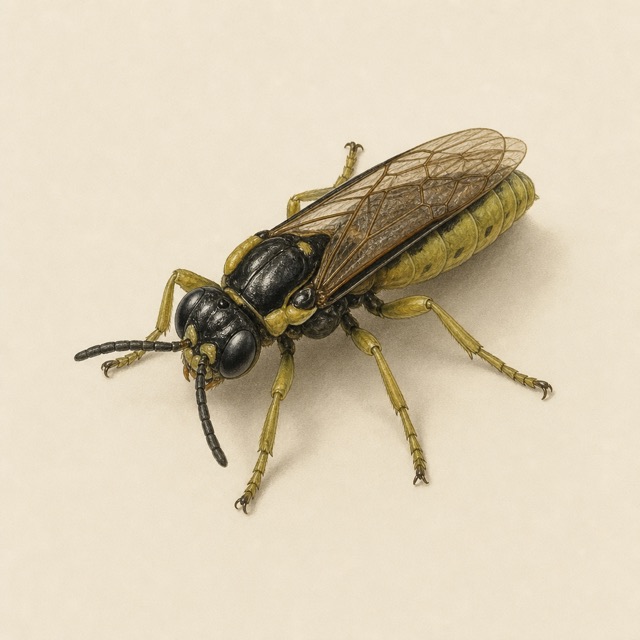
Sawflies are common garden pests whose caterpillar-like larvae can quickly skeletonize the leaves of roses, pines, willows, and many other plants. Despite their name, sawflies are actually primitive wasps -- not flies -- and understanding this distinction is key to choosing effective control methods. While rarely lethal to established plants, heavy infestations can seriously weaken and disfigure prized ornamentals.
Sawfly larvae closely resemble caterpillars but can be distinguished by their prolegs -- sawfly larvae have 6 or more pairs of fleshy prolegs on the abdomen, while true caterpillars have 5 or fewer pairs. Adults are stout-bodied, wasp-like insects with broad waists (no narrow wasp-waist). Many species curl into an S-shape when disturbed.
Similar Pests
Sawfly larvae are commonly mistaken for caterpillars (moth and butterfly larvae). The critical difference is prolegs: count the fleshy legs on the abdomen -- 6 or more pairs means sawfly, 5 or fewer means true caterpillar. This matters because Bt (Bacillus thuringiensis), effective on caterpillars, does not work on sawflies.
Signs of Infestation
- •Skeletonized leaves with only veins remaining, or holes chewed through foliage
- •Clusters of small, slug-like larvae feeding together on leaf edges
- •S-shaped curling defensive posture when larvae are disturbed
- •Defoliated branch tips on pines, roses, willows, or fruit trees
Key Inspection Areas
- •Rose bushes, especially leaf undersides
- •Pine and spruce needles, particularly new growth
- •Willow, birch, elm, and fruit tree foliage
- •Columbine, hibiscus, and other susceptible perennials
When to Inspect
Check plants in late spring when first-generation larvae emerge, and again in mid-summer for second-generation feeding. Inspect leaf undersides where young larvae cluster.
Inspection Tools
Hand lens for examining small larvae, garden gloves for handpicking, bucket of soapy water
Identify the Sawfly Species
Determine which sawfly species you are dealing with, as host plants and timing vary. Common types include rose sawflies (green, slug-like), European pine sawflies (striped, on needles), pear sawflies (dark, slimy on fruit tree leaves), and columbine sawflies. Proper identification helps target your control efforts.
Handpick Small Colonies
For light infestations, handpicking is the most effective and environmentally friendly approach. Wear garden gloves and pick larvae off foliage, dropping them into soapy water. Sawfly larvae typically feed in clusters, making manual removal efficient. Check leaf undersides where young larvae often hide.
Spray With Insecticidal Soap or Horticultural Oil
Insecticidal soap and horticultural oil sprays are effective against young sawfly larvae on contact. Spray directly on larvae, thoroughly coating them. These products have minimal impact on beneficial insects and break down quickly. Reapply every 5-7 days as needed, and always spray in early morning or evening to avoid leaf burn.
Apply Spinosad for Heavier Infestations
Spinosad (sold as Captain Jack's Dead Bug Brew, Monterey Garden Insect Spray) is an organic insecticide that is very effective against sawfly larvae. Spray foliage thoroughly, targeting areas where larvae are feeding. Spinosad works both by contact and ingestion and remains active on foliage for about a week. Apply when pollinators are not active.
Use Neem Oil as a Deterrent
Neem oil acts as both a contact insecticide and a feeding deterrent for sawfly larvae. Apply neem oil spray to affected plants, covering both upper and lower leaf surfaces. The azadirachtin in neem disrupts larval feeding and development. Reapply every 7-14 days and after rain. Neem also helps prevent egg-laying by adult sawflies.
Avoid Using Bt Products
Unlike most caterpillar pests, sawflies are not susceptible to Bacillus thuringiensis (Bt). This is because sawflies are wasp larvae, not moth or butterfly larvae, and Bt specifically targets lepidopteran caterpillars. Using Bt on sawflies wastes time and money. Use spinosad, insecticidal soap, neem, or pyrethrin-based products instead.
Disrupt the Overwintering Cycle
In late fall after the first hard frost, lightly cultivate the soil beneath host plants to a depth of 2 inches. This exposes sawfly pupae to winter cold, desiccation, and predation by birds. Apply a fresh layer of mulch in spring. For persistent problems on roses, consider applying beneficial nematodes (Steinernema feltiae) to the soil in spring to parasitize pupae.
- 1Inspect susceptible plants weekly during spring and summer for early larval colonies
- 2Encourage natural predators including parasitic wasps, predatory beetles, and birds
- 3Cultivate healthy soil and diverse plantings to support natural enemy populations
- 4Remove and destroy heavily infested leaves before larvae mature and drop to the soil
- 5Till or cultivate soil around susceptible plants in fall to expose overwintering pupae
- 6Choose resistant plant varieties when available, especially for roses
Seasonal Note
Most sawfly species overwinter as pupae in the soil beneath host plants. Light cultivation of the top 2 inches of soil in late fall exposes pupae to freezing temperatures and predators, reducing next year's population.
Will sawflies kill my plants?
Established trees and shrubs rarely die from sawfly defoliation, though they may be significantly weakened and disfigured. Young transplants and small ornamental plants can be seriously damaged or killed by heavy infestations, especially if defoliated multiple years in a row. Pines defoliated of all new growth may lose affected branches.
Why doesn't Bt work on sawflies?
Bt (Bacillus thuringiensis var. kurstaki) is a biological insecticide that specifically targets caterpillars -- the larvae of moths and butterflies (order Lepidoptera). Sawflies belong to the order Hymenoptera (wasps and bees), so their larvae are physiologically different and not affected by Bt toxins.
Are sawflies harmful to humans?
No, adult sawflies do not sting despite being related to wasps, and larvae do not bite. They are strictly plant-feeding insects. Some species may produce a mildly irritating secretion when handled, so wearing garden gloves during handpicking is recommended.
How do I tell sawfly larvae from caterpillars?
Count the pairs of fleshy prolegs on the abdomen. Sawfly larvae have 6 or more pairs, while true caterpillars (moth/butterfly larvae) have 5 or fewer pairs. Sawfly larvae also tend to curl into an S or C shape when disturbed, whereas many caterpillars drop or curl into a tight ball.
Do sawflies come back every year?
Yes, sawflies can return annually, especially if host plants are present and conditions favor their survival. Many species have two generations per year. Disrupting the overwintering cycle by cultivating soil in fall and applying beneficial nematodes in spring can reduce recurring populations significantly.
Quick Facts
- Size
- Adults 1/4 to 3/4 inch; larvae up to 1 inch depending on species
- Color
- Adults typically black or brown; larvae are green, gray, or yellowish, often with spots or stripes
- Habitat
- Gardens, landscapes, and forests on a wide range of deciduous and coniferous plants
- Active Season
- Larvae active spring through fall depending on species; many have two generations per year
Danger Level: Low
This pest is primarily a nuisance but can be eliminated with DIY methods.