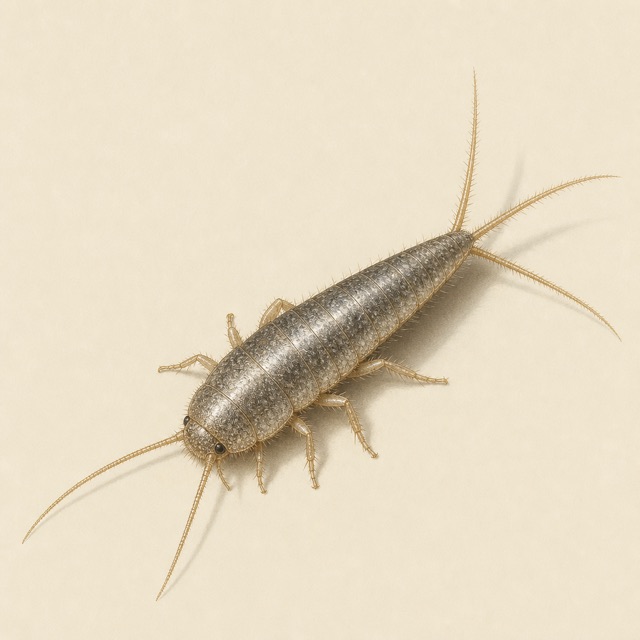
Those fast-moving, silvery insects darting across your bathroom floor at night aren't trying to scare you—they're just looking for their next meal of book glue, wallpaper paste, or your favorite cotton t-shirt. Silverfish are primitive insects that have survived for over 400 million years by thriving in dark, humid spaces, and once they settle into your home, they multiply quietly in the shadows.
Silverfish are 1/2 to 3/4 inch long, wingless, carrot-shaped, covered in silvery-gray scales. They have long antennae, three long tail bristles (cerci), and wriggle fish-like when they run. They move quickly when disturbed.
Similar Pests
Firebrats are similar but tan/brown and prefer hot areas (near furnaces). Bristletails (jumping bristletails) can jump; silverfish cannot. Earwigs have pincers; silverfish have tail bristles.
Signs of Infestation
- •Small irregular holes or notches chewed in paper, wallpaper, book bindings, or cardboard
- •Yellow staining or surface damage on fabrics, especially starched or sized materials
- •Shed exoskeletons (tiny silvery casings) in infested areas
- •Silverfish scurrying away when disturbed, especially in bathrooms, basements, or attics
- •Black pepper-like feces in book bindings or paper storage areas
Key Inspection Areas
- •Bathrooms, laundry rooms, and basements with high humidity (above 75%)
- •Inside book bindings, cardboard boxes, and paper storage areas
- •Behind baseboards, in wall voids, and under sinks
- •Attics with moisture problems or roof leaks
When to Inspect
Inspect year-round (silverfish are active all year indoors). Check at night when they forage. Most common in warm, humid conditions (70-80°F, 75-95% humidity).
Inspection Tools
Flashlight for night inspection, sticky traps to monitor activity, dehumidifier to reduce moisture, hygrometer to measure humidity levels
Identify the Problem Areas
Check bathrooms, laundry rooms, basements, and anywhere with humidity above 75%. Look for silverfish in dark corners, under sinks, behind toilets, in cardboard boxes, and between book pages. They're most active at night, so use a flashlight during evening inspections. You'll also notice their molted skins and tiny black pepper-like droppings near their hiding spots.
Reduce Moisture and Humidity
Run a dehumidifier in basements and other humid areas, keeping humidity below 50%. Fix any leaky pipes, dripping faucets, or moisture problems immediately. Improve ventilation by running bathroom exhaust fans during and after showers, and consider adding ventilation to crawl spaces. This single step will make your home significantly less attractive to silverfish.
Apply CimeXa Insecticidal Dust
Use CimeXa (100% silica dust) in wall voids, under appliances, behind baseboards, and in other hidden areas where silverfish hide. Apply a light, barely visible dusting with a hand duster—over-application reduces effectiveness. CimeXa works by absorbing the waxy coating on insects and remains effective for up to 10 years when kept dry. Focus on cracks, crevices, and entry points.
Set Out Targeted Traps
Place sticky traps like Trapper Max or Pro-Pest glue traps along baseboards, in corners, and under sinks where you've seen activity. For DIY bait traps, wrap glass jars in masking tape (for grip) and put a small piece of bread or oats inside—silverfish climb in but can't escape the smooth interior. Check and replace traps every 2-3 weeks to monitor population levels.
Treat with Residual Spray
Apply a residual insecticide like Tempo SC Ultra or Demon WP around baseboards, door frames, windows, and other entry points. Spray behind and under furniture, in closets, and along the foundation perimeter outside. These products create a barrier that kills silverfish on contact and continues working for weeks. Always follow label directions and allow surfaces to dry before allowing pets or children in treated areas.
Eliminate Food Sources
Store pantry items in airtight plastic or glass containers, not cardboard boxes. Remove old papers, magazines, and cardboard from storage areas. Vacuum bookshelves regularly and consider storing valuable books in sealed plastic bins. Keep pet food sealed and clean up any spilled grains or starches immediately—silverfish love carbohydrates and anything with glue or adhesive.
Seal Entry Points and Harborage Areas
Caulk cracks and gaps around baseboards, pipes, windows, and doors with silicone caulk. Install door sweeps on exterior doors and weather stripping around windows. Remove wallpaper that's peeling or damaged, as silverfish hide and feed behind it. Pay special attention to areas where pipes enter walls—these are common entry routes from wall voids.
Maintain Long-Term Prevention
Continue running dehumidifiers and ensure proper ventilation year-round. Vacuum regularly, especially in closets and storage areas. Inspect incoming boxes and packages for hitchhiking silverfish before bringing them inside. Schedule quarterly perimeter treatments and reapply dust to void spaces annually to prevent reinfestation. Consistency is key—silverfish populations build slowly but can be eliminated with persistent effort.
- 1Reduce indoor humidity below 50% using dehumidifiers, especially in basements and bathrooms
- 2Fix leaky pipes, faucets, and roof leaks that create damp conditions
- 3Store books, papers, and cardboard in sealed plastic bins rather than cardboard boxes
- 4Seal cracks and crevices around baseboards, pipes, and behind cabinets
- 5Remove clutter and dust regularly to eliminate food sources (dust contains starches)
- 6Store out-of-season clothing in sealed plastic bins with cedar blocks
Seasonal Note
Silverfish thrive in warm, humid conditions (above 75°F and 75% humidity). Reduce humidity before summer to prevent infestations.
Are silverfish harmful to humans?
Silverfish don't bite, sting, or transmit diseases to humans, making them essentially harmless from a health perspective. However, they can cause property damage by feeding on paper, book bindings, wallpaper, clothing (especially cotton and linen), and even synthetic fabrics with food stains. Their presence often indicates a moisture problem that could lead to mold or other issues. While not dangerous, they're definitely a nuisance pest you'll want to eliminate.
Why do I suddenly have silverfish in my house?
Silverfish infestations usually develop slowly, but you might suddenly notice them due to increased humidity, a water leak, or seasonal changes that drive them into living spaces. They may have been brought in through cardboard boxes, old books, or other items from infested areas. Once inside, they reproduce in hidden areas like wall voids and only become visible when populations grow large. Check for recent changes in moisture levels or newly introduced items that could be the source.
How long does it take to get rid of silverfish?
With consistent treatment, you should see a significant reduction in 2-3 weeks, but complete elimination typically takes 2-3 months. Silverfish have a slow reproductive cycle, and eggs hidden in cracks can take weeks to hatch. The key is combining immediate knockdown treatments (sprays and traps) with long-term environmental changes (reducing humidity and eliminating food sources). If you're still seeing silverfish after three months of proper treatment, you may have a hidden moisture source or entry point that needs addressing.
What smell do silverfish hate?
Silverfish are repelled by strong scents like cedar, citrus (especially lemon), lavender, and cinnamon. While cedar blocks or sachets of dried lavender may provide some deterrent effect in closets and drawers, these natural repellents alone won't eliminate an established infestation. They work best as supplementary prevention after you've reduced the population with traps, insecticides, and moisture control. Essential oils can be used around baseboards, but they need frequent reapplication and aren't as effective as proper pest control products.
Can silverfish live in beds or mattresses?
Silverfish don't typically infest beds like bed bugs do, as they prefer areas with higher humidity and don't feed on blood. However, they may occasionally be found near beds if there are food sources like dust, dead skin cells, or starched fabrics nearby. They're more likely to be in the bedroom closet, under furniture, or behind baseboards than in your actual mattress. If you're seeing insects in your bed at night, carefully examine them—you might be dealing with bed bugs or carpet beetles instead.
Quick Facts
- Size
- 1/2 - 3/4 inch
- Color
- Silver-gray with metallic sheen
- Habitat
- Bathrooms, basements, attics, kitchens, and areas with high humidity and moisture
- Active Season
- Year-round indoors (more active in spring and summer)
Danger Level: Low
This pest is primarily a nuisance but can be eliminated with DIY methods.
Top Products
Recommended for How to Get Rid of Silverfish: Complete Guide
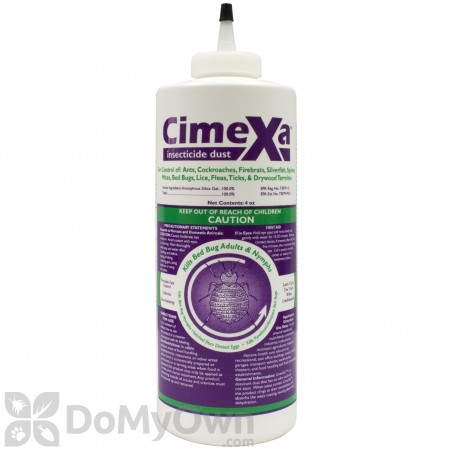
Rockwell Labs
CimeXa Insecticide Dust

Harris
Harris Food Grade Diatomaceous Earth (4 lb)
Bayer
Drione Pest Insecticide Dust