Skunks are best known for their powerful defensive spray, but they also dig destructive cone-shaped holes in lawns, den under foundations, and pose rabies transmission risks. Effective skunk management requires careful, low-stress approaches to avoid triggering their notorious spray response.
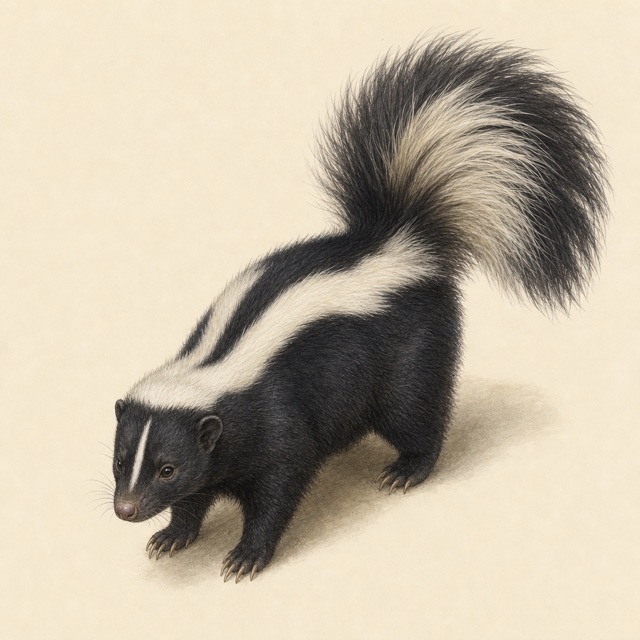
Striped skunks are cat-sized mammals with a distinctive black and white color pattern that serves as a warning to predators. They have small heads, short legs, and large bushy tails. Their front claws are long and well-adapted for digging, which they use extensively when hunting grubs and insects.
Similar Pests
Spotted skunks are smaller with broken white spots and stripes rather than the bold V-pattern. At night, skunks may briefly resemble feral cats in silhouette, but their waddling gait and bushy tail are distinctive.
Signs of Infestation
- •Strong, lingering musky odor near the property, especially in early morning
- •Numerous small cone-shaped holes (3 to 4 inches deep) dug in the lawn overnight
- •Tracks showing five toes with visible claw marks on front feet
- •Rolled-back sections of sod where skunks have been digging for grubs
Key Inspection Areas
- •Under decks, porches, concrete stoops, and low-clearance sheds
- •Window wells and basement egress windows
- •Lawn areas with visible grub damage or soft soil
- •Gaps in foundation walls and crawl space vents
When to Inspect
Inspect at dusk just after sunset when skunks begin their nightly foraging. Daytime inspections should focus on finding den entrances, which are typically 6 to 8 inch openings under structures with distinctive musky odor.
Inspection Tools
Flashlight with red filter to avoid startling skunks, wildlife camera for monitoring den sites, and garden gloves for handling exclusion materials
Locate the den and identify entry points
Look for 6 to 8 inch burrow openings under structures, especially under concrete stoops, decks, and sheds. The musky odor near an opening confirms skunk occupation. Place a wildlife camera or sprinkle flour near the opening to track activity patterns and count individuals.
Eliminate grub and food sources
Apply beneficial nematodes or milky spore to your lawn to kill grubs, which are the primary reason skunks dig up yards. Secure trash, remove pet food, and clean up fallen fruit and birdseed. Reducing food sources motivates skunks to relocate voluntarily.
Apply mild deterrents near the den
Place bright battery-operated lights and a radio near the den entrance. Skunks prefer dark, quiet dens and may leave on their own when these conditions change. Ammonia-soaked rags placed near (not in) the den entrance can also encourage departure. Move slowly and quietly to avoid spraying.
Install a one-way exclusion door carefully
After confirming no babies are present and observing the skunk leaving at dusk, install a one-way exclusion device over the entry point. Use a funnel design at least 24 inches long so the skunk is well away from the door before it closes. Leave in place for 5 to 7 nights.
Seal all entry points permanently
Once the skunk has vacated, remove the exclusion device and close the opening with welded wire mesh or galvanized hardware cloth. Bury the barrier 12 inches deep in an L-shape extending 12 inches outward. Inspect the entire perimeter for additional gaps.
Address lawn damage and apply repellents
Repair dug-up lawn areas by pressing sod back into place and watering. Apply castor oil-based repellent granules around the property perimeter and near previously damaged areas. Reapply monthly and after heavy rainfall.
Monitor and maintain exclusion barriers
Check sealed areas monthly for signs of digging or tampering. Continue grub control treatments annually. If skunk odor returns, re-inspect immediately. Consider professional wildlife control if skunks persist, especially if spray incidents near the home are a concern.
- 1Treat your lawn for grubs with milky spore or beneficial nematodes to eliminate the primary food attractant
- 2Secure trash can lids with bungee cords or use animal-proof containers
- 3Install exclusion barriers of heavy-gauge hardware cloth around deck and porch perimeters, buried at least 12 inches deep
- 4Cover window wells with commercial well covers or heavy-gauge mesh
- 5Remove brush piles, lumber stacks, and other ground-level hiding spots near the home
- 6Keep garage doors closed at night and seal any gaps larger than 4 inches in outbuildings
Seasonal Note
Apply grub control treatments in late summer to reduce fall and spring lawn damage. Avoid sealing den sites from April through August when baby skunks are present. Late fall is the ideal time to install exclusion barriers before skunks seek winter dens.
How do I get skunk smell off my dog?
Mix one quart of 3 percent hydrogen peroxide, one quarter cup of baking soda, and one teaspoon of liquid dish soap. Apply to your dog's fur while dry, work in thoroughly, and rinse after 5 minutes. Do not store this mixture as it can build pressure in a sealed container. Tomato juice is a myth and does not work.
Do skunks carry rabies?
Yes, skunks are one of the four primary rabies vector species in the United States along with raccoons, bats, and foxes. A skunk that is active during the day, appears disoriented, or shows no fear of humans should be avoided and reported to animal control immediately.
How far can a skunk spray?
Skunks can spray their sulfur-based musk accurately up to 10 to 15 feet, with the mist carrying even farther. They typically give warning signs before spraying, including stomping their front feet, raising their tail, and hissing. If you see these behaviors, back away slowly and quietly.
Will skunks damage my home foundation?
Skunks dig shallow dens rather than deep burrow systems, but their digging can still undermine concrete stoops, sidewalks, and shallow foundations over time. The greater concern is often their spray, which can permeate a home's interior through foundation vents and crawl space openings.
Can I use mothballs or ammonia to repel skunks?
Using mothballs outdoors is illegal under EPA regulations and poses health risks. Ammonia-soaked rags can provide temporary deterrence near den sites but are not a long-term solution. Commercial castor oil-based repellents are more effective and environmentally appropriate for ongoing skunk management.
Quick Facts
- Size
- 20 to 30 inches long including tail; 6 to 14 pounds
- Color
- Glossy black fur with a prominent white stripe pattern running from the head down the back, splitting into a V-shape
- Habitat
- Suburban yards, under porches and decks, crawl spaces, window wells, and areas with grub-rich lawns
- Active Season
- Year-round; most active February through October, with mating season in February and March
Danger Level: Medium
This pest can cause health issues or property damage if left untreated.