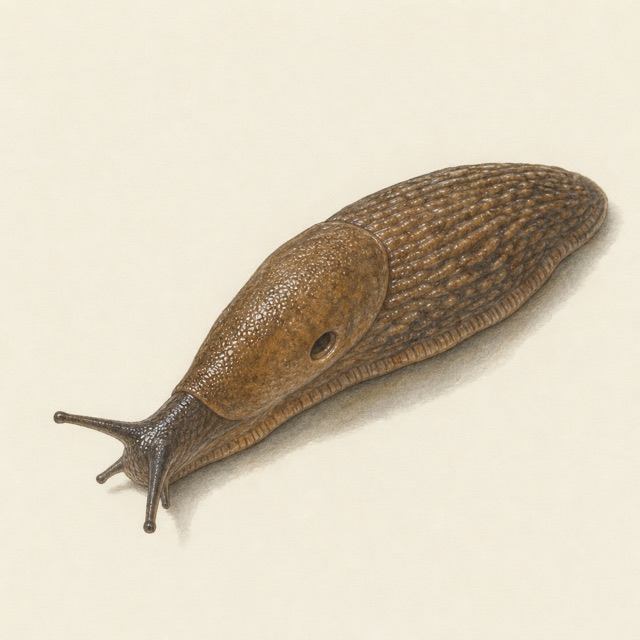
Slugs are among the most destructive garden pests, capable of decimating seedlings, leafy greens, and ornamental plants overnight. These soft-bodied mollusks thrive in moist conditions and leave behind telltale slime trails as evidence of their nighttime feeding. Left unchecked, a slug population can destroy an entire garden bed in just a few days.
Slugs are soft-bodied, shell-less mollusks with two pairs of tentacles on their head. They range from small gray garden slugs to large banana slugs and produce a characteristic mucus trail wherever they travel. Their bodies are elongated and muscular, allowing them to squeeze through surprisingly narrow gaps.
Similar Pests
Snails are closely related but carry a coiled shell on their backs. Slug damage can be confused with caterpillar feeding, but the presence of silvery slime trails is the key distinguishing factor.
Signs of Infestation
- •Irregular holes in leaves, especially on tender new growth
- •Silvery slime trails on plants, soil, and hard surfaces
- •Seedlings clipped at the base or entirely consumed
- •Damage appearing overnight, concentrated during wet periods
Key Inspection Areas
- •Under mulch, leaf litter, and garden debris
- •Beneath boards, rocks, and flower pots
- •Around the base of hostas, lettuce, and other preferred plants
- •In compost piles and under dense ground cover
When to Inspect
Inspect after dark with a flashlight or early morning before sunrise when slugs are actively feeding. Overcast, rainy days also bring slugs out during daylight hours.
Inspection Tools
Flashlight for nighttime inspections, a flat board or wet newspaper as a slug trap to check in the morning
Survey and identify slug activity
Conduct nighttime inspections with a flashlight to locate active slugs. Place damp boards or overturned flower pots in the garden as daytime traps and check them each morning to gauge population levels.
Hand-pick slugs during peak activity
Go out after dark or early morning and manually remove slugs from plants and soil. Drop collected slugs into a bucket of soapy water to dispatch them. This is the most immediate way to reduce a large population.
Set up beer traps
Bury shallow containers (such as tuna cans or yogurt cups) so the rim is level with the soil surface and fill with cheap beer. Slugs are attracted to the yeast, crawl in, and drown. Empty and refill traps every two to three days.
Apply iron phosphate bait
Scatter iron phosphate-based slug bait pellets (such as Sluggo) around affected areas. This organic-approved bait is safe for pets, wildlife, and edible gardens. Reapply after heavy rain or irrigation.
Create physical barriers
Surround vulnerable plants with copper tape or copper mesh barriers. Slugs receive a mild electric-like sensation from copper that deters crossing. Ensure barriers are at least two inches tall with no gaps.
Modify the habitat
Reduce mulch depth to one inch or less near vulnerable plants. Switch from straw or bark mulch to gravel or pine needle mulch which slugs find less hospitable. Remove unnecessary ground cover plants that harbor slugs.
Introduce biological controls
Apply beneficial nematodes (Phasmarhabditis hermaphrodita) to soil in spring and fall. These microscopic organisms parasitize slugs underground and can reduce populations by up to 90% over a season. Keep soil moist after application for best results.
- 1Remove garden debris, fallen leaves, and hiding spots to reduce daytime shelter
- 2Water gardens in the morning so soil dries by evening when slugs become active
- 3Use drip irrigation instead of overhead watering to keep foliage and soil surface dry
- 4Apply a thin ring of diatomaceous earth or crushed eggshells around vulnerable plants
- 5Space plants adequately to improve air circulation and reduce humidity at ground level
- 6Encourage natural predators such as ground beetles, birds, frogs, and toads
Seasonal Note
Begin slug prevention in early spring as soon as temperatures rise above 40°F and moisture levels increase. Fall cleanup of garden debris is critical to reduce overwintering egg populations.
Are slugs harmful to humans?
Slugs themselves are not directly harmful, but they can carry parasites such as rat lungworm (Angiostrongylus cantonensis) which can cause illness if slugs contaminate produce that is eaten unwashed. Always wash garden vegetables thoroughly.
What plants do slugs avoid?
Slugs tend to avoid plants with strong fragrances, fuzzy or tough leaves, or toxic compounds. Lavender, rosemary, ferns, foxglove, and ornamental grasses are generally slug-resistant choices for your garden.
Does salt kill slugs?
Yes, salt dehydrates and kills slugs on contact, but it also damages soil health and can harm plants. Salt is not recommended as a garden slug control method. Use iron phosphate bait or beer traps instead.
How fast do slugs reproduce?
A single slug can lay up to 500 eggs per year in batches of 20 to 50. Eggs hatch in two to four weeks under favorable conditions, which is why early-season control is essential to prevent population explosions.
Do coffee grounds repel slugs?
Research shows that caffeine can deter and even kill slugs at high concentrations. Sprinkling used coffee grounds around plants may provide a mild deterrent, but they are not reliable as a sole control method. Combine with other strategies for best results.
Quick Facts
- Size
- 1 to 8 inches depending on species
- Color
- Gray, brown, black, or yellowish with a slimy, moist body
- Habitat
- Moist garden beds, under mulch, rocks, boards, and leaf litter
- Active Season
- Spring through fall, most active during cool, wet weather
Danger Level: Low
This pest is primarily a nuisance but can be eliminated with DIY methods.