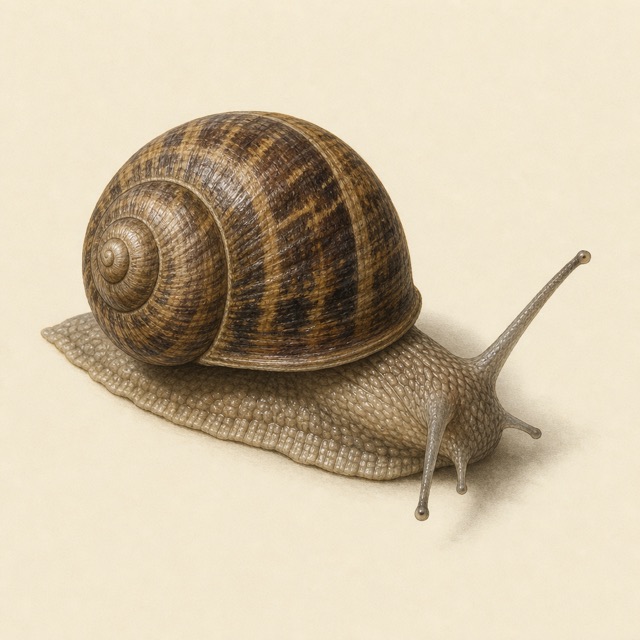
Garden snails are persistent pests that feed on a wide range of plants, from vegetables and herbs to ornamental flowers. Carrying their signature spiral shells, these mollusks emerge at night and during damp weather to chew ragged holes through leaves and stems. A single snail can consume several times its body weight in plant material each week, making early intervention critical.
The common garden snail has a rounded, brownish shell with darker brown spiral bands and a soft, slimy grayish body. When disturbed, the snail retracts fully into its shell for protection. Two pairs of tentacles extend from the head, with the upper pair bearing the eyes.
Similar Pests
Slugs are shell-less relatives that cause similar damage. Other snail species such as the white garden snail (Theba pisana) are smaller with lighter-colored shells. The presence of a coiled shell is the primary feature distinguishing snails from slugs.
Signs of Infestation
- •Large irregular holes in leaves with smooth, rounded edges
- •Silvery mucus trails on foliage, soil, and hard surfaces
- •Chewed stems and bark on young plants
- •Clusters of small, round, translucent eggs in moist soil
Key Inspection Areas
- •Underneath flower pots, planters, and garden ornaments
- •Along the base of walls, fences, and raised bed edges
- •In dense ground cover such as ivy or low-growing shrubs
- •Inside stacked firewood, lumber, and garden storage areas
When to Inspect
Inspect during the evening or early morning when snails are actively foraging. Rainy or overcast days also prompt daytime activity. Check hiding spots midday to locate resting snails.
Inspection Tools
Flashlight for evening inspections, garden gloves for hand-picking, flat boards or damp burlap as monitoring traps
Assess the infestation level
Count snails during evening patrols and check daytime hiding spots to estimate the population. Place four to six damp boards or overturned pots throughout the garden as monitoring stations and check daily for one week.
Hand-pick snails regularly
Collect snails by hand during dusk or dawn and place them in a sealed bag for disposal or drop them into a bucket of soapy water. Consistent hand-picking over two to three weeks can dramatically reduce snail numbers.
Deploy iron phosphate bait
Sprinkle OMRI-listed iron phosphate snail bait around the perimeter of garden beds and near damaged plants. This bait is safe for use around children, pets, and edible crops. Reapply every two weeks or after rain.
Install copper barriers
Attach adhesive copper tape or copper mesh around the rims of raised beds, pots, and tree trunks. The copper reacts with snail mucus to create an unpleasant sensation that prevents crossing. Ensure no leaves or stems bridge over the barrier.
Set up beer or yeast traps
Sink shallow containers into the soil so the lip is at ground level and fill with beer or a mixture of water, sugar, and yeast. Snails are attracted to the fermentation and drown. Empty and refill traps every three days.
Apply diatomaceous earth
Sprinkle food-grade diatomaceous earth in a continuous band around plants and along garden bed edges. The abrasive particles damage snail mucus membranes and deter crossing. Reapply after rain or irrigation as it loses effectiveness when wet.
Encourage biological control
Welcome natural snail predators into your garden by creating habitat for birds (thrushes are particularly effective), hedgehogs, ground beetles, and predatory snails like the decollate snail (where permitted). Avoid broad-spectrum pesticides that harm these beneficial organisms.
- 1Eliminate hiding places by clearing garden debris, stacked pots, and leaf piles
- 2Water in the morning so the soil surface is dry by evening
- 3Use drip irrigation to minimize surface moisture that attracts snails
- 4Plant snail-resistant varieties like rosemary, lavender, and sage near vulnerable crops
- 5Maintain a tidy garden perimeter with a gravel or dry mulch border
- 6Attract natural predators by installing bird houses and creating habitat for ground beetles and frogs
Seasonal Note
Focus prevention efforts in early spring when overwintered snails become active and begin laying eggs. A thorough fall cleanup removes egg-laying sites and reduces the next season's population.
How long do garden snails live?
Common garden snails can live two to five years in the wild, and some specimens in protected environments have survived over 10 years. Their longevity means a single snail can produce thousands of eggs during its lifetime.
Are garden snails the same as escargot?
Yes, Cornu aspersum (formerly Helix aspersa) is one of the species used in escargot cuisine. However, garden snails should never be eaten raw due to potential parasites. They require proper purging and thorough cooking.
Will snails damage my lawn?
Snails rarely cause visible damage to established lawns because grass blades are less palatable than broadleaf plants. However, they may feed on newly seeded areas and clover mixed into lawns.
Can snails climb walls and fences?
Yes, snails are excellent climbers and can scale vertical surfaces using their muscular foot and mucus. They commonly climb walls, fences, and tree trunks to reach food or find sheltered resting spots.
Do snails carry diseases?
Garden snails can carry parasites including rat lungworm, which is transmissible to humans through ingestion of raw or undercooked snails or unwashed produce contaminated with slime trails. Always wash garden-harvested vegetables thoroughly.
Quick Facts
- Size
- 1 to 1.5 inches in diameter (shell), body extends 3 to 4 inches
- Color
- Shell is brown or yellowish with darker spiral bands; body is grayish-brown
- Habitat
- Gardens, flower beds, under pots and stones, along walls and fences
- Active Season
- Spring through fall, peak activity during rainy periods
Danger Level: Low
This pest is primarily a nuisance but can be eliminated with DIY methods.