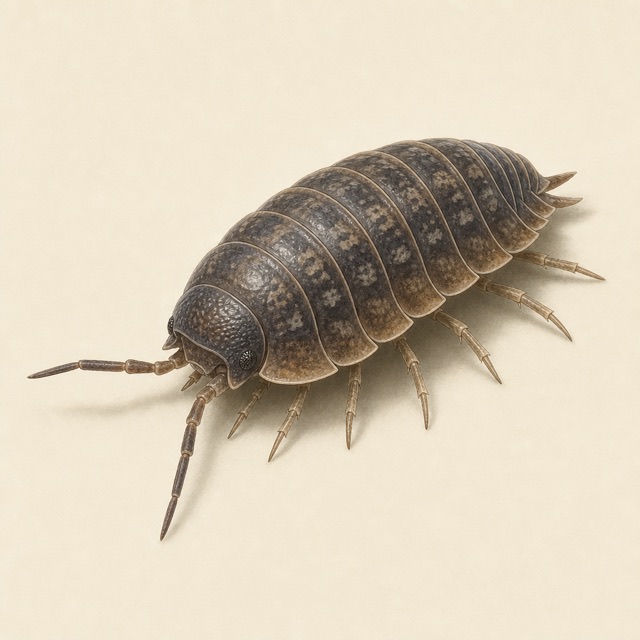
Finding gray, armored creatures crawling around your basement or garden? Those are sowbugs, harmless crustaceans that somehow ended up living on land. While they won't bite or damage your home, their presence signals moisture problems you'll want to address before more serious pests move in.
Sowbugs (woodlice) are 1/4 to 1/2 inch long, oval, flattened, gray to brown, with segmented armor-like plates, 7 pairs of legs, and two tail-like appendages. They do not roll into a ball (unlike pillbugs).
Similar Pests
Pillbugs (roly-polies) roll into a tight ball when disturbed; sowbugs cannot. Millipedes are longer, more cylindrical, and have many more legs. Earwigs have pincers; sowbugs do not.
Signs of Infestation
- •Sowbugs crawling on basement floors, especially after rain or in damp areas
- •Congregations under mulch, firewood, stones, or flowerpots in gardens
- •Feeding damage on seedlings or decaying plant material
- •Large numbers migrating indoors during very wet or very dry periods
Key Inspection Areas
- •Under mulch, flowerpots, landscape stones, and firewood
- •In damp basements, crawl spaces, and garages
- •Around door thresholds, window wells, and foundation vents
- •Near compost piles, leaf litter, and rotting wood
When to Inspect
Inspect during or after rain when moisture drives sowbugs to surface and indoors. Check in spring and fall. They migrate indoors during very wet or very dry periods seeking optimal moisture.
Inspection Tools
Flashlight for inspecting dark corners, overturned pots or boards as traps, dehumidifier to reduce indoor moisture
Identify Moisture Sources
Sowbugs breathe through gill-like structures and need constant moisture to survive. Check your basement, crawl space, and around your foundation for leaking pipes, poor drainage, or condensation. Use a moisture meter to find problem areas—anywhere reading above 50% relative humidity is sowbug paradise. Fix leaky faucets and ensure downspouts direct water at least 6 feet away from your foundation.
Remove Outdoor Harborage
Sowbugs congregate under anything that traps moisture against the ground. Clear away leaf litter, excess mulch, stacked firewood, stones, and boards from around your foundation. Keep mulch at least 6 inches away from your home's exterior and limit it to a 2-3 inch depth. Move firewood storage to at least 20 feet from the house and elevate it off the ground.
Seal Entry Points
While sowbugs rarely survive long indoors, they'll keep wandering in if you have gaps. Seal cracks in your foundation with polyurethane caulk and install door sweeps on all exterior doors. Check where utility lines enter your home and fill gaps with copper mesh and caulk. Pay special attention to basement windows and crawl space vents.
Improve Ventilation
Reduce indoor humidity to make your home inhospitable to sowbugs. Run a dehumidifier in basements and crawl spaces, keeping humidity below 50%. Ensure bathroom and kitchen exhaust fans vent outside, not into attics. In crawl spaces, consider installing a vapor barrier and adding foundation vents if needed.
Create a Perimeter Barrier
Apply a residual insecticide like Talstar P or Cyper WSP in a 3-foot band around your foundation. Spray the ground and up the wall about 2 feet, focusing on areas where sowbugs are active. Also treat under siding, around window wells, and door thresholds. Granular products like Bifen LP work well in mulch beds—water them in lightly after application.
Use Diatomaceous Earth Strategically
Food-grade diatomaceous earth works great in dry areas where sowbugs enter, like garage thresholds or basement window wells. Apply a light dusting—it damages their exoskeleton on contact and desiccates them. Reapply after rain or when it gets wet, as moisture makes it ineffective. Delta Dust is a more moisture-resistant alternative for damp locations.
Address Garden Populations
If sowbugs are overwhelming your garden, reduce watering frequency and improve soil drainage. They rarely damage healthy plants but can feed on seedlings and soft fruits touching the ground. Use drip irrigation instead of sprinklers to keep foliage dry. For severe infestations, scatter Sluggo Plus granules, which target sowbugs along with slugs and snails.
Monitor and Maintain
Set up monitoring by placing boards or folded cardboard in problem areas—check underneath every few days. Large numbers indicate ongoing moisture issues. Reapply perimeter treatments every 2-3 months during active season. Remember, a few sowbugs are normal; they're beneficial decomposers outdoors. Focus your efforts on keeping them outside where they belong.
- 1Remove mulch, leaf litter, firewood, and debris from around foundation
- 2Fix drainage issues and redirect downspouts away from house
- 3Seal cracks around doors, windows, and foundations with caulk or weatherstripping
- 4Install door sweeps on exterior doors to prevent entry
- 5Reduce watering near foundations and allow soil to dry between waterings
- 6Use dehumidifiers in damp basements and crawl spaces
Seasonal Note
Sowbugs migrate indoors during very wet or very dry periods. Seal entry points and improve drainage before rainy seasons.
Are sowbugs the same as pillbugs or roly-polies?
They're closely related but different species. Pillbugs (Armadillidium vulgare) can roll into a perfect ball when disturbed, while sowbugs have two tail-like appendages and can only curl slightly. Both are land-dwelling crustaceans, not insects, and require similar moisture levels. They're often found together and controlled using the same methods.
Can sowbugs damage my home or plants?
Sowbugs pose virtually no threat to your home—they can't damage wood, fabric, or structural materials. In gardens, they primarily feed on decaying organic matter and are actually beneficial decomposers. Occasionally they'll nibble on seedlings, soft roots, or fruits touching wet soil, but this damage is typically minor and easily prevented by reducing moisture.
Why do I suddenly have so many sowbugs in my basement?
Sudden sowbug invasions usually follow heavy rain or overwatering that saturates the soil around your foundation. They're seeking shelter from drowning or trying to find moisture if conditions outside become too dry. Check for new moisture sources like a leaking pipe, poor gutter drainage, or increased humidity. The invasion will stop once you address the moisture problem.
Do sowbugs bite or carry diseases?
No, sowbugs are completely harmless to humans and pets—they cannot bite, sting, or transmit diseases. They don't damage food, clothing, or household items. Their presence is purely a nuisance and moisture indicator. You can safely pick them up and relocate them outside without any health concerns.
What's the fastest way to get rid of sowbugs already inside?
Simply vacuum them up or sweep them into a dustpan—sowbugs die quickly indoors from lack of moisture anyway. For ongoing control, place a dehumidifier in affected areas and sprinkle diatomaceous earth along baseboards and entry points. The key is fixing moisture problems and sealing entryways; otherwise, new ones will keep wandering in from outside to replace the ones you remove.
Quick Facts
- Size
- 1/4 - 1/2 inch
- Color
- Gray to slate-colored with segmented armor
- Habitat
- Damp areas under rocks, mulch, leaf litter, flower pots, and basement foundations
- Active Season
- Spring through fall, year-round in warm climates
Danger Level: Low
This pest is primarily a nuisance but can be eliminated with DIY methods.