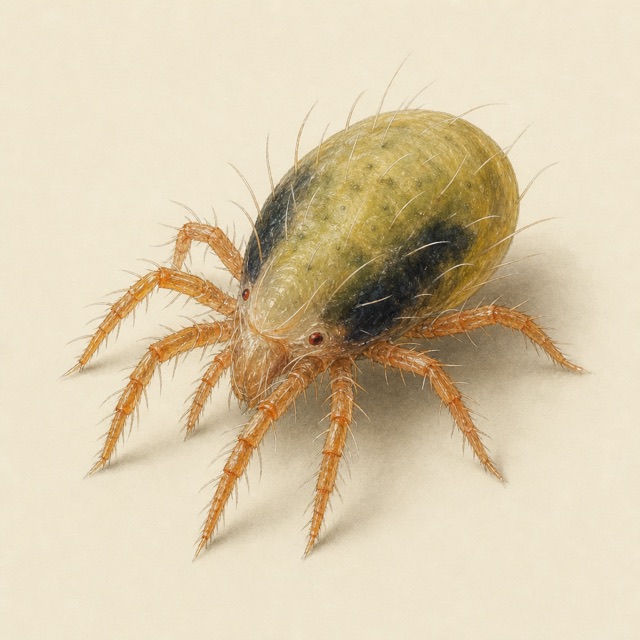
Spider mites are tiny arachnids that can explode into devastating infestations seemingly overnight, turning lush green foliage into stippled, yellowed, webbed masses. Barely visible to the naked eye, these sap-sucking pests thrive in hot, dry conditions and attack hundreds of plant species -- from garden vegetables and fruit trees to prized indoor houseplants. Fast action is essential because spider mite populations can double every few days.
Spider mites are extremely tiny, oval-shaped arachnids (8 legs, not insects) that live and feed on the undersides of leaves. They pierce individual plant cells and suck out the contents, leaving tiny pale dots (stippling) on the upper leaf surface. In heavy infestations, they produce fine silk webbing over foliage and between leaves.
Similar Pests
Spider mite damage (stippling) can be confused with thrips damage, which produces more silvery streaks, or nutrient deficiency symptoms. The fine webbing distinguishes spider mites from all other pests. To confirm, hold a sheet of white paper under a leaf and tap -- tiny moving specks that fall onto the paper are spider mites.
Signs of Infestation
- •Fine stippling (tiny pale dots) on upper leaf surfaces
- •Thin, silky webbing on leaf undersides and between leaves
- •Leaves turning yellow, bronze, or dry and crispy
- •Tiny moving dots visible on leaf undersides with a hand lens
Key Inspection Areas
- •Undersides of leaves on roses, tomatoes, beans, strawberries, and cucumbers
- •Indoor houseplants, especially near heating vents and in dry rooms
- •Drought-stressed trees and shrubs in landscapes
- •Greenhouse crops and indoor growing operations
When to Inspect
Check regularly during hot, dry weather outdoors and throughout the year for indoor plants. Spider mite populations build fastest when humidity is low and temperatures exceed 80 degrees F. Inspect new plants before bringing them into your home or greenhouse.
Inspection Tools
Hand lens or magnifying glass (10x minimum), white paper for tap test, spray bottle with water for washing leaves
Confirm the Infestation Early
Perform the white paper tap test: hold a sheet of white paper beneath a suspect leaf and tap the leaf sharply. Tiny specks that fall onto the paper and begin moving are spider mites. Use a hand lens to observe their oval shape and eight legs. Early detection is critical, as small colonies are far easier to control than established populations with visible webbing.
Isolate Infested Indoor Plants
Immediately separate any infested houseplant from your other plants to prevent mites from spreading. Spider mites can travel between closely spaced plants on silk threads and air currents. Place isolated plants in a bright bathroom or kitchen where humidity is naturally higher.
Wash Plants Thoroughly
Spray infested plants forcefully with water, targeting leaf undersides. For houseplants, use the shower or sink sprayer. For garden plants, use a strong jet from the hose. This physically dislodges mites, eggs, and webbing. Washing alone can reduce populations by 70-80% and is the foundation of spider mite management.
Apply Insecticidal Soap or Horticultural Oil
Spray plants with insecticidal soap or horticultural oil, thoroughly wetting all leaf surfaces, especially undersides. These products kill mites on contact by smothering them and disrupting their cell membranes. Reapply every 5-7 days for at least 3 applications, as eggs are not killed and new mites will hatch.
Use Neem Oil for Residual Control
Neem oil provides both contact kill and residual anti-feeding and reproductive disruption effects on spider mites. Mix neem oil according to label directions and spray all plant surfaces in the evening (to avoid leaf burn). The azadirachtin component interferes with mite reproduction and development, providing longer-lasting suppression than soap or oil alone.
Release Predatory Mites for Biological Control
Predatory mites (Phytoseiulus persimilis, Neoseiulus californicus) are the most effective long-term solution for spider mite control in greenhouses and on houseplants. Order from a reputable insectary and release according to supplier instructions. Predatory mites consume spider mites at all life stages and will establish ongoing populations if conditions are suitable.
Prevent Reinfestation
After control is achieved, maintain preventive practices. Mist houseplants regularly or use a humidifier. Continue weekly inspections using the tap test. Wash foliage monthly. Avoid placing plants near heat vents or in hot, dry locations. Outdoors, ensure consistent irrigation during hot weather and avoid broad-spectrum insecticides that kill natural predators.
- 1Maintain adequate humidity around houseplants (40-50%+) by grouping plants, using pebble trays, or running a humidifier
- 2Water plants consistently to avoid drought stress, which makes plants more susceptible
- 3Inspect all new plants thoroughly before bringing them indoors or placing near other plants
- 4Regularly wash and mist houseplant foliage to discourage mite establishment
- 5Avoid excessive nitrogen fertilization, which produces soft growth that spider mites prefer
- 6Keep garden areas clean of dusty debris, as dust on leaves favors spider mite outbreaks
Seasonal Note
Outdoors, spider mite problems peak during hot, dry summer months. Overhead watering and periodic strong hosing of foliage disrupts mite colonies. Indoors, dry winter heating creates ideal conditions, so increase humidity around houseplants from October through March.
Can spider mites infest my entire house?
Spider mites do not infest homes the way cockroaches or ants do -- they live exclusively on plants. However, they can spread from plant to plant throughout your collection quickly. They do not bite humans or pets and cannot survive away from plant material.
Why do spider mites keep coming back?
Spider mites recur because their eggs are resistant to most treatments and hatch in 3-5 days. A single missed application allows the population to rebound. Consistent treatment every 5-7 days for at least 3 weeks is needed to break the egg cycle. Low humidity and drought stress also invite reinfestation.
Do spider mites bite humans?
No, spider mites do not bite humans or pets. They feed exclusively on plant cell contents and cannot survive on human skin or blood. Any skin irritation near infested plants is likely caused by plant sap or coincidental contact dermatitis, not mite bites.
Should I throw away a spider mite infested plant?
Not necessarily. Most plants can recover from spider mite damage with proper treatment. However, if a plant is severely infested with extensive webbing and leaf loss, and you have many other plants at risk, it may be more practical to discard the infested plant to protect the rest of your collection.
Does rubbing alcohol kill spider mites?
Yes, a solution of 70% isopropyl alcohol and water (1:1 ratio) kills spider mites on contact and can be used to wipe down leaves of sturdy houseplants. However, alcohol can burn sensitive foliage, so test on a small area first and rinse after treatment. It is best used as a spot treatment rather than a whole-plant spray.
Quick Facts
- Size
- Less than 1/50 inch (0.5 mm); barely visible without magnification
- Color
- Pale green, yellow, red, or brown depending on species; two-spotted spider mite has two dark spots on abdomen
- Habitat
- Undersides of leaves on vegetable crops, ornamentals, fruit trees, and indoor houseplants
- Active Season
- Year-round indoors; outdoors peak in hot, dry summer weather (June through September)
Danger Level: Medium
This pest can cause health issues or property damage if left untreated.