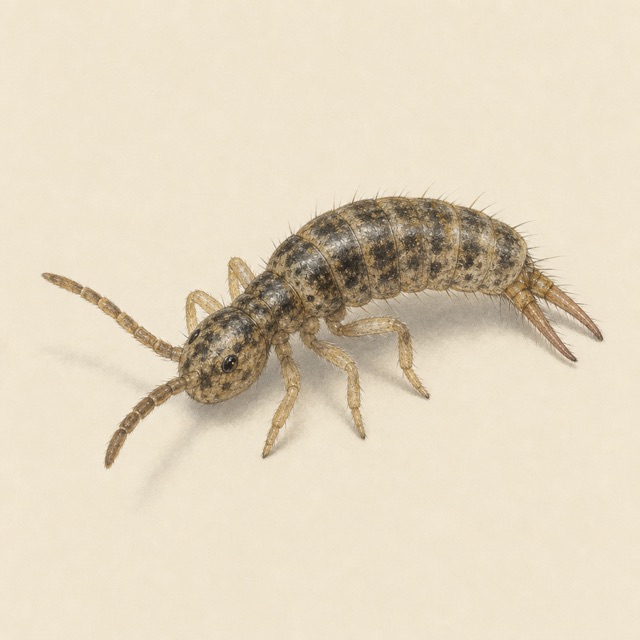
Springtails are tiny jumping insects that suddenly appear in damp areas by the hundreds or thousands, alarming homeowners who've never seen them before. The good news? These primitive creatures are completely harmless to humans and actually indicate a moisture problem you need to fix. Eliminate their water source, and they'll disappear on their own.
Springtails are minute (1/16 inch or smaller), soft-bodied, wingless, usually white, gray, or black. They have a forked tail-like appendage (furcula) that snaps down to propel them into the air. They are often mistaken for fleas but do not bite.
Similar Pests
Fleas are darker, laterally compressed, and jump using legs, not a tail appendage. Booklice are lighter colored and slower-moving. Psocids have wings; springtails do not.
Signs of Infestation
- •Tiny hopping or jumping insects on bathroom sinks, tubs, or basement floors
- •Large numbers congregating in damp areas, especially after rain
- •White or gray pepper-like specks on water surfaces in sinks or houseplants
- •Presence of mold, algae, or decaying organic matter where they feed
Key Inspection Areas
- •Bathrooms, kitchens, and basements with water leaks or high humidity
- •Around sinks, tubs, and floor drains where water accumulates
- •In potted plants with overwatered soil
- •Near foundation cracks, window wells, and damp crawl spaces
- •Areas with mold, algae, or decaying organic matter
When to Inspect
Inspect during or after rain when moisture drives springtails indoors. Check in spring and summer when populations peak. Most visible on bathroom fixtures and basement floors in damp conditions.
Inspection Tools
Flashlight, dehumidifier to reduce moisture, moisture meter to identify wet areas, vacuum for collecting large numbers
Identify the Moisture Source
Springtails cannot survive without high humidity and moisture. Check for leaking pipes under sinks, condensation on windows, damp basements, overwatered plants, or water-damaged drywall. Use a moisture meter to find hidden dampness in walls or floors. The springtails are your alarm system telling you there's a water problem that could lead to mold or structural damage.
Fix All Water Leaks and Drainage Issues
Repair any plumbing leaks immediately, even minor drips. Ensure bathroom and kitchen exhaust fans vent outside and use them during and after showers. Check that gutters drain away from your foundation and that your yard slopes away from the house. This step alone will eliminate 90% of springtail problems within a few weeks.
Reduce Indoor Humidity
Run a dehumidifier in basements, bathrooms, or other problem areas to keep humidity below 50%. Empty drip trays under houseplants and avoid overwatering. Fix any condensation issues on windows or pipes by improving insulation or ventilation. Springtails thrive in humid conditions and will naturally die off or migrate away when it's too dry for them.
Vacuum Up Visible Springtails
Use a vacuum with a hose attachment to immediately remove springtail clusters from walls, windowsills, and floors. Empty the vacuum bag or canister outside right away. While this doesn't solve the root cause, it provides instant relief from the unsettling sight of hundreds of these jumping bugs and reduces their population during treatment.
Apply Diatomaceous Earth to Dry Areas
Sprinkle food-grade diatomaceous earth (like CimeXa or Harris DE) in dry cracks, along baseboards, and in wall voids where springtails travel. This desiccant dust damages their exoskeleton and dehydrates them. Only apply in completely dry areas—it doesn't work when wet. Reapply after cleaning or if it gets damp.
Treat Outdoor Sources
Remove mulch touching your foundation and create a 6-12 inch dry barrier. Reduce lawn watering near the house and remove leaf litter, rotting wood, and other decaying organic matter where springtails breed. If needed, apply granular insecticide like Talstar or Bifen outdoors around the perimeter, focusing on mulch beds and moist soil.
Seal Entry Points
Caulk gaps around windows, doors, pipes, and foundation cracks with silicone sealant. Install or replace weatherstripping on doors. Add door sweeps to exterior doors. While springtails are so tiny they can enter through microscopic gaps, reducing entry points helps prevent mass migrations indoors.
Monitor and Maintain Dry Conditions
Continue monitoring moisture levels with a hygrometer or moisture meter for several weeks. Springtails have short life cycles, so once conditions become unfavorable, populations crash quickly. If they return, it means moisture is accumulating again somewhere. Address any new water issues immediately to prevent reinfestation.
- 1Fix leaks and reduce indoor humidity below 50% using dehumidifiers
- 2Improve ventilation in bathrooms, kitchens, and basements
- 3Remove mold, algae, and decaying organic matter from damp areas
- 4Fix drainage issues around foundations and redirect downspouts away from house
- 5Allow potted plants to dry between waterings — don't overwater
- 6Seal cracks around doors, windows, and foundations
Seasonal Note
Springtails thrive in damp conditions. Reduce moisture and improve drainage before spring rains to prevent infestations.
Are springtails dangerous or do they bite?
No, springtails are completely harmless to humans, pets, and structures. They don't bite, sting, or spread disease. They don't damage food, clothing, or furniture. While alarming due to their numbers, they're actually beneficial decomposers in nature. Their presence simply indicates excess moisture that you should address.
Why do I suddenly have thousands of springtails?
Springtails reproduce rapidly in moist conditions, with populations exploding when humidity is high. You likely always had some present, but a recent water leak, heavy rain, plumbing issue, or seasonal humidity spike created ideal breeding conditions. They often migrate indoors en masse when outdoor conditions become too wet or too dry, seeking optimal moisture levels.
How long does it take to get rid of springtails?
Once you eliminate moisture problems, springtails typically disappear within 2-4 weeks as they die off from desiccation or migrate elsewhere. You'll see immediate reduction from vacuuming and dehumidifiers, but complete elimination requires maintaining dry conditions. If they persist beyond a month, you haven't found all the moisture sources yet.
Do I need an exterminator for springtails?
Usually no—springtails are a DIY problem since the solution is moisture control, not pesticide application. Chemical treatments provide only temporary relief if you don't fix the water issue. However, if you can't locate the moisture source or have extensive water damage requiring professional remediation, a pest control expert can help identify hidden problems and treat large outdoor populations.
Can springtails live in my bed or couch?
No, springtails don't infest furniture, beds, or fabrics like bed bugs or carpet beetles. They need constant moisture and typically stay near water sources like bathrooms, basements, or potted plants. If you're finding bugs in your bed, they're likely a different pest. Springtails you see on furniture are just wandering and will die quickly in those dry environments.
Quick Facts
- Size
- 1/16 inch (1-2mm)
- Color
- White, gray, black, or mottled
- Habitat
- Damp soil, mulch, potted plants, bathrooms, basements, kitchens, and areas with moisture accumulation
- Active Season
- Year-round indoors, most active spring through fall outdoors
Danger Level: Low
This pest is primarily a nuisance but can be eliminated with DIY methods.