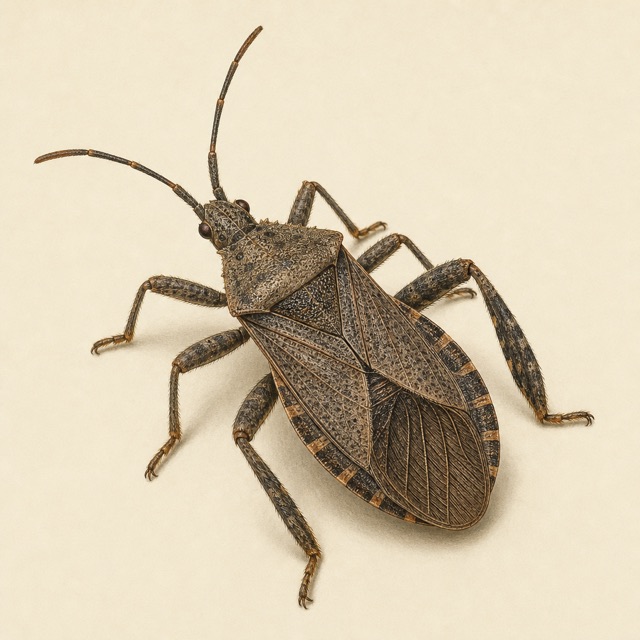
Squash bugs are one of the most difficult pests to control in the home garden, causing extensive damage to squash, pumpkins, and other cucurbit crops. Both adults and nymphs feed by piercing plant tissue and sucking sap, causing leaves to wilt, turn brown, and die. Large populations can kill entire plants, and squash bugs also transmit cucurbit yellow vine disease.
Adult squash bugs are flat-backed, shield-shaped insects about five-eighths of an inch long with a dark grayish-brown body. They emit a foul odor when crushed, similar to stink bugs. Nymphs are smaller, rounder, and lighter colored, often appearing in clusters on leaf undersides near distinctive bronze-colored egg masses.
Similar Pests
Squash bugs are often confused with stink bugs due to their similar shape and defensive odor. However, squash bugs are narrower and more elongated than the broadly shield-shaped stink bugs. Leaf-footed bugs are also similar but have flattened, leaf-like expansions on their hind legs.
Signs of Infestation
- •Wilting leaves that eventually turn crispy and brown (called anasa wilt)
- •Clusters of shiny, bronze or copper-colored eggs on leaf undersides
- •Groups of gray-green nymphs feeding together on stems and leaves
- •Adults hiding under leaves, mulch, and at the base of plant stems
Key Inspection Areas
- •Undersides of squash and pumpkin leaves, especially near the crown
- •At the base of cucurbit stems where adults hide during the day
- •Under mulch, boards, and garden debris near cucurbit plants
- •On vine runners and at leaf junctions where nymphs congregate
When to Inspect
Inspect plants early morning or late evening when adults are less mobile. Check leaf undersides daily from mid-June through August for egg masses. Morning inspections when bugs are sluggish make hand-picking most effective.
Inspection Tools
Duct tape or packing tape for egg removal, bucket of soapy water for collecting adults, board traps placed near plants overnight
Scout for and destroy egg masses
Check the undersides of squash leaves daily for clusters of bronze-colored eggs, typically laid in neat rows or groups of 15 to 40 eggs. Scrape eggs off with a piece of duct tape or a butter knife and dispose of them in soapy water. This is the most effective control timing.
Hand-pick adults and nymphs
In early morning when squash bugs are sluggish, pick adults and nymphs off plants and drop them into a bucket of soapy water. Wear gloves as crushed bugs emit a strong unpleasant odor. Focus on the base of plants and leaf undersides.
Set up board traps
Place flat boards, shingles, or pieces of cardboard on the soil surface near squash plants in the evening. Squash bugs will congregate underneath overnight. Flip the boards each morning and destroy the gathered bugs in soapy water.
Apply neem oil to nymphs
Spray neem oil solution directly on young nymphs, which are much more susceptible to insecticides than adults. Thoroughly coat leaf undersides and stems where nymphs cluster. Neem is less effective on adult squash bugs due to their tough exoskeleton.
Use insecticidal soap on nymphs
Apply insecticidal soap spray directly to nymph clusters for immediate knockdown. Soap must contact the insects to be effective, so thorough coverage of leaf undersides is essential. Reapply every three to five days as new nymphs hatch.
Apply diatomaceous earth around plant bases
Dust food-grade diatomaceous earth around the base of squash stems and on the soil surface where adults hide. The abrasive particles damage the bugs' waxy coating and cause dehydration. Reapply after rain or irrigation.
Implement companion planting and trap crops
Interplant squash with nasturtiums, marigolds, and tansy to help repel squash bugs. Plant a Blue Hubbard squash trap crop at the garden perimeter to attract bugs away from your main crop. Concentrate control efforts on the trap crop.
- 1Delay planting squash until early summer to avoid the first wave of overwintered adults
- 2Use row covers over young squash plants and remove at flowering for pollination
- 3Plant resistant varieties such as Butternut squash, which is less susceptible to squash bug damage
- 4Practice strict crop rotation, never planting cucurbits in the same location two years in a row
- 5Remove all cucurbit debris and vines immediately after harvest in fall
- 6Inspect transplants and new growth daily for egg masses during the first month after planting
Seasonal Note
Squash bugs overwinter as adults in garden debris, under boards, and in buildings. A thorough fall cleanup removing all squash vines and debris is the single most important prevention step. Spring emergence coincides with cucurbit planting.
Can squash bugs fly?
Yes, adult squash bugs can fly, though they prefer to walk or run. They fly primarily when migrating to new food sources or seeking overwintering sites in fall. Their flight capability means physical barriers need to be fully sealed to be effective.
Do squash bugs bite humans?
Squash bugs rarely bite humans, but they can occasionally pierce skin with their piercing-sucking mouthparts if handled roughly. The bite is mildly painful but not medically significant. They also emit a foul odor when disturbed or crushed.
What is the difference between squash bugs and stink bugs?
Squash bugs are narrower and more elongated than the broadly shield-shaped stink bugs. Squash bugs are also specialist feeders on cucurbits, while most stink bugs feed on a wider range of plants. Both emit defensive odors when disturbed.
Will squash bugs kill my plants?
Yes, heavy squash bug infestations can kill cucurbit plants, especially young ones. Large numbers of feeding bugs cause extensive sap loss and inject toxins that cause anasa wilt, where leaves and eventually entire vines wilt and die.
What squash varieties resist squash bugs?
Butternut squash and other Cucurbita moschata varieties show the greatest resistance to squash bugs. Royal Acorn and Sweet Cheese are also more tolerant. Summer squash varieties like zucchini are generally most susceptible to damage.
Quick Facts
- Size
- 0.5 to 0.75 inches long (adults)
- Color
- Adults are grayish-brown to dark brown; nymphs are pale green to gray with dark legs
- Habitat
- Cucurbit gardens, squash patches, under mulch and plant debris near host plants
- Active Season
- Late spring through fall, adults overwinter and emerge when cucurbits are planted
Danger Level: Medium
This pest can cause health issues or property damage if left untreated.