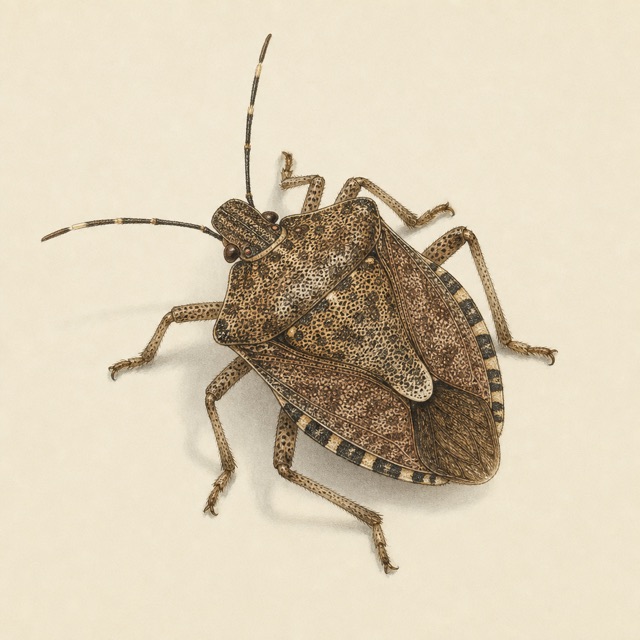
If you've ever crushed a stink bug and instantly regretted it, you know exactly why they earned their name. These shield-shaped invaders don't bite or damage homes, but they gather by the hundreds in fall seeking warm overwintering spots. The key to managing them is prevention before they get inside—because once they're in your walls, they'll keep appearing until spring.
Brown marmorated stink bugs are 1/2 to 5/8 inch long, shield-shaped, mottled brown with alternating light and dark bands on antennae and abdomen edges. They have 6 legs, a triangular plate (scutellum) on back, and emit a pungent cilantro-like odor when crushed or threatened.
Similar Pests
Boxelder bugs are darker with red markings, not mottled brown. Squash bugs are similar but have orange stripes on abdomen edges. Assassin bugs have a curved beak and predatory behavior.
Signs of Infestation
- •Large aggregations on south- or west-facing walls in fall seeking entry points
- •Stink bugs crawling on window frames, door frames, and siding cracks
- •Strong cilantro-like or skunk-like odor when bugs are disturbed or crushed
- •Dead stink bugs accumulating on windowsills inside heated spaces in late winter
Key Inspection Areas
- •South- and west-facing exterior walls in fall (sun-warmed surfaces)
- •Around window frames, door frames, and siding cracks
- •Inside attics, wall voids, and crawl spaces during winter
- •Behind curtains, in light fixtures, and on windowsills indoors
When to Inspect
Inspect exterior in September-October when bugs aggregate for overwintering. Check indoors in late winter (February-March) when heating triggers emergence from wall voids.
Inspection Tools
Vacuum with disposable bag (to avoid odor), ladder to inspect upper walls and soffits, caulk to seal entry cracks
Seal Entry Points Before Fall
Stink bugs exploit tiny gaps to access wall voids and attics. Inspect your home's exterior in late August or early September, focusing on areas where siding meets, around window frames, door thresholds, utility penetrations, and soffit vents. Use quality silicone caulk for cracks and gaps smaller than 1/4 inch, and stuff larger openings with copper mesh before sealing. Install door sweeps on all exterior doors and repair damaged window screens.
Apply Perimeter Barrier Treatment
In late August through September, apply a residual insecticide like Talstar P or Suspend Polyzone around your home's foundation, window frames, door frames, and eaves. Focus on the sun-facing sides (south and west) where stink bugs congregate. Spray 3 feet up the exterior walls and 3 feet out onto the ground. Reapply every 30-45 days during peak season for continued protection.
Install Weatherstripping and Vent Covers
Stink bugs commonly enter through attic and crawlspace vents, chimney caps, and poorly sealed doors. Install fine mesh screening (1/8 inch or smaller) over gable vents, ridge vents, and soffit vents. Replace worn weatherstripping around doors and windows, and ensure your chimney has a properly fitted cap with screening. These physical barriers are your most effective long-term defense.
Remove Indoor Bugs Without Crushing
When you find stink bugs indoors, never squash them—the defensive odor is pungent and lingering. Use a vacuum cleaner with a disposable bag or insert, or create a simple trap using a foil roasting pan with soapy water placed under a desk lamp at night. For individual bugs, knock them into a container of soapy water or flush them. Immediately dispose of vacuum bags in outdoor trash to prevent odor buildup.
Target Outdoor Aggregation Sites
Stink bugs cluster on warm, sunny exterior walls before entering homes. Spray these congregations directly with ready-to-use products like Ortho Home Defense or Spectracide Bug Stop. For large populations, consider using a shop vacuum to collect them from exterior walls. Remove or relocate firewood piles, leaf litter, and ornamental grasses at least 20 feet from your foundation, as these provide staging areas.
Use Light Traps for Indoor Monitoring
Commercially available stink bug traps or DIY light traps can help monitor and reduce indoor populations. Place a desk lamp over a shallow pan of soapy water in attics, basements, or rooms where bugs emerge. The bugs are attracted to light and warmth, especially during winter thaws. Check traps daily and dispose of collected bugs in outdoor trash sealed in plastic bags.
Apply Diatomaceous Earth in Wall Voids
For persistent problems where bugs are overwintering inside walls, use a hand duster to apply CimeXa or food-grade diatomaceous earth into wall voids through electrical outlets (power off first), attic spaces, and crawlspaces. This desiccant dust kills stink bugs through dehydration and remains effective for years. Focus on areas where you see bugs emerging in late winter and spring.
Plan for Next Season's Prevention
Stink bug management is a yearly cycle requiring proactive measures. Mark your calendar for late August to begin exterior treatments and inspections before populations build. Consider reducing outdoor lighting near entry points during fall, as lights attract stink bugs. If you have severe infestations annually, consult a pest professional about professional-grade treatments and exclusion work that may provide better long-term results.
- 1Seal cracks around windows, doors, siding, and foundations with caulk in late summer
- 2Repair or replace damaged window screens and door sweeps
- 3Apply residual pyrethroid spray (Talstar P, Cyper WSP) to exterior walls in September
- 4Remove weeds, vines, and dense vegetation from around foundations
- 5Vacuum stink bugs indoors rather than crushing (they emit strong odor)
- 6Install weatherstripping on exterior doors and attic access points
Seasonal Note
Prevention must happen in late summer/early fall before bugs aggregate for overwintering. Once inside walls, removal is difficult.
Why do stink bugs suddenly appear in my house during winter?
Stink bugs entered your walls and attic in fall to overwinter, going into a hibernation-like state called diapause. During warm winter days or when indoor heating warms wall voids, they become active and mistakenly emerge into living spaces thinking spring has arrived. They're not reproducing indoors—they're just disoriented bugs that got in last fall trying to get back outside.
What actually kills stink bugs instantly?
Soapy water is the most effective and odor-free method, drowning them within minutes. Contact insecticides like those containing pyrethroids will kill on contact, but may cause the bug to release its odor as it dies. Freezing temperatures kill them, but simply putting them outside in winter may not work if they find shelter. Avoid squashing them at all costs unless you enjoy the smell of cilantro mixed with burnt rubber.
Do stink bugs cause damage to my home or garden?
Stink bugs don't damage homes—they don't chew wood, lay eggs indoors, or reproduce inside like other pests. However, they are serious agricultural pests that damage fruits, vegetables, and ornamental plants by piercing and sucking plant juices. In homes, they're purely a nuisance pest that creates odor issues and causes anxiety when hundreds appear. The staining from their defensive secretions can damage fabrics and curtains.
How do I prevent stink bugs from coming back next year?
Prevention must start in late summer before they begin seeking overwintering sites. Seal all exterior gaps and cracks, install proper screening on vents, apply residual insecticides to exterior surfaces in September, and eliminate outdoor harborage sites near your foundation. No single method works perfectly, but combining exclusion (sealing), chemical barriers, and habitat modification significantly reduces populations. Consider professional pest control if DIY methods aren't sufficient.
Are stink bugs dangerous to humans or pets?
Stink bugs pose no health threat—they don't bite, sting, or transmit diseases to humans or pets. Their only defense is the foul-smelling chemical they release when threatened or crushed. Some people may experience minor skin irritation or allergic reactions if they handle many bugs, and the odor can cause temporary nausea. Pets rarely eat them more than once due to the terrible taste, and they're not toxic if accidentally ingested.
Quick Facts
- Size
- 1/2 - 3/4 inch
- Color
- Mottled brown with lighter bands on antennae and legs
- Habitat
- Exterior walls, attics, wall voids, and agricultural areas; congregate on sun-facing sides of buildings in fall
- Active Season
- Peak activity late summer through fall; emerge indoors during winter warm spells and spring
Danger Level: Low
This pest is primarily a nuisance but can be eliminated with DIY methods.