Tent caterpillars are among the most visible and alarming spring pests, building large, conspicuous silk tents in the forks of deciduous trees. While their webs and mass defoliation look devastating, most healthy trees recover fully from tent caterpillar attacks. Understanding their life cycle and acting at the right time makes control straightforward and effective.
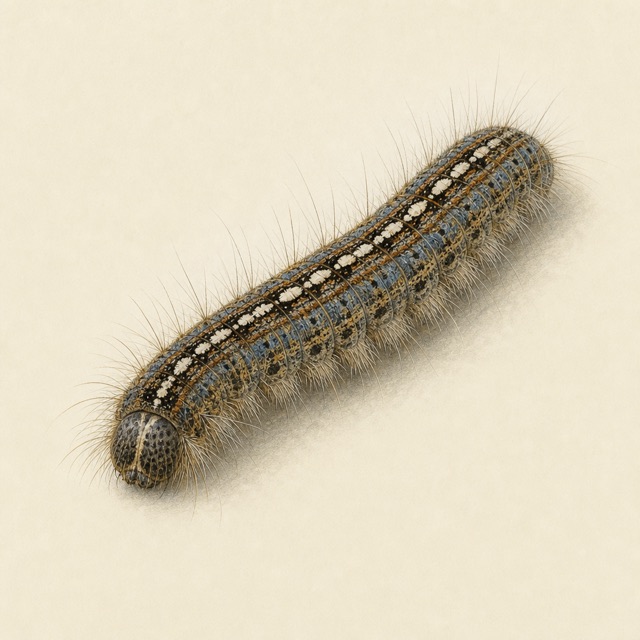
Eastern tent caterpillars are colorful, hairy caterpillars with a distinctive white stripe running down the back, flanked by blue and orange markings. They are social, living communally in silk tents built in the crotches of tree branches. Adults are small, stout-bodied reddish-brown moths with two pale bands across each forewing.
Similar Pests
Often confused with fall webworms, which build loose webs at branch tips in late summer (not in branch forks in spring). Also confused with gypsy moth caterpillars, which have paired red and blue spots and do not build silk tents. Forest tent caterpillars have keyhole-shaped white spots instead of a continuous stripe.
Signs of Infestation
- •Conspicuous white silk tents in branch forks, enlarging through spring
- •Masses of caterpillars crawling on trunks, branches, and nearby surfaces
- •Defoliated branches near tent structures
- •Dark, shiny egg masses encircling small twigs (visible in winter)
Key Inspection Areas
- •Branch forks and crotches of wild cherry, apple, and crabapple trees
- •Ornamental fruit trees and hawthorn in residential landscapes
- •Twigs and small branches for overwintering egg masses (dark, varnished bands)
- •Nearby fences, decks, and building foundations where mature larvae wander
When to Inspect
Inspect trees for egg masses in fall and winter. Watch for tiny tents forming in early spring (March-April) when buds begin to swell. Tents grow rapidly through April and May.
Inspection Tools
Pole pruner or long stick, bucket of soapy water, gloves, ladder if needed for small trees
Remove Egg Masses in Winter
Inspect twigs from October through March for dark, shiny egg masses that encircle small branches like bands. Prune off infested twigs and destroy them. Each egg mass can produce 200-300 caterpillars, so early removal is highly effective. Focus on wild cherry, apple, and crabapple trees.
Destroy Tents While Small
When tents first appear in early spring, remove them physically. Wind a small tent around a stick or gloved hand in the early morning or evening when caterpillars are inside. Drop the tent and caterpillars into a bucket of soapy water. Do not burn tents in trees, as this causes far more damage to the tree than the caterpillars would.
Apply Bt for Young Caterpillars
Spray Bacillus thuringiensis var. kurstaki (Bt) on foliage near and around tents when caterpillars are small (under 1 inch). Bt is a biological insecticide that specifically targets caterpillars and is safe for all other organisms. Apply in the evening when caterpillars are actively feeding and UV exposure is minimal.
Use Spinosad for Moderate Infestations
Spinosad-based products offer effective organic control of tent caterpillars at all larval stages. Spray foliage thoroughly around tent sites. Spinosad works both by contact and ingestion and remains active on foliage for about a week. Reapply after heavy rain.
Apply Band Barriers on Trunks
Wrap a band of sticky tree barrier (such as Tanglefoot) around tree trunks to trap caterpillars as they crawl up and down between tents and feeding sites. Place the band at chest height and apply sticky material over the outer surface. This also catches mature larvae as they leave trees to pupate.
Let Nature Help
Tent caterpillar populations are naturally cyclic, building for several years then crashing due to disease, parasites, and predators. Avoid spraying entire landscapes with broad-spectrum insecticides, as this kills parasitic wasps and tachinid flies that provide long-term population control. Focus treatments only on valued specimen trees.
Support Tree Recovery
Healthy deciduous trees typically produce a second flush of leaves after tent caterpillar defoliation and recover fully within one growing season. Water defoliated trees deeply during summer and avoid fertilizing until the following spring. Monitor for two consecutive years of heavy defoliation, which can weaken trees and warrant more aggressive treatment.
- 1Prune and destroy egg masses from twigs during winter dormant season
- 2Encourage natural predators including parasitic wasps, birds, and predatory beetles
- 3Avoid broad-spectrum insecticides that kill beneficial parasitoids and predators
- 4Install birdhouses near susceptible trees to attract cavity-nesting birds that eat caterpillars
- 5Monitor wild cherry trees in your area, as they are primary host plants
- 6Maintain tree health through proper watering and mulching to ensure recovery from defoliation
Seasonal Note
Winter egg mass removal is the most efficient prevention method. A single egg mass contains 200-300 eggs, so removing even a few masses significantly reduces spring populations.
Will tent caterpillars kill my trees?
In most cases, no. Healthy deciduous trees recover from a single season of tent caterpillar defoliation by producing new leaves in summer. However, multiple consecutive years of severe defoliation can stress and weaken trees, making them susceptible to secondary pests and diseases.
Are tent caterpillars poisonous or dangerous?
Tent caterpillars are not poisonous and do not sting, but their hairs can cause mild skin irritation in sensitive individuals. In rare cases, mare reproductive loss syndrome has been linked to Eastern tent caterpillars near horse pastures. They are not a health concern for humans, dogs, or cats.
What is the difference between tent caterpillars and fall webworms?
Eastern tent caterpillars build tents in branch forks in spring and leave the tent to feed. Fall webworms build loose, messy webs at branch tips in late summer and feed inside the web. They are different species with different seasonal timing and web placement.
Should I burn out tent caterpillar nests?
Never burn tents in trees. Burning damages bark, kills branches, and can start fires in dry conditions. It causes far more tree damage than the caterpillars themselves. Instead, remove tents physically with a stick or gloved hand and drop them into soapy water.
Do tent caterpillars come back every year?
Tent caterpillar populations are naturally cyclic, typically building over 6-10 years and then crashing dramatically due to viral and fungal diseases. After a population crash, several years of low numbers follow before the cycle rebuilds. Winter egg mass removal helps reduce populations during peak years.
Quick Facts
- Size
- Larvae grow up to 2 inches long; egg masses 1/2 to 3/4 inch
- Color
- Black with white dorsal stripe, blue and orange lateral markings; hairy body
- Habitat
- Deciduous trees, especially wild cherry, apple, crabapple, hawthorn, and ornamental fruit trees
- Active Season
- Larvae active March through June; egg masses present year-round on twigs
Danger Level: Medium
This pest can cause health issues or property damage if left untreated.