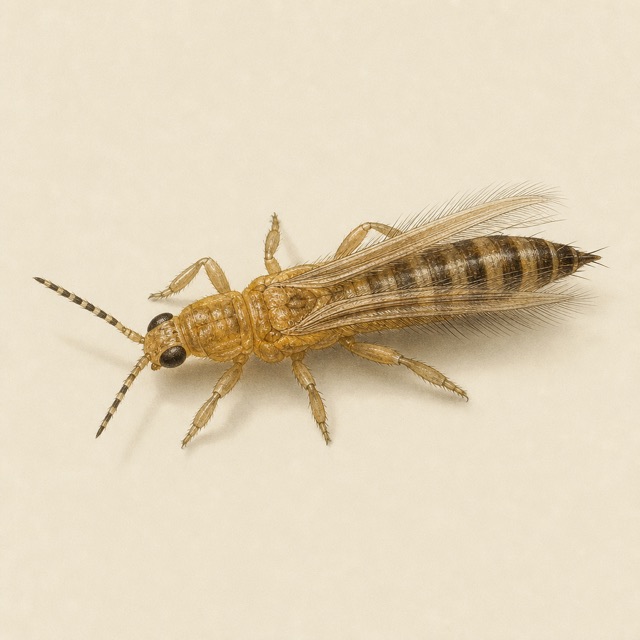
Those tiny black specks on your houseplants aren't just dirt—they're thrips, and they're actively sucking the life out of your green babies. These microscopic menaces are notoriously difficult to spot until the silvery streaking and leaf damage becomes obvious. The good news? With the right strategy, you can eliminate thrips before they decimate your entire plant collection.
Thrips are minute (1/50 to 1/25 inch), slender, elongated, yellow, brown, or black. They have fringed wings (though many are wingless), piercing-sucking mouthparts, and rasping feeding behavior. They are barely visible to the naked eye.
Similar Pests
Springtails are rounder and jump. Aphids are larger and pear-shaped. Spider mites are rounder and leave webbing. Thrips are skinny and cigar-shaped.
Signs of Infestation
- •Silvery-white stippling or streaking on leaf surfaces from rasping feeding
- •Distorted, curled, or discolored new growth on plants
- •Tiny black fecal specks (varnish-like) on leaf undersides
- •Scarred or deformed flowers and fruit from feeding damage
- •Thrips visible as tiny moving specks when tapping flowers over white paper
Key Inspection Areas
- •Flowers, especially roses, gladiolus, and dahlias
- •New growth tips and undersides of leaves on vegetables and ornamentals
- •Greenhouses, indoor plants, and windowsill gardens
- •Field edges and areas with blooming weeds
When to Inspect
Inspect during active growing season (spring through fall). Check weekly once thrips are detected (they reproduce rapidly). Thrips are most active in warm, dry weather.
Inspection Tools
White paper or cloth to tap flowers over (thrips become visible as moving specks), hand lens or magnifying glass (thrips are minute), sticky traps to monitor populations
Confirm You're Dealing with Thrips
Shake a suspected leaf over white paper and look for tiny, slender insects that move quickly. Check leaves for silvery streaking, stippling, or a papery appearance with black fecal spots. Use a magnifying glass or your phone camera zoom—adult thrips are barely visible to the naked eye, looking like moving flecks. You may also notice distorted new growth or scarred flower petals.
Isolate Infested Plants Immediately
Move affected plants away from your healthy collection right away—thrips are highly mobile and will spread rapidly. Place them in a bathroom or separate room where you can treat them without risking cross-contamination. Check neighboring plants carefully for the next few days, as thrips can travel on air currents and your clothing. This quarantine period is critical for containment.
Start with a Strong Shower Treatment
Take infested plants to the sink or shower and blast them with a strong stream of lukewarm water, focusing on leaf undersides where thrips hide. This physically removes adult thrips, larvae, and eggs while causing minimal plant stress. Repeat this process every 2-3 days for two weeks as part of your treatment regimen. For delicate plants, use a spray bottle set to stream rather than full water pressure.
Apply Spinosad-Based Insecticide
Spray your plants thoroughly with Monterey Garden Insect Spray (spinosad) or BonideĀ® Captain Jack's Dead Bug Brew, covering all leaf surfaces until dripping. Spinosad is organic, highly effective against thrips, and safe for most plants when applied in the evening. Apply every 5-7 days for 3-4 treatments to break the reproduction cycle. Make sure to treat the soil surface too, as pupating thrips drop into the top layer.
Deploy Blue Sticky Traps
Place blue sticky traps (thrips are attracted to blue) around and just above your plants to catch adult thrips. Products like Garsum Blue Sticky Traps work excellently for monitoring and reducing flying adult populations. Replace traps weekly and use them to gauge whether your treatment is working—you should see declining numbers over time. Position them close to affected plants for maximum effectiveness.
Introduce Beneficial Predators for Ongoing Control
For persistent infestations or greenhouse settings, release beneficial insects like Neoseiulus cucumeris (predatory mites) or Orius insidiosus (minute pirate bugs). These can be ordered online from suppliers like Arbico Organics or Koppert Biological Systems. They'll hunt down thrips larvae and establish a natural control system. This works best in enclosed environments where predators can't escape and establish a population.
Treat the Soil and Prevent Re-infestation
Since thrips pupate in soil, drench the top 1-2 inches with diluted neem oil or use beneficial nematodes (Steinernema feltiae) to kill pupae. Remove any fallen leaves or plant debris where thrips can hide and reproduce. Going forward, inspect any new plants carefully before bringing them near your collection, and maintain good air circulation to discourage thrips, which prefer still, warm conditions.
Monitor and Maintain Prevention Protocols
Keep blue sticky traps up permanently as an early warning system for thrips. Inspect your plants weekly, especially new growth and flower buds where thrips congregate. Consider a monthly preventative spray of insecticidal soap or neem oil during peak season. Healthy, well-watered plants resist thrips better than stressed ones, so maintain proper plant care as your first line of defense.
- 1Remove weeds and debris around garden that harbor thrips populations
- 2Use reflective mulch (aluminum foil) around susceptible plants to repel thrips
- 3Inspect new plants before adding to garden to avoid introducing thrips
- 4Introduce beneficial insects (minute pirate bugs, lacewings) for biological control
- 5Apply insecticidal soap or spinosad spray at first sign of thrips (repeat every 5-7 days)
- 6Remove and destroy heavily infested flowers to prevent spread
Seasonal Note
Thrips populations peak in warm, dry summer months. Monitor weekly and treat early before populations explode.
Can thrips harm humans or pets?
Thrips occasionally bite humans, causing small, itchy welts that resemble mosquito bites, but they don't transmit diseases and can't infest people. The bites are more of an irritation that happens when thrips land on skin while searching for moisture. Thrips pose no threat to pets and are only a significant concern for plants. Any skin irritation from thrips bites typically resolves within a few days without treatment.
Why do I keep getting thrips on my indoor plants?
Thrips most commonly enter homes on new plants from nurseries or garden centers where infestations are widespread. They can also fly in through open windows and doors, especially during warm weather, and are attracted to flowering plants. Dry indoor air and stressed plants create ideal conditions for thrips to thrive. Always quarantine and inspect new plants for 1-2 weeks before adding them to your collection.
How long does it take to completely eliminate thrips?
Expect 3-4 weeks of consistent treatment to fully eliminate a thrips infestation due to their multi-stage life cycle. Eggs hatch in 2-7 days, and adults can live for 30-45 days while continuously laying new eggs, so you must interrupt multiple generations. The pupal stage occurs in soil, making them temporarily resistant to sprays. Persistence with weekly treatments and monitoring is essential—don't stop too early or they'll rebound quickly.
Are thrips the same as fungus gnats?
No, they're completely different insects that require different treatments. Fungus gnats are small black flies that hover around soil and indicate overwatering, while thrips are slender, barely visible insects that live on plant tissue and cause silvery leaf damage. Fungus gnats cause minimal plant harm, but thrips actively feed on plant cells and can devastate foliage. Yellow sticky traps catch fungus gnats, while blue traps work better for thrips.
Will neem oil alone kill thrips effectively?
Neem oil can work against thrips but is generally less effective than spinosad-based products, especially for heavy infestations. It acts more as a deterrent and growth disruptor than a contact killer, and requires very thorough coverage and repeated applications. For best results, use neem oil as a preventative or in combination with other methods like predatory insects and physical removal. If you're dealing with an active infestation, start with spinosad for faster knockdown, then switch to neem for maintenance.
Quick Facts
- Size
- 1/25 - 1/12 inch (0.5-2mm)
- Color
- Yellow, brown, or black with slender bodies
- Habitat
- Flowers, leaves, and stems of plants; both indoor and outdoor gardens, greenhouses, and agricultural settings
- Active Season
- Year-round indoors; spring through fall outdoors, peaking in hot, dry weather
Danger Level: Medium
This pest can cause health issues or property damage if left untreated.