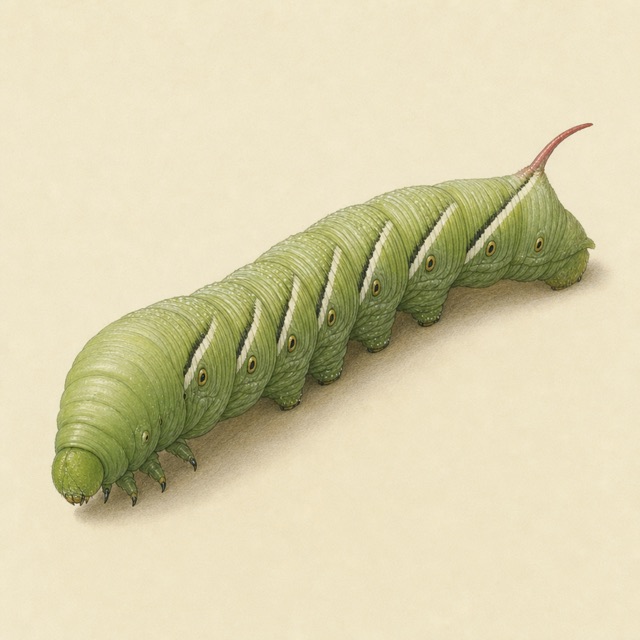
Tomato hornworms are large, voracious caterpillars that can strip a tomato plant of its foliage in just a few days. Despite their impressive size of up to four inches, their green coloring provides excellent camouflage that makes them surprisingly hard to spot. These pests also attack peppers, eggplant, and potatoes, making them a serious threat to any nightshade garden.
Tomato hornworms are large, bright green caterpillars with eight V-shaped white markings along each side and a prominent black or dark blue horn projecting from the rear. They are the larval stage of the five-spotted hawk moth. Despite their large size, their coloring blends remarkably well with tomato foliage.
Similar Pests
The closely related tobacco hornworm (Manduca sexta) has diagonal white lines instead of V-shapes and a red horn. Both species cause identical damage and are controlled the same way. Green tomato fruit worms are smaller and bore into fruit rather than defoliating plants.
Signs of Infestation
- •Large sections of foliage stripped from tomato plant tops
- •Dark green to black droppings (frass) on leaves and on the ground below plants
- •Chewed or missing fruit with large gouges
- •Defoliated stems with only bare stalks remaining
Key Inspection Areas
- •On the upper portions of tomato plants where they begin feeding
- •Along stems and leaf petioles where caterpillars rest during the day
- •On the undersides of leaves near feeding damage
- •On the ground beneath plants where large dark droppings accumulate
When to Inspect
Inspect in the early morning or late evening when hornworms are actively feeding. During midday, they often rest motionless along stems and are harder to spot. Use a UV blacklight at night for easy detection as hornworms fluoresce brightly.
Inspection Tools
UV blacklight flashlight for nighttime detection, garden gloves for hand-picking, bucket of soapy water for disposal
Hand-pick hornworms from plants
The most effective immediate control is hand-picking. Look for frass droppings on leaves and the ground, then follow the trail upward to find the caterpillar. Remove hornworms and drop them into soapy water. Check plants daily during peak season.
Use a blacklight for nighttime detection
After dark, shine a UV blacklight on tomato plants. Hornworms glow bright green under UV light, making them dramatically easier to spot than during daytime. A single evening sweep can locate caterpillars you would miss for days in daylight.
Apply Bt (Bacillus thuringiensis) spray
Spray Bt var. kurstaki (sold as DiPel or Thuricide) on all foliage, especially upper growth. Bt is a biological insecticide that kills caterpillars when ingested but is safe for beneficial insects, humans, and pets. Apply in the evening and reapply after rain.
Leave parasitized hornworms in the garden
If you find a hornworm covered with small white cocoons, leave it in place. These are pupae of braconid wasps, a beneficial parasitoid. The wasp larvae have already consumed the caterpillar internally and will emerge as adults to parasitize more hornworms.
Apply spinosad for heavy infestations
For severe infestations where Bt alone is insufficient, apply OMRI-listed spinosad according to label directions. Spinosad provides faster knockdown than Bt and remains effective for up to a week. Apply in the evening to protect pollinators.
Introduce beneficial insects
Release Trichogramma wasps early in the season. These tiny parasitic wasps lay their eggs inside hornworm moth eggs, preventing caterpillars from ever hatching. Release rates of 5,000 to 10,000 wasps per garden per week during moth flight season are recommended.
Till soil to destroy pupae
After the growing season ends, till or deeply cultivate the top six inches of soil in beds where hornworms were present. This exposes overwintering pupae to cold, desiccation, and predators. Repeat light cultivation in early spring before planting to catch any survivors.
- 1Till garden soil in fall and early spring to destroy overwintering pupae buried 4 to 6 inches deep
- 2Rotate nightshade crops to different beds each year
- 3Plant dill, basil, and marigolds near tomatoes to attract beneficial parasitic wasps
- 4Inspect tomato plants twice weekly starting in early July for eggs and small caterpillars
- 5Encourage paper wasps and braconid wasps which are natural hornworm predators
- 6Use row covers on young transplants until plants are well established
Seasonal Note
Hawk moths emerge in late spring and lay eggs on tomato leaf undersides. Caterpillars grow rapidly through five instars over three to four weeks before pupating in soil. In warm climates, a second generation may appear in late summer.
Are tomato hornworms poisonous?
No, tomato hornworms are not poisonous or venomous. The horn on their rear end is not a stinger and cannot harm you. They are completely safe to handle, though they may try to thrash their bodies when picked up.
What do tomato hornworms turn into?
Tomato hornworms are the larval stage of the five-spotted hawk moth (also called sphinx moth or hummingbird moth). The adult moths are large, gray-brown moths with a five-inch wingspan that hover at flowers like hummingbirds to feed on nectar at dusk.
How do hornworms appear so suddenly?
Hornworm eggs are tiny and laid individually on leaf undersides, making them nearly impossible to spot. The caterpillars grow from less than a quarter inch to four inches in just two to three weeks, so they seem to appear overnight once they reach noticeable size.
Should I kill hornworms with white cocoons on them?
No. The white cocoons are pupae of braconid parasitoid wasps. The hornworm is already dying and will not feed much more. The emerging wasps will parasitize additional hornworms, providing free biological control. Leave parasitized caterpillars in your garden.
Can hornworms eat my tomato fruit?
Yes, tomato hornworms will eat green tomato fruit in addition to foliage. They typically chew large, shallow gouges into fruit, leaving them scarred and susceptible to rot. However, they primarily prefer leaves and will eat fruit only when foliage is depleted.
Quick Facts
- Size
- 3 to 4 inches long when mature
- Color
- Bright green with white V-shaped markings along the sides and a distinctive black horn on the rear end
- Habitat
- Vegetable gardens growing tomatoes, peppers, eggplant, and potatoes
- Active Season
- Mid-summer through early fall, with moths emerging in late spring
Danger Level: Medium
This pest can cause health issues or property damage if left untreated.