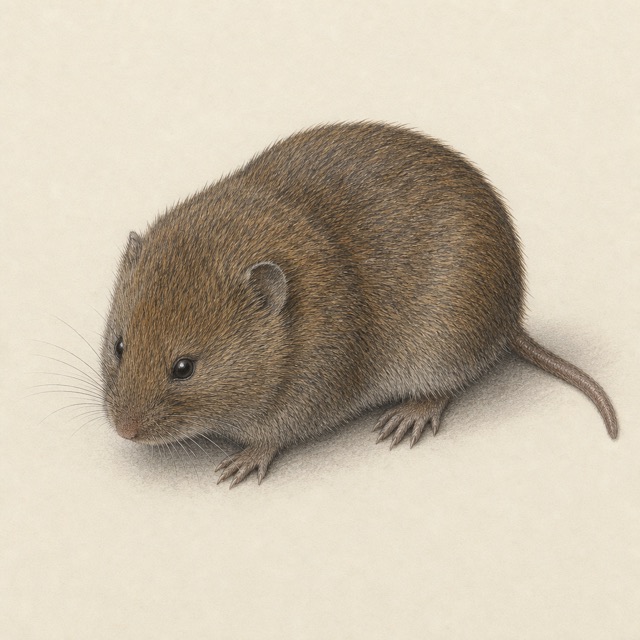
Those mysterious surface tunnels crisscrossing your lawn aren't from moles—they're likely the work of voles, small rodents that can devastate gardens and damage trees in surprisingly short order. Unlike their insect-eating mole cousins, voles are voracious herbivores that breed year-round and can produce 100 offspring annually, making early intervention critical to protecting your landscape.
Voles (meadow mice) are 3 to 5 inches body length, stocky, with short tails (1 to 2 inches), small eyes and ears, brown to gray-brown fur, and rounded snouts. They are active day and night.
Similar Pests
Mice have longer tails (over half body length), larger ears, and pointed snouts. Moles are larger, have no visible eyes/ears, and have large front digging claws. Shrews have pointed snoses and eat insects, not plants.
Signs of Infestation
- •Narrow surface runways (1-2 inches wide) in grass or mulch with clipped grass along paths
- •Burrow entrances (1-2 inch diameter) in lawn or garden beds
- •Girdled bark at base of young trees and shrubs, often hidden by mulch or snow
- •Damaged plant roots and bulbs from feeding
- •Grass clippings and droppings in runways
Key Inspection Areas
- •Surface runways (1-2 inches wide) in lawns, especially under light snow
- •Around base of young trees and shrubs with gnawed bark
- •In garden beds, especially near root vegetables and bulbs
- •Dense groundcover, mulch beds, and overgrown grassy areas
- •Near bird feeders where spilled seed attracts voles
When to Inspect
Inspect year-round (voles are active all year). Check in late winter/early spring when snow melts revealing runway damage. Look for fresh clipped grass and droppings in runways.
Inspection Tools
Probing rod to locate burrow entrances, removal of snow to reveal runways, hardware cloth or tree guards to protect vulnerable plants
Confirm You Have Voles, Not Moles
Vole runways appear as 1-2 inch wide surface tunnels through grass with visible entry holes about golf-ball sized. Mole tunnels create raised ridges underground. Look for chewed plant stems, gnawed bark near the ground on trees and shrubs, and small droppings near runways. You'll rarely see the voles themselves since they're most active at dawn and dusk.
Eliminate Cover and Food Sources
Voles thrive in areas with dense vegetation where they're protected from predators. Mow your lawn regularly and keep grass short (3 inches or less). Remove heavy mulch layers around trees and foundations, pull back dense ground covers, and clear away brush piles and tall weeds. Create a vegetation-free border of at least 3 feet around gardens and tree bases using gravel or cleared soil.
Install Physical Barriers Around Valued Plants
Protect young trees and shrubs with 1/4-inch hardware cloth cylinders buried 6-10 inches deep and extending 18 inches above ground—voles can't climb but will burrow. For garden beds, sink hardware cloth barriers 10-12 inches into the soil around perimeters. These physical barriers are your most reliable long-term solution for protecting specific high-value plantings.
Set Snap Traps Along Active Runways
Victor snap traps designed for mice work excellently for voles when placed perpendicular to their runways with triggers facing the path. Bait with peanut butter mixed with oatmeal, or use apple slices. Set 15-20 traps at once for serious infestations—voles have large populations and piecemeal trapping won't make a dent. Check and reset traps daily for 2-3 weeks.
Use Zinc Phosphide Bait for Large Infestations
For severe vole problems, ZP rodent bait (zinc phosphide) applied directly into burrow openings is highly effective. Products like Kaput Rat & Mouse Bait or ZP Tracking Powder work well. Apply according to label directions, placing bait deep in active tunnels and covering openings slightly. This is more effective than surface broadcasting and reduces risk to non-target animals. Always follow local regulations regarding rodenticide use.
Apply Castor Oil Repellents to Treated Areas
After reducing populations through trapping or baiting, apply castor oil-based repellents like Bonide MoleMax or I Must Garden Vole Repellent to make your yard less appealing. These products coat plants and soil with an unpleasant taste and smell. Reapply monthly and after heavy rain. While not a standalone solution, repellents help prevent recolonization once you've addressed the immediate problem.
Encourage Natural Predators
Hawks, owls, foxes, coyotes, and snakes all prey on voles. Install owl boxes and raptor perches to attract birds of prey. Keep outdoor cats (where appropriate and legal). Avoid using rodenticides that could poison predators feeding on affected voles. A single barn owl family can consume thousands of rodents annually, providing excellent natural control that complements your other efforts.
Monitor and Maintain Vigilance
Voles reproduce rapidly—a solved problem can return in weeks if you drop your guard. Walk your property weekly looking for fresh runway activity, gnawed bark, or new burrow holes. Keep habitat modifications in place permanently: short grass, minimal mulch, and cleared buffer zones. Early detection of new activity lets you deploy 5-10 traps immediately before populations explode again.
- 1Keep grass mowed short (below 3 inches) to eliminate vole cover
- 2Remove mulch from around tree/shrub bases (at least 3 feet out from trunks)
- 3Install 1/4-inch wire mesh tree guards around young trees buried 6 inches deep
- 4Eliminate dense groundcover, leaf litter, and debris that provide runway cover
- 5Trap voles in late winter/early spring before breeding season (they breed rapidly)
- 6Use gravel or stone mulch instead of wood mulch in landscape beds
Seasonal Note
Vole damage peaks in winter under snow when girdling is hidden. Protect trees and trap in late winter before spring breeding season.
What's the fastest way to get rid of voles in my yard?
The fastest effective approach combines habitat modification with aggressive snap trapping. Cut grass short, remove cover, and immediately set 15-20 snap traps along active runways. For properties with extensive vole damage, adding zinc phosphide bait to burrows accelerates elimination. You should see significant reduction within 1-2 weeks if you're persistent with daily trap checks and resets.
Do coffee grounds or other home remedies actually repel voles?
Coffee grounds, garlic, and similar home remedies have minimal effectiveness against voles and won't solve an active infestation. While voles may briefly avoid certain smells, they quickly habituate and hunger overrides aversion. Castor oil-based commercial repellents show better results but still work best as maintenance after you've reduced populations through trapping or exclusion. Focus on proven methods before experimenting with home remedies.
How can I tell if I have voles or moles damaging my yard?
Voles create visible surface runways through grass with multiple open holes, and they eat plants, roots, bulbs, and tree bark. Moles create raised tunnel ridges and volcano-shaped mounds, and they eat insects (not plants). If you see gnawed vegetation and surface pathways like tiny highways through your lawn, you have voles. Mole damage looks like someone pushed tunnels up from below, creating soft, raised areas you can press down.
Will voles go away on their own, or do I need to take action?
Voles will not leave on their own if your property provides food, cover, and safety from predators. In fact, populations typically grow rapidly—a single pair can produce 100 offspring in one year under ideal conditions. Without intervention, expect expanding damage to lawns, gardens, and trees. The longer you wait, the more entrenched the population becomes and the harder elimination gets.
Are voles dangerous to humans or pets?
Voles pose minimal direct danger to humans and pets—they're shy, rarely enter homes, and don't aggressively defend territory. However, they can carry hantavirus, tularemia, and other diseases transmitted through droppings and urine, so avoid handling them directly. The real threat is to your landscape: voles can girdle and kill mature trees, destroy entire garden beds overnight, and create extensive lawn damage that costs thousands to repair.
Quick Facts
- Size
- 5-8 inches long (including tail)
- Color
- Brown to gray with a lighter underside
- Habitat
- Dense ground cover, gardens, lawns, orchards, and areas with heavy mulch or vegetation
- Active Season
- Year-round (most active spring and fall)
Danger Level: Medium
This pest can cause health issues or property damage if left untreated.