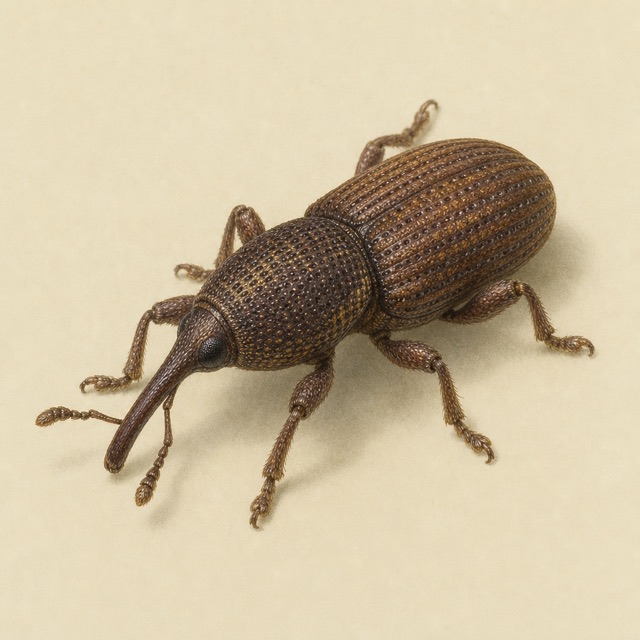
Finding small beetles crawling through your rice, flour, or cereal is disgusting—and those are weevils, pantry invaders that can infest dozens of food items before you even notice them. These tiny snout-nosed beetles lay eggs directly inside grains and dried foods, meaning the infestation often starts from products you brought home from the store. The good news: with thorough cleaning and proper storage, you can eliminate weevils and prevent them from ever returning.
Grain weevils (rice weevils, granary weevils) are 1/8 to 3/16 inch, dark brown to black, with elongated snouts and elbowed antennae. They have hard shells, clubbed antennae, and chewing mouthparts at the tip of the snout. They infest stored grains and dry foods.
Similar Pests
Flour beetles are flatter, lack a snout, and have straight antennae. Cigarette beetles are rounder with smooth heads. Bean weevils are seed beetles, not true weevils, and lack the snout.
Signs of Infestation
- •Small holes chewed in grain kernels, beans, or pasta
- •Live weevils crawling in or flying near pantry shelves
- •Fine powdery frass (flour-like residue) in food packages
- •Webbing or clumping of grain products (some species spin silk)
- •Infested food with a musty or sour odor
Key Inspection Areas
- •Pantry shelves with stored grains, rice, flour, and pasta
- •Inside unopened food packages (adults chew through cardboard and plastic)
- •In pet food storage containers and bird seed
- •Near food processing or storage areas in basements and garages
When to Inspect
Inspect when weevils are first noticed in food. Check all grain products immediately (infestation spreads rapidly). Inspect monthly as preventive measure. Year-round problem indoors.
Inspection Tools
Magnifying glass to identify species, sealed containers to quarantine suspect foods, flashlight to inspect dark pantry corners, vacuum for removing spilled grain
Inspect and Discard All Infested Food
Check every single dry food item in your pantry—flour, rice, pasta, cereal, beans, nuts, spices, and even decorative corn or birdseed. Look for live weevils, small holes in packaging, webbing, or grain dust. Throw away anything infested in sealed bags outside your home immediately. Even if you only see weevils in one box of pasta, they've likely spread to nearby items.
Deep Clean Your Pantry Completely
Remove everything from your cupboards and vacuum every corner, shelf, and crack where grain dust or eggs might hide. Wipe down all surfaces with a mixture of white vinegar and water, paying special attention to shelf brackets, hinges, and the backs of cabinets. Use a crevice tool to vacuum along shelf edges where weevil eggs often accumulate.
Freeze Questionable Items
For unopened or expensive items you're unsure about, place them in the freezer for 4-7 days to kill any eggs or larvae inside. This works well for specialty flours, organic grains, or bulk items. After freezing, transfer them to airtight containers immediately—freezing kills the infestation but doesn't prevent re-infestation from other sources.
Transfer All Dry Goods to Airtight Containers
Invest in quality airtight containers with rubber gasket seals—weevils can chew through cardboard, paper, and thin plastic bags easily. Glass jars, OXO containers, or thick plastic bins with locking lids work best. Label everything with purchase dates and check containers monthly for any signs of new activity.
Apply Residual Insecticide to Cracks and Edges
Use a pantry-safe insecticide like Demand CS or Suspend SC applied to cracks, crevices, and shelf supports where weevils hide (never directly on food surfaces). You can also apply diatomaceous food-grade DE behind shelves and in gaps, which kills weevils through dehydration. Let treated areas dry completely before replacing food items.
Set Up Monitoring Traps
Place Terro Pantry Moth Traps or similar pheromone traps in your cupboards to catch any remaining adults and alert you to new activity. While these traps work best for moths, they'll help you monitor for any flying pantry pests. Check traps weekly for the first month, then monthly as a preventive measure.
Inspect New Groceries Before Storage
Weevils often come home with you in infested products from the store. Check packaging for tiny holes, grain dust, or movement before buying. When you get home, inspect items again and consider transferring bulk grains, flour, and rice directly into airtight containers, discarding the original packaging.
Implement Long-Term Prevention Habits
Buy smaller quantities of dry goods and rotate stock regularly using the FIFO method (first in, first out). Add bay leaves to containers as a natural deterrent—weevils dislike the smell. Keep your pantry cool and dry since warmth and humidity encourage faster breeding. Inspect your storage areas monthly and clean up spills immediately.
- 1Store all grains, rice, flour, pasta, and cereals in airtight glass or hard plastic containers
- 2Inspect dry goods before purchasing — avoid torn or damaged packages
- 3Clean pantry shelves regularly and vacuum corners to remove spilled grain
- 4Freeze new grain products for 7 days before storing to kill any eggs or larvae
- 5Discard infested food immediately in outdoor trash
- 6Use bay leaves in pantry (mild repellent effect) — replace every few months
Seasonal Note
Weevils breed year-round indoors. Inspect and store dry goods properly when bringing home from store — infestations often start with contaminated purchases.
Are weevils harmful if you accidentally eat them?
No, weevils aren't harmful to humans if accidentally consumed—they're just unpleasant and gross. They don't bite, sting, or carry diseases. The bigger concern is that heavily infested food loses nutritional value and can develop mold or off-flavors. If you've unknowingly eaten some weevil-contaminated food, you'll be fine, but it's still best to throw out infested items.
Can weevils infest sealed packages from the store?
Yes, absolutely. Weevils often infest grain products at warehouses or processing facilities, and the eggs or tiny larvae can be inside sealed bags when you buy them. This is especially common with bulk bins, organic products with minimal processing, and items that have sat on shelves for months. Always inspect packages for tiny holes or grain dust before purchasing.
What's the difference between weevils and other pantry beetles?
Weevils have distinctive elongated snouts (called rostrums) that look like tiny elephant trunks, which they use to bore into grains. Other pantry beetles like cigarette beetles, drugstore beetles, or flour beetles have rounded heads without snouts. Weevils also tend to infest whole grains more than processed flour, though rice weevils will attack many products. The treatment approach is similar for all pantry beetles.
How long does it take to completely eliminate a weevil infestation?
With thorough cleaning and proper food storage, you can eliminate active weevils within 2-3 weeks. However, eggs can take 3-4 weeks to hatch, so you might see stragglers for up to 6-8 weeks after your initial cleanout. This is why airtight storage is critical—it prevents any newly hatched weevils from accessing food and breaks the reproduction cycle. Stay vigilant for at least two months.
Do I need to throw away my spices if I find weevils?
Check spices carefully—weevils typically prefer grains, pasta, and flour over ground spices, but they can infest whole spices like peppercorns, coriander seeds, or bay leaves. If you see any movement, webbing, or tiny holes in whole spices, discard them. Ground spices in sealed containers are usually safe, but if they're old or you're unsure, freezing them for a week will kill any potential eggs before you use them.
Quick Facts
- Size
- 1/8 - 1/4 inch
- Color
- Dark brown to black, some with reddish-brown markings
- Habitat
- Pantries, cupboards, stored grains, flour, rice, pasta, cereals, birdseed, pet food, and dried goods
- Active Season
- Year-round indoors, more active spring through fall
Danger Level: Low
This pest is primarily a nuisance but can be eliminated with DIY methods.