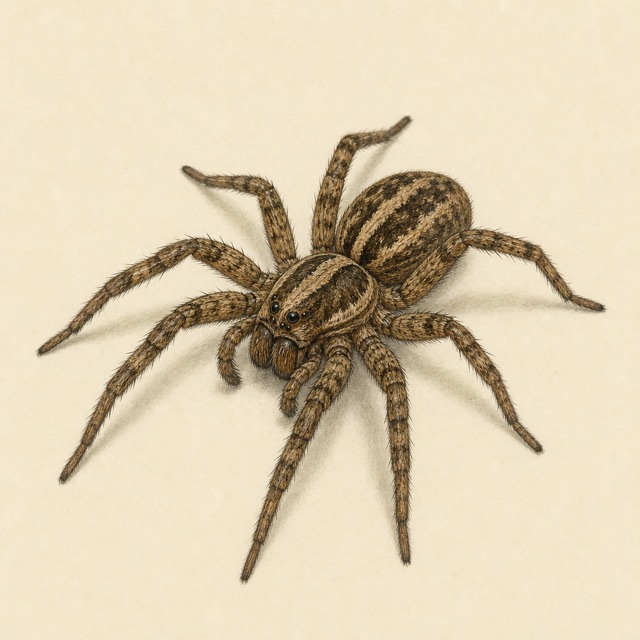
Wolf spiders are the hairy hunters that startle homeowners by darting across floors at surprising speeds. Unlike web-building spiders, these ground-dwelling predators actively chase down their prey and often wander indoors during fall months. While they're beneficial pest controllers and rarely bite humans, their intimidating size and speed make them unwelcome houseguests.
Wolf Spiders: Complete Guide are identifiable by their Brown or gray with darker stripes or markings coloring and 1/2 - 1 inch body (2 inches including legs) size. Scientific name: Lycosidae family. They have distinct physical features that help differentiate them from similar pests.
Signs of Infestation
- •Physical sightings of the pest in or around the affected area
- •Damage patterns characteristic of this pest's feeding or nesting behavior
- •Droppings, shed skins, or other biological evidence of infestation
Key Inspection Areas
- •Areas where Ground level areas, leaf litter, tall grass, basements, and garages is commonly found
- •Entry points and harborage sites specific to this pest
- •Food and water sources that attract this pest
When to Inspect
Inspect during peak activity times for this pest. Check regularly during their active season (Spring through fall (peak indoor sightings in autumn)).
Inspection Tools
Flashlight for inspecting dark areas, appropriate traps for monitoring
Seal Entry Points Around Your Foundation
Wolf spiders enter through gaps under doors, foundation cracks, and utility openings. Apply weather stripping to exterior doors and use door sweeps to eliminate ground-level gaps. Seal foundation cracks with caulk or foam sealant, and add screens to crawlspace vents. Pay special attention to areas where pipes and wires enter your home.
Eliminate Outdoor Hiding Spots Near Your Home
Wolf spiders thrive in leaf piles, mulch, firewood stacks, and tall vegetation. Move firewood at least 20 feet from your foundation and elevate it off the ground. Rake up leaf litter, trim grass short, and create a 12-inch barrier of gravel or rock around your home's perimeter. Remove debris, old lumber, and dense ground cover within 10 feet of your house.
Apply Perimeter Insecticide Treatment
Spray a residual insecticide like Talstar P or Suspend SC around your home's exterior foundation, focusing on the first 3 feet up the wall and 6 feet out from the base. Treat entry points, window wells, and garage thresholds. Reapply every 60-90 days during peak season. This creates a chemical barrier that kills spiders attempting to enter and reduces their prey base.
Use Indoor Residual Spray for Active Infestations
For spiders already inside, apply Ortho Home Defense or Raid Max Spider & Scorpion along baseboards, behind furniture, and in corners of basements and garages. Focus on ground-level areas where wolf spiders hunt. These spiders don't build webs, so they'll walk through treated surfaces and pick up the insecticide on their legs and body.
Deploy Glue Traps in High-Activity Areas
Place sticky traps like Catchmaster Spider Traps along walls, in corners, and near entry points where you've spotted wolf spiders. Position them flat against baseboards since these spiders travel along edges. Check and replace traps weekly. The traps also help you monitor which areas have the most activity so you can focus your treatment efforts.
Reduce Indoor Lighting That Attracts Prey
Wolf spiders follow their food source—flying insects attracted to lights. Switch outdoor lights to yellow or sodium vapor bulbs that attract fewer insects. Move lighting fixtures away from doors and windows when possible. Inside, reduce unnecessary nighttime lighting in basements and garages. Less insect activity means fewer hunting grounds for wolf spiders.
Vacuum Regularly and Eliminate Clutter
Wolf spiders hide in cluttered areas during daytime hours. Vacuum thoroughly along baseboards, under furniture, and in storage areas at least twice weekly. Immediately dispose of the vacuum bag or empty the canister outside. Organize storage areas by using sealed plastic bins elevated off the floor rather than cardboard boxes that create ideal spider habitat.
Apply Diatomaceous Earth in Secluded Areas
Dust food-grade diatomaceous earth like CimeXa or Harris Diatomaceous Earth in areas where sprays aren't practical—inside wall voids, behind appliances, and in crawlspaces. This desiccant powder damages the spider's exoskeleton and causes dehydration. It remains effective indefinitely when kept dry and is safe for use around pets and children once settled.
- 1Eliminate food sources and properly store food items
- 2Reduce moisture and fix any water leaks
- 3Seal entry points and potential access routes
- 4Maintain cleanliness and reduce clutter that provides harborage
- 5Monitor regularly and address problems early before populations grow
Are wolf spiders dangerous or aggressive toward humans?
Wolf spiders are not aggressive and rarely bite unless directly handled or threatened. Their venom is not medically significant to humans—bites typically cause only minor pain, redness, and swelling similar to a bee sting. They're actually beneficial predators that hunt pest insects. Most bites occur when spiders are accidentally trapped against skin in clothing or bedding.
Why do I suddenly have so many wolf spiders in my house?
Wolf spider invasions typically spike in autumn when males wander searching for mates and both sexes seek shelter from cooling temperatures. You may also notice more activity if you have abundant prey insects indoors or outdoor habitat disruption near your foundation. Female wolf spiders carry egg sacs and dozens of spiderlings on their backs, so one spider can quickly look like an infestation when the babies disperse.
What attracts wolf spiders into homes?
Wolf spiders enter homes while hunting for prey insects like crickets, cockroaches, and silverfish. They're also attracted to moisture, cluttered storage areas, and ground-level hiding spots. Gaps under doors and foundation cracks provide easy access. Unlike web-building spiders, they actively roam and may wander inside accidentally while searching for food or mates during their nocturnal hunting activity.
How do I identify a wolf spider versus other common house spiders?
Wolf spiders have a distinctive eye arrangement with four small eyes on the bottom, two large eyes in the middle, and two medium eyes on top of their head. They're noticeably hairy, robust-bodied, and brown or gray with striped markings. They don't build webs and move extremely fast when disturbed. Female wolf spiders are often seen carrying a round egg sac or dozens of tiny spiderlings on their abdomen.
Will wolf spiders leave on their own or do I need treatment?
Individual wolf spiders that wander inside occasionally will usually leave on their own or die within a few weeks without access to prey and moisture. However, if you're seeing multiple spiders regularly, you likely have entry points and favorable conditions that require treatment. Fall invasions won't resolve without sealing entry points, and pregnant females can release hundreds of spiderlings indoors if not addressed promptly.
Quick Facts
- Size
- 1/2 - 1 inch body (2 inches including legs)
- Color
- Brown or gray with darker stripes or markings
- Habitat
- Ground level areas, leaf litter, tall grass, basements, and garages
- Active Season
- Spring through fall (peak indoor sightings in autumn)
Danger Level: Low
This pest is primarily a nuisance but can be eliminated with DIY methods.