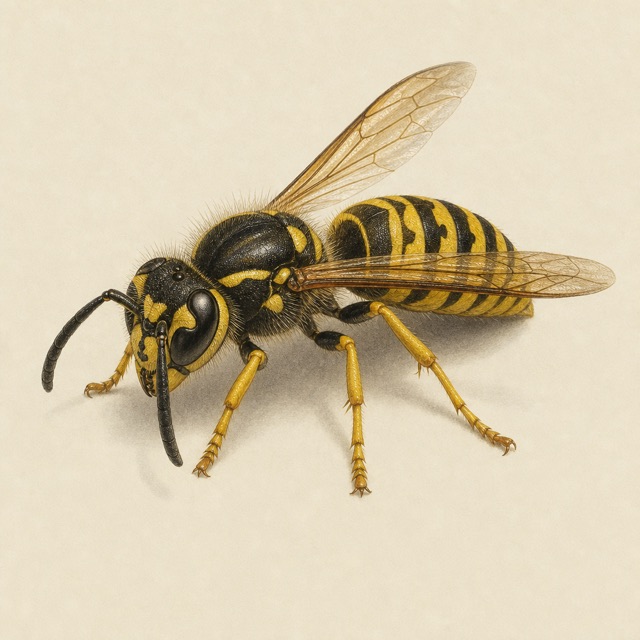
Yellow jackets are the aggressive party crashers of the wasp world, turning backyard barbecues into danger zones with their territorial behavior and painful stings. Unlike honeybees, these predatory wasps can sting repeatedly and will aggressively defend their nests, which can house thousands of workers by late summer. Understanding their behavior and acting early in the season is your best defense against a serious infestation.
Yellow jackets are 3/8 to 5/8 inch, stocky, with bright yellow and black banded abdomens, smooth bodies, and folded wings at rest. They have narrow waists, short antennae, and are aggressive, especially in late summer. They are often mistaken for bees but are wasps.
Similar Pests
Honey bees are fuzzier, tan/brown (not bright yellow), and less aggressive. Paper wasps are slimmer with longer legs. Hoverflies mimic yellow jackets but don't sting and have 2 wings, not 4.
Signs of Infestation
- •Yellow jackets flying in and out of ground holes or wall voids in high traffic
- •Paper nests built in ground cavities, wall voids, attics, or shrubs
- •Aggressive swarming behavior when nests are disturbed
- •Yellow jackets scavenging at trash cans, picnics, or sugary drinks in late summer/fall
- •Loud buzzing from large colonies (up to thousands of workers)
Key Inspection Areas
- •Ground holes in lawns, gardens, and landscaped areas
- •Wall voids, attics, and crawl spaces in structures
- •Inside rodent burrows, tree cavities, and hollow logs
- •Under eaves, decks, and porch steps
- •Near garbage cans, compost bins, and outdoor food sources
When to Inspect
Inspect in late summer and fall when colonies are largest and most aggressive. Watch for heavy traffic in and out of ground holes or wall voids. Early morning or dusk is safest for observation.
Inspection Tools
Red-filtered flashlight for night inspection (yellow jackets don't see red light well), binoculars to observe from safe distance, marking flags to note nest locations
Locate the Nest Safely
Watch yellow jackets from a safe distance during daylight to track their flight path back to the nest entrance. They typically fly in straight lines when returning home. Ground nests often have a single entrance hole about 1-2 inches wide with constant traffic during warm days. Never approach closer than 10-15 feet during this observation phase, and avoid blocking their flight path or making sudden movements.
Choose Your Treatment Method
For ground or void nests, aerosol sprays like Spectracide Wasp & Hornet Killer or Raid Wasp & Hornet Spray work well with their 20+ foot reach. For a more thorough approach, use residual dust insecticides like Delta Dust or Tempo Dust applied directly into the entrance. Liquid treatments like Cyper WSP or Demand CS can also be effective when mixed and applied with a sprayer. Select products labeled specifically for yellow jackets and ground-nesting wasps.
Treat at Dusk or Dawn
Apply treatment during dusk or very early morning when temperatures are coolest and all workers have returned to the nest. Yellow jackets are sluggish in cooler temperatures and cannot see well in low light, making this the safest time to approach. Wear protective clothing including long sleeves, pants, gloves, and consider a beekeeping veil if treating a large nest. Have a clear escape route planned before you begin treatment.
Apply Insecticide Directly
For aerosol sprays, stand at maximum distance and saturate the nest entrance for 10-15 seconds, then retreat immediately. For dust formulations, use a hand duster to puff 2-3 tablespoons directly into the opening—the wasps will track the dust throughout the colony. Do not shine bright flashlights directly at the entrance as this alerts and agitates the colony. If using a light, cover it with red cellophane as yellow jackets cannot see red light well.
Set Up Perimeter Traps
Place yellow jacket traps like RESCUE! Yellow Jacket Trap or Safer Brand Deluxe Yellow Jacket Trap 20-30 feet away from high-traffic areas like decks and patios. Fill them with the provided attractant or a mixture of sugar water, vinegar, and a drop of dish soap. Position traps in early spring to catch founding queens and reduce summer populations. Replace attractants every 2-3 weeks and empty traps when half full to maintain effectiveness.
Seal the Entrance After Treatment
Wait 24-48 hours after treatment, then verify the nest is inactive by observing for several minutes during warm daylight hours. Once confirmed dead, seal ground nest entrances with soil or expanding foam to prevent reuse by other pests. For wall voids or structural nests, seal entry points with caulk or steel wool after ensuring complete eradication. Never seal an active nest as trapped yellow jackets may chew through interior walls seeking escape.
Eliminate Attractants
Keep garbage cans tightly sealed with locking lids and clean them regularly to remove sugary residues. Cover outdoor food immediately and clean up fallen fruit from trees. Avoid wearing sweet perfumes or bright floral patterns when spending time outdoors during peak season. Keep pet food indoors and fix leaky hoses or irrigation, as yellow jackets need water sources especially in late summer.
Prevent Future Nesting
Inspect your property in early spring for founding queens searching for nest sites—this is when single yellow jackets appear before colonies develop. Fill old rodent burrows and ground holes that could become nest sites. Screen vents, seal cracks in siding, and repair soffit gaps to prevent nesting in structures. Consider applying a residual insecticide like Talstar P around potential nesting areas in April-May as a preventive barrier.
- 1Keep garbage cans tightly sealed and empty outdoor trash daily during late summer/fall
- 2Avoid eating outdoors or cover food/drinks when eating outside in late summer
- 3Remove fallen fruit from trees and ground that attracts foraging yellow jackets
- 4Seal ground holes, cracks, and gaps where yellow jackets nest underground or in walls
- 5Don't swat at yellow jackets — move away slowly and don't run
- 6Treat active nests at night with aerosol wasp spray or call professional for large/inaccessible nests
Seasonal Note
Yellow jackets are most aggressive in late summer and fall when colonies peak and natural food sources decline. Seal nesting sites in spring before colonies form.
When is the best time to kill a yellow jacket nest?
The absolute best time is early spring when you spot a single founding queen before she establishes a colony. For existing nests, treat at dusk or dawn when all workers are inside and activity is minimal. Early summer nests (June) are smaller and easier to eliminate than late summer nests which can contain 4,000+ workers. Temperature below 50°F also slows their reaction time significantly.
How dangerous are yellow jackets compared to other wasps?
Yellow jackets are significantly more aggressive than most other wasps and account for the majority of stinging incidents in North America. They can sting multiple times without dying, release alarm pheromones that recruit nestmates to attack, and will chase perceived threats for considerable distances. Unlike paper wasps which are relatively docile, yellow jackets vigorously defend their nests and forage areas. Their venom can cause severe allergic reactions in sensitive individuals.
Can I just pour gasoline or boiling water down a ground nest?
Avoid gasoline—it's illegal in many areas, environmentally toxic, creates fire hazards, and often fails to kill the entire colony, making survivors extremely aggressive. Boiling water can work on small, early-season nests if you use several gallons rapidly, but it's risky and often ineffective on established colonies with deep tunnels. Proper insecticidal dust is safer, more effective, and kills the entire colony as wasps carry it throughout the nest structure.
Why are yellow jackets worse in late summer and fall?
Colonies reach peak population in August-September with thousands of workers and fewer larvae to feed, changing their foraging behavior from hunting protein to seeking sugars. As natural food sources decline and the colony begins to die off, workers become more desperate and aggressive around human food and drinks. The founding queen also stops producing worker-controlling pheromones, making individual wasps more erratic and defensive.
Should I call a professional for yellow jacket removal?
Call a professional if the nest is inside a wall void or difficult-to-access area, if you're allergic to stings, if the colony is very large (visible heavy traffic), or if DIY attempts have failed and made them aggressive. Also seek professional help for nests near children's play areas, building entrances, or if multiple nests are present. Professionals have protective equipment, specialized tools, and can safely remove nests that would be dangerous for homeowners to tackle.
Quick Facts
- Size
- 3/8 - 5/8 inch
- Color
- Bright yellow and black bands with minimal hair
- Habitat
- Underground nests, wall voids, attics, eaves, dense vegetation, occasionally aerial paper nests in trees or shrubs
- Active Season
- Spring through fall (peak activity July-September)
Danger Level: High
This pest poses significant health or property risks. Act quickly and consider professional help.
Top Products
Recommended for How to Get Rid of Yellow Jackets: Complete Guide
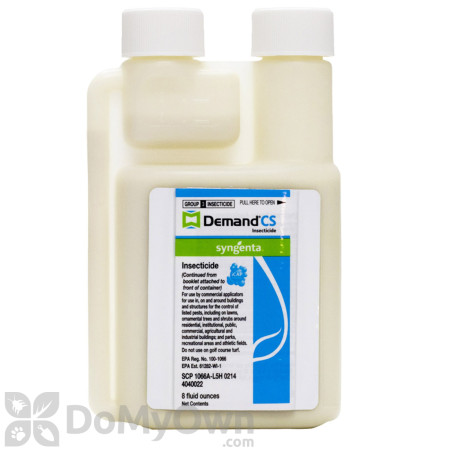
Syngenta
Demand CS Insecticide
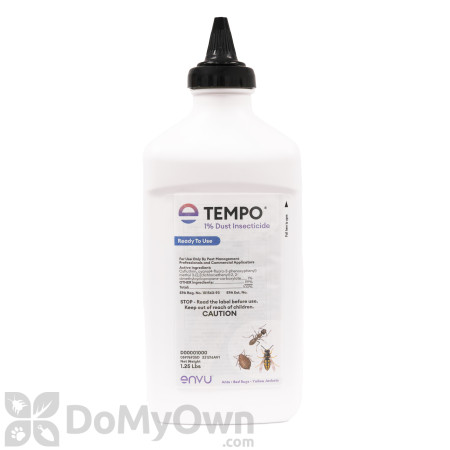
Bayer
Tempo 1% Dust Insecticide
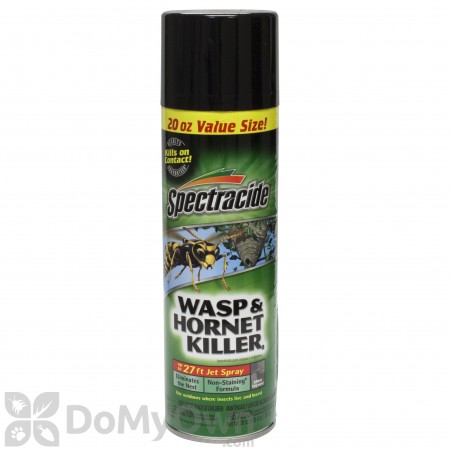
Spectracide
Spectracide Wasp & Hornet Killer Aerosol